Modern Sales Operations is the backbone of any business that wants to scale quickly in today’s tough market. Many companies struggle because they rely on old, manual ways of working that slow down their growth and frustrate their teams.
By moving away from simple record-keeping and toward proactive process design, you can remove the hidden blocks that stop your buyers from saying “yes.” This change helps your team focus on Revenue scalability and high-value selling instead of administrative tasks.
When you align your Cross-departmental data and sharpen your Sales infrastructure, you turn your ops team into a secret weapon for Predictable revenue and long-term Strategic growth that actually lasts.
What Is Modern Sales Operations (and Why Traditional Sales Ops is Dead)?
Modern sales operations are the primary driver of revenue scalability. It shifts from reactive record-keeping to proactive process engineering. Removing friction from the buyer journey and aligning cross-departmental data enables teams to focus on high-value selling.
This approach turns an administrative cost center into a strategic engine for predictable, sustainable revenue growth.
The Shift from Reactive Administration to Strategic Growth
Traditional operations teams acted as reactive firefighters, spending hours on manual reports. In my experience, the transition to a strategic model happens when operations stop reporting on history and start architecting the future.
We now embed operations directly into the sales process. This shift allows us to focus on how to structure a modern B2B outbound sales department that scales naturally rather than relying on heroic individual efforts.
Sales Ops vs. RevOps: Breaking Down the Silos
While sales operations focus on the efficacy of a single department, revenue operations integrate marketing and customer success. We found that when these departments operate in silos, data leaks occur at every handoff.
By breaking these silos, we ensure the customer journey remains consistent. This alignment is the only way to achieve truly accurate pipeline forecasting across the entire revenue lifecycle.
Tactical Takeaway: Never implement a new process until you have mapped the existing manual workflow on a whiteboard. If the underlying human process is broken, technology will only allow you to automate the chaos.
The 4 Strategic Pillars of a Modern Sales Ops Framework
A robust sales operations framework relies on four critical pillars: territory planning, technology optimization, process engineering, and data governance. These core pillars ensure that resources remain allocated efficiently and all decision-making is rooted in verifiable data.
When we built these pillars at previous firms, we saw immediate, quantifiable improvements in how sales teams utilized their time.
1. Strategy & Territory Planning (Predicting the Future)

Effective planning requires balancing account potential with actual capacity. When we implemented this, we stopped using arbitrary zip code assignments and started segmenting based on propensity to buy.
This ensures that every representative operates in a zone where they can realistically exceed quotas based on current market signals and historical win-loss patterns.
2. Technology Stack Optimization (Removing Tool Fatigue)
Too many tools create friction. In my experience, the goal is to reduce the number of clicks required for a representative to complete a task. By auditing the stack, we removed redundant platforms that did not talk to each other.
We focused on tools that provide high utility, ensuring that data flows automatically between systems without manual intervention.
3. Process Engineering & Enablement (Standardizing the Playbook)
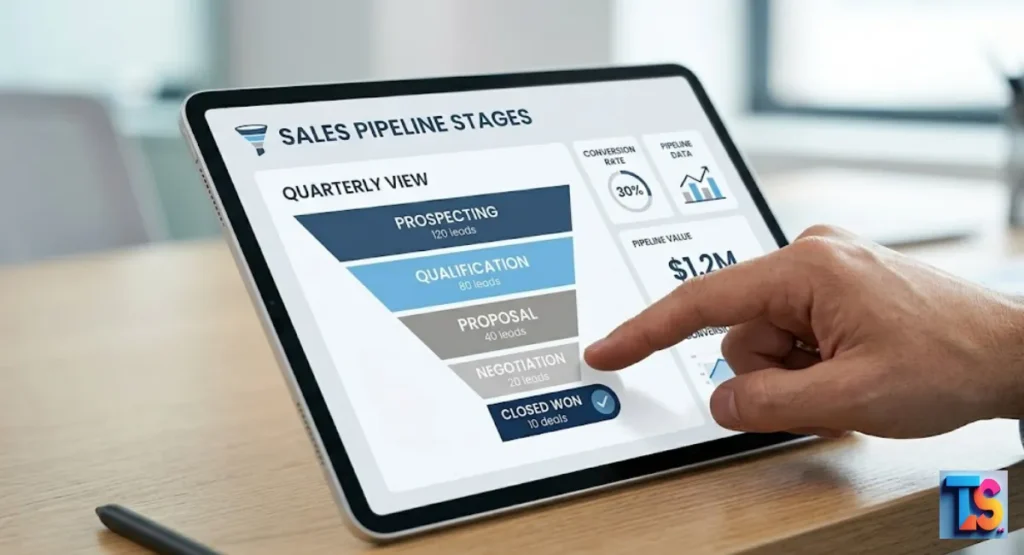
Standardization ensures every representative follows the most efficient path to a closed deal. We found that providing “just-in-time” content within the CRM reduces ramp time significantly.
When operations teams define these steps, they provide representatives with the exact talk tracks and assets needed for every stage, which is vital to optimize the B2B sales cycle length. This process includes:
- Mapping every stage of the buyer journey.
- Creating standardized collateral for every touchpoint.
- Implementing mandatory training sessions for new reps.
4. Data Governance & Advanced Analytics (The Single Source of Truth)
Without clean data, forecasting is impossible. Data governance mandates strict entry requirements for CRM fields. When we enforced these rules, we stopped arguing about whose numbers were correct.
Accurate data allows us to identify the exact moment a prospect disengages, allowing the team to intervene early and salvage the deal before the pipeline loses value.
Building a Lean Sales Tech Stack: Core Tools You Actually Need
A lean tech stack prioritizes quality over quantity, focusing on tools that improve seller efficiency. The core includes a primary CRM, a data enrichment tool, a conversation intelligence platform, and a dialer.
These tools must communicate flawlessly to capture data automatically, which directly contributes to the impact of automation on sales representative productivity.
CRM Governance: Keeping Data Clean in the AI Era
The CRM remains the single source of truth. To maintain integrity, we implement automated validation rules that prevent incomplete records from entering the system.
By forcing data hygiene at the point of entry, we ensure that our reporting tools provide accurate insights rather than flawed projections based on guesses. This prevents common errors like:
- Duplicate prospect records.
- Missing contact information.
- Incorrect stage attribution.
Crucial Integrations: Data Enrichment, Enablement, and Dialers
Integrations serve as the connective tissue of the department. Data enrichment tools automatically populate prospect profiles, saving hours of manual research.
Enablement platforms deliver the right resources directly into the CRM interface, while automated dialers log calls instantly. This ecosystem ensures that representatives spend their time selling, not navigating software.
Tactical Takeaway: If a tool requires a representative to log in to a separate tab to perform a core task, the adoption rate will eventually drop. Integration is not a luxury; it is a requirement for speed.
How AI and Automation Are Transforming Modern Sales Workflows
Automation removes the burden of repetitive administrative tasks. By utilizing software to handle lead routing, follow-up emails, and activity logging, we significantly increase the amount of time representatives spend in direct conversation with prospects.
We have seen that this shift from manual labor to high-value engagement directly improves both productivity and overall team morale.
Automating Admin: Reclaiming Hours for the Sales Floor
Manual logging is the primary thief of sales productivity. By automating the capture of meetings and email interactions, we gain back hundreds of hours per month.
When the system handles the administrative load, representatives maintain their momentum throughout the day, avoiding the fatigue that comes from entering data at the end of every shift.
Conversation Intelligence and Predictive Forecasting
Modern software now transcribes sales calls, identifying the specific keywords or objections that lead to closed deals. This intelligence feeds into predictive forecasting models, which offer a far more accurate view of the pipeline than traditional spreadsheets.
These models highlight at-risk deals long before the end of the quarter, providing time for corrective action.
Key Performance Indicators (KPIs) Every Sales Ops Leader Must Track
Metrics must reflect both output and the quality of the supporting infrastructure. We focus on a balance between efficiency and operational metrics. Tracking these key performance indicators (KPIs) for sales operations teams allows leaders to identify bottlenecks in the sales funnel and optimize accordingly.
Without these core metrics, a sales department is effectively flying blind.
Efficiency Metrics: Sales Velocity and Win Rates
Sales velocity measures how fast a deal moves through the pipeline. A higher velocity indicates a healthy process. When we see win rates drop, we immediately investigate the quality of leads and the effectiveness of current enablement materials.
This helps us ensure that we are not just moving deals fast, but moving them to a successful close.
Technology Metrics: Tool Adoption and Data Accuracy Rates
Even the best tools fail if the team does not use them correctly. We measure login frequency and the percentage of completed mandatory fields to get a clear picture of technology return on investment.
Low adoption rates often indicate that a tool is either poorly integrated or overly complex, signaling a need for immediate process simplification.
Tactical Takeaway: If your team ignores a field in the CRM, delete it. Every data point you ask a representative to track must either help them close a deal or help you make a strategic decision.
Case Study: How We Optimized a Broken Sales Pipeline
When we audited a high-growth company, we found a sales cycle length of nine months and a win rate below 15 percent.
By implementing a standardized CRM workflow, removing three redundant software licenses, and automating lead routing, we reduced the cycle length by 30 percent and increased the win rate to 22 percent within six months.
| Metric | Before Optimization | After Optimization |
| Sales Cycle Length | 9 Months | 6 Months |
| Lead Conversion Rate | 12% | 19% |
| Manual Data Entry Time | 12 hrs/week | 1 hr/week |
| Win Rate | 14% | 22% |
Common Pitfalls in Sales Operations (and How to Avoid Them)
The most common mistake in operations is trying to solve a process problem with a new tool. Leaders often fall into the trap of purchasing software before fixing the underlying workflow.
This leads to expensive, unused technology. To avoid this, always prioritize refining the human process before automating it or introducing new complex layers to the stack.
Final Thoughts:
Modern sales operations are the difference between a scaling organization and one that stagnates under its own complexity.
By shifting the focus toward removing friction, standardizing processes, and ensuring data integrity, you create a foundation that allows your sales team to perform at its peak.
Start by auditing your current workflows and identifying one significant point of friction to eliminate today.