Many business owners live on a revenue rollercoaster. You experience a fantastic month with packed schedules, followed by weeks of absolute silence. Relying on random word of mouth or casual networking creates constant stress. You cannot predict your income, and you cannot scale your operations safely.
At its core, understanding what is client acquisition comes down to moving away from this unpredictability. True client acquisition is the strategic, repeatable process of attracting and converting potential prospects into paying customers. Rather than a series of one-off marketing tasks, a proper client acquisition system is a predictable framework that uses automated software workflows to find prospects, capture their data, and convert them into buyers. This repeatable engine replaces manual daily outreach and random marketing tasks with a structured pipeline. It runs continuously to deliver new revenue without relying on luck.
Why Most Client Acquisition System Efforts Fail

Client acquisition efforts fail when businesses rely on manual outreach and single-channel tactics instead of automated pipelines. This operational gap creates low conversion rates, unpredictable lead flow, and lost revenue. Unmanaged prospective buyers quickly slip through communication gaps before a sales conversation can start.
You spend hours posting social media content or sending cold messages, but your inbox stays empty. Random acts of marketing do not create stable revenue.
Mistake 1: Targeting Everyone Instead of a Hyper-Specific Ideal Customer Profile
- Focus your messaging on a specific group because broad marketing dilutes your economic impact.
- Isolate distinct enterprise pain points since a software company differs from a medical clinic. For instance, high-performing client acquisition strategies for financial advisors will look completely different from the pipelines used by e-commerce brands. Similarly, navigating staffing industry client acquisition challenges requires a completely unique approach to account management and volume hiring demands compared to selling standard SaaS products. Deciding to scale a broad campaign without narrowing your niche ensures you waste capital on uninterested traffic. If you want a reliable B2B client acquisition strategy, you have to build a strict profile based on.
- Establish a strict profile based on exact company size, industry vertical, revenue, and daily challenges.
Mistake 2: Relying on a Single Platform
- Protect your client pipeline from sudden social media algorithm changes that halt lead volume.
- Avoid dangerous spikes in customer acquisition costs during highly competitive marketing seasons.
- Diversify lead generation channels so a single software update cannot disable your entire company’s revenue.
Mistake 3: A Broken Follow-Up Process
- Prevent hot leads from slipping through the cracks due to delayed internal communication.
- Contact new prospects within sixty minutes to maximize the likelihood of closing a deal.
- Deploy centralized tracking software so your team never forgets to follow up with busy prospects.
The 4 Essential Pillars of a Modern Acquisition Engine
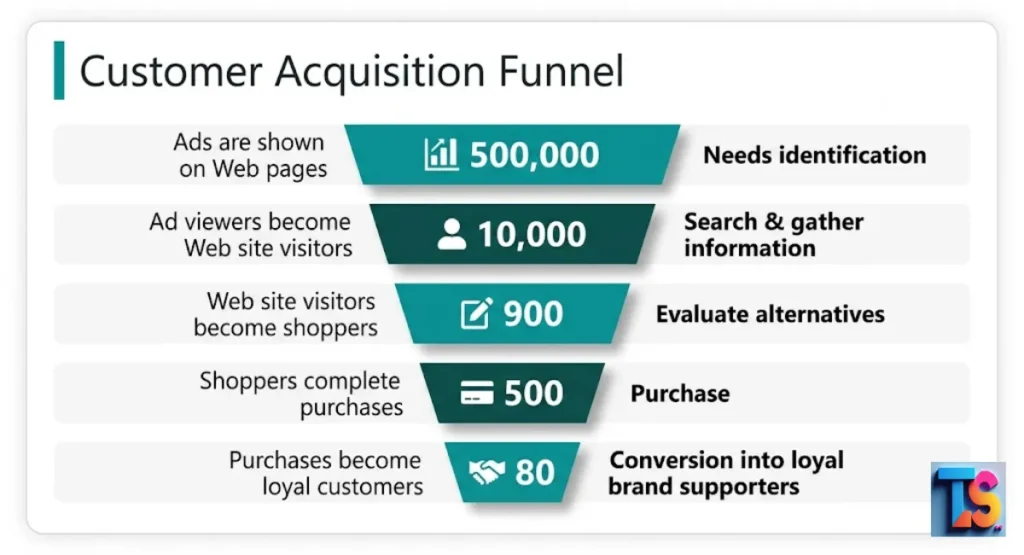
A modern customer acquisition engine coordinates four sequential operational stages: attraction, capture, nurture, and conversion. This integrated architecture moves raw traffic down a standardized path into a centralized sales database. Connecting these steps through software webhooks removes human error from pipeline management.
| Pillar | Core Function | Primary Tools Used |
| Attraction | Generates raw visibility and traffic | HubSpot, LinkedIn, Google Ads |
| Capture | Collects contact details from visitors | Typeform, Carrd, Unbounce |
| Nurture | Builds trust and answers objections | ActiveCampaign, MailerLite |
| Conversion | Closes the deal and manages data | Pipedrive, Salesforce, Zapier |
Attraction (The Traffic)
- Publish deep educational articles that directly answer high-volume customer search queries.
- Send highly personalized messages via business networks to your exact target buyers.
- Purchase targeted keyword placement on search engines for immediate consumer visibility.
Capture (The Lead Magnet)
- Secure prospect contact details instead of allowing web visitors to leave without taking action.
- Design actionable assets like interactive calculators, pricing templates, or custom website audits.
- Resolve one clear technical bottleneck for your target buyer within ten minutes of delivery.
Nurture (The Trust Builder)
- Educate early-stage prospects who are not ready to purchase a premium package immediately.
- Demonstrate real operational expertise automatically while your core delivery team sleeps.
- Neutralize common buying objections regarding pricing and onboarding times through an automated email series.
Conversion (The CRM & Sales Call)
- Monitor every active opportunity by utilizing dedicated deal tracking software.
- Link front-end submission tools directly into your backend sales tracking system.
- Execute this real-world automated workflow so your team or a dedicated client acquisition manager can maximize your overall pipeline speed:
- A prospect submits their business information via a Typeform questionnaire.
- An automated client acquisition bot or Zapier integration captures that submission via an instant webhook.
- Zapier automatically creates a new person and a new deal card inside Pipedrive.
- The system automatically moves that deal card to the “Qualified Lead” column.
- Pipedrive fires an automated email using a custom template to offer a calendar booking link.
Blueprint: The Best Client Acquisition System Framework for Your Business

Choosing the right client acquisition framework depends on your contract value, target audience, and operational budget. Selecting an incompatible pipeline layout causes excessive manual labor or negative returns on advertising spend. When looking for the best strategies for client acquisition, businesses must scale by selecting either an outbound engine, an inbound authority model, or a paid advertising funnel.
[Traffic Source]
│
▼
[Capture Page]
│
▼
[Nurture Sequence]
│
▼
[CRM / Close]
The Outbound Engine
This framework works best for high-ticket business services, IT consulting, and agencies where deals are worth thousands of dollars. You build a clean list of prospects using data tools like ZoomInfo or Apollo. You then send short, personalized email campaigns focused on a single business outcome.
Your call to action invites them to a brief conversation rather than a hard sales pitch. This keeps your costs low because you only pay for data tools and email sending platforms rather than expensive ads.
The Inbound Authority Framework
This approach fits coaches, consultants, lowercase solopreneurs, and creators who sell expertise. You publish deep, helpful guides on your website and platforms like LinkedIn. Your content addresses specific technical challenges your audience faces.
Inside the content, you embed links to free templates or video training. Once readers download the resource, your automated email system takes over to guide them toward booking a paid strategy session.
The Paid-to-Scale Funnel
This model suits software companies, productized services, and businesses with highly repeatable offers. You run targeted ads on Google or Meta that point directly to a video demonstration or a free trial signup page.
Because paid ads require an upfront investment, you use automated retargeting ads to display customer testimonials to users who visited your page but did not sign up on their first visit.
How to Measure and Optimize Your System Health

Optimizing acquisition health requires the continuous measurement of Customer Acquisition Cost, Lifetime Value ratios, and Pipeline Velocity. Evaluating these three mathematical benchmarks allows owners to pinpoint funnel blockages and protect profit margins. Consistent data review removes financial risk from your weekly corporate growth strategy.
Customer Acquisition Cost (CAC)
This metric shows exactly how much money you spend to win a single new customer. To calculate it, add your total marketing expenses, ad spend, and sales software costs for a specific month. Divide that total by the number of new clients acquired in that same month.
$$CAC = \frac{\text{Total Marketing \& Sales Spend}}{\text{Number of New Clients Acquired}}$$
If you spend $3,000 on ads and software to get 10 clients, your CAC is $300.
Lifetime Value (LTV) to CAC Ratio
Your Lifetime Value represents the total net profit a customer contributes to your business over the entire duration of your relationship. For a healthy, sustainable business, your LTV to CAC ratio should be at least 3:1.
Understanding the dynamics of Customer Acquisition vs Retention is critical here. While this system focuses heavily on bringing new buyers through the front door, keeping your acquisition costs down only matters if you can keep those clients long enough to maximize their lifetime value. If your average client brings in $900 in total profit, and your CAC is $300, your system is on solid ground. If your ratio drops to 1:1, you are spending too much money to get clients and will struggle to survive without fixing either your acquisition efficiency or your retention strategy.
Pipeline Velocity
This metric measures how fast a prospect moves from the first point of contact to a closed contract. You track the number of days a lead spends in each stage of your CRM. If leads get stuck in the negotiation stage for weeks, you know you need to improve your proposal process or handling of pricing objections.
Action Plan: 5 Steps to Build Your System This Week
Implementing a functional client pipeline requires a systematic, step-by-step setup of data profiles, capture assets, and tracking columns. Taking these clear actions eliminates operational confusion and establishes measurable marketing momentum within seven days. Following a sequential launch list prevents technical delays and keeps execution costs low.
- Lock In Your Profile: Write down a detailed description of your top ten current or past clients. Identify their shared industry, revenue, and software tools.
- Build Your Capture Asset: Create a simple spreadsheet template or a five-page PDF checklist that solves one immediate problem for that group.
- Set Up Your CRM Pipeline: Open a free or low-cost account on HubSpot or Pipedrive. Create four basic columns: New Lead, Meeting Booked, Proposal Sent, and Won.
- Launch One Traffic Source: Choose either outbound email or helpful organic articles. Dedicate two hours every morning to executing this single traffic strategy.
- Review the Numbers Weekly: Every Friday afternoon, look at your spreadsheet. Track your new leads, total money spent, and new revenue generated to see where your pipeline needs adjustment.
Conclusion & Next Steps
Building a reliable customer growth system removes the panic of unpredictable income. It replaces stress with clear numbers and automated routines. When you treat business growth as a repeatable engineering process instead of a creative guessing game, you gain total control over your monthly revenue. Pick your primary traffic channel today, build your lead capture asset, and start tracking your metrics daily.