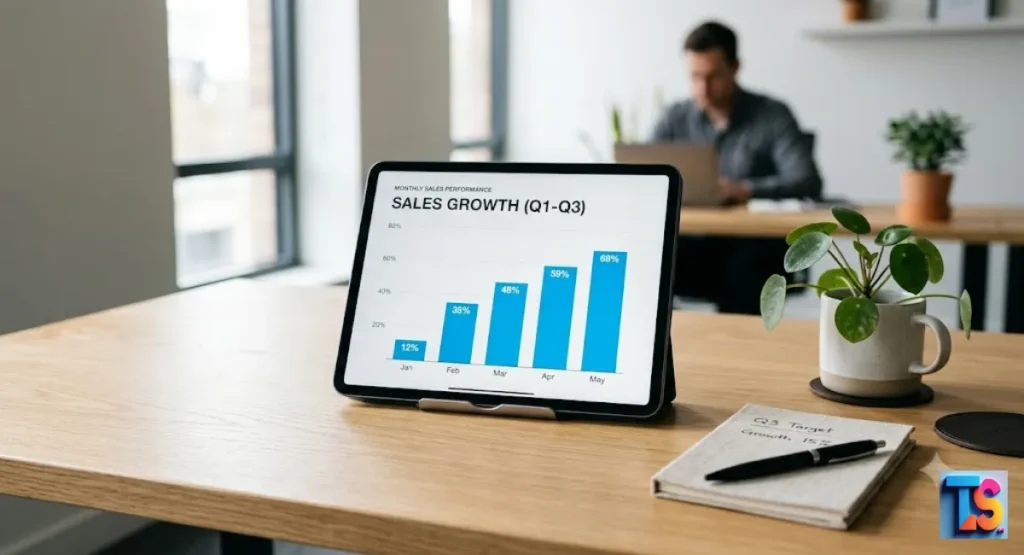
To master modern growth, you must track the right KPIs for sales operations teams. These metrics act as a compass, guiding your department toward higher efficiency and predictable revenue. By focusing on sales pipeline velocity, you can identify exactly where your process stalls and where it succeeds.
Implementing a structured outbound department ensures that your team remains proactive, not reactive, in a competitive market. Furthermore, leveraging sales automation tools removes manual friction, and the positive impact of automation on sales representative productivity allows your representatives to focus on high-value interactions.
Ultimately, achieving cross-functional alignment between marketing and sales is the key to maintaining a healthy B2B procurement journey, ensuring your organization hits its aggressive growth targets every single quarter.
The Hidden Cost of a Bloated B2B Sales Cycle
A long sales cycle is expensive and risky for any business. When deals take too long to close, companies waste valuable sales representative time, resources, and potential revenue.
By reducing cycle length, teams improve their cash flow and allow their staff to focus on more opportunities, which directly increases total annual earnings. You must act now.
Why Time is the Ultimate Killer of B2B Deals
Tracking time is one of the most important Key performance indicators (KPIs) for sales operations teams to ensure rapid growth. Long cycles allow interest to fade and internal hurdles to grow.
Every week a deal remains open, the risk of a competitor entering or the prospect choosing a status quo solution increases significantly for your team.
Constant monitoring of deal stages is necessary. When you allow processes to drag, your momentum stalls. Teams that prioritize speed keep buyers focused on value.
By minimizing delays and keeping the conversation active, you ensure that the prospect remains engaged and committed until the final contract is signed by all parties.
Champion Fatigue and Budget Shifts: The Risks of Mid-Funnel Stalling
Internal champion fatigue is a major factor among the Key performance indicators (KPIs) for sales operations teams to monitor during long deals. When processes drag, champions grow tired of defending your solution to their peers.
Simultaneously, company priorities shift rapidly. Moving fast protects deals from these unpredictable changes by securing commitments before budgets disappear.
Recognizing the signs of fatigue early is essential. If your champion stops responding to emails or avoids scheduling follow-up meetings, they may be losing internal support.
Combat this by providing them with quick, high-value assets they can easily share with their colleagues to maintain interest and keep the project on the executive agenda.
Step 1: Upgrading from BANT to Ruthless MEDDICC Qualification
Qualification frameworks like MEDDICC provide a deeper view of a deal than older, simpler methods. By focusing on metrics, economic buyers, and decision criteria, sales teams can filter out weak opportunities early.
This rigor ensures that representatives only invest their energy into prospects that have a genuine need, budget, and timeline to buy.
Identifying the True Economic Buyer in Today’s Buying Committees
Identifying the economic buyer is essential for the Key performance indicators (KPIs) for sales operations teams that track deal win rates. Buying committees are larger than ever in 2026.
You must use stakeholder mapping to find the person who holds the budget. If you cannot reach the economic buyer, the deal will likely stall indefinitely.
Mapping the entire organization helps you find your direct line of communication. Do not assume that your primary contact is the final decision-maker. Look for the person who has the power to sign off on the financial investment.
Engaging them early ensures your value proposition aligns with their specific business goals.
Establishing Quantifiable Decision Metrics to Filter Out Low-Intent Leads
Success metrics are vital Key performance indicators (KPIs) for sales operations teams when assessing deal quality. You should define these with your prospect early in the process.
Ask how they measure the success of a new tool. If a prospect cannot provide specific goals or data points, they are likely not ready to buy.
Asking direct, challenging questions about their current pain points and expected outcomes works well. Using these metrics acts as a filter to separate serious buyers from tire kickers.
When you focus your energy only on prospects with clear, measurable goals, your win rate and overall team efficiency improve across the entire pipeline.
Red Flags: When to Disqualify a Prospect Early to Protect Rep Capacity
Disqualifying a lead is a sign of a high-performing organization. Look for signs like a lack of urgency, inability to reach decision-makers, or vague business problems. If these red flags appear, stop working the deal immediately.
Reallocating that time to high-probability prospects is a core strategy for modern sales operations.
Being honest about deal health is a must. It is better to lose a bad deal early than to waste months chasing a prospect who will never sign.
By clearing out your pipeline of low-intent leads, you create space for better opportunities and keep your team focused on revenue-generating activities that actually lead to success.
Step 2: Transitioning from Sequential to Parallel Deal Processing
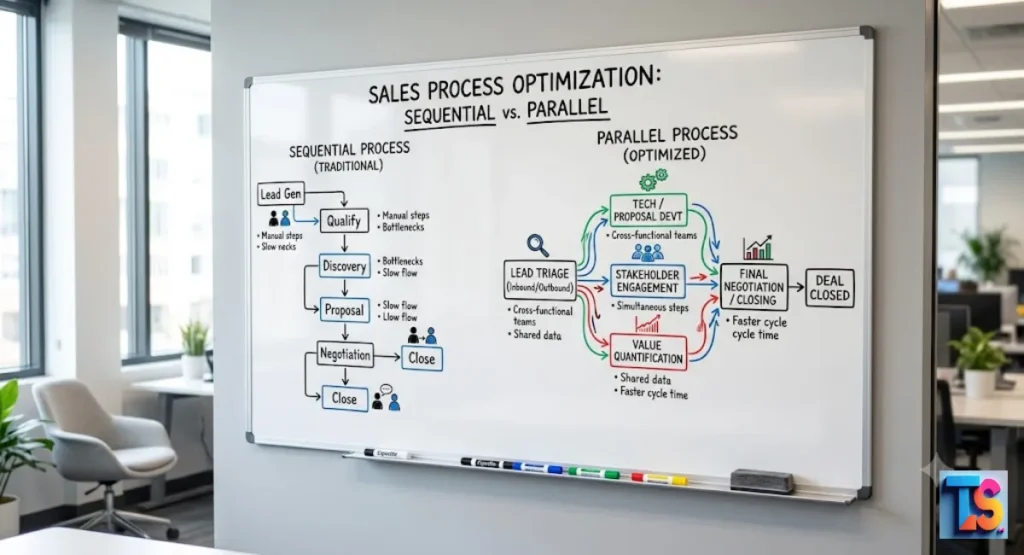
Many companies move through sales steps one by one, which creates unnecessary downtime. Parallel processing means starting legal, security, and technical reviews while you are still conducting product demonstrations.
This strategy compresses the timeline and ensures that when the prospect is ready to buy, the operational requirements are already handled. Integrating sales automation into your workflow and structuring a modern B2B outbound sales department helps you align these processes to move faster.
- Identify all departments involved in B2B procurement early to avoid surprises.
- Start your security and compliance reviews during the discovery phase.
- Use shared tracking tools to keep cross-functional alignment across legal and IT teams.
- Remove manual hand-offs between your marketing, sales, and implementation teams.
The Bottleneck of Linear Sales Stages (Discovery ➔ Demo ➔ Legal)
Linear processes are slow because they wait for one step to finish before starting the next. This creates long gaps where nothing happens. If you finish a demo and then wait two weeks to start security reviews, you are losing speed.
Modern teams run these processes simultaneously to remove these dead zones.
Auditing your current workflow helps you find where the most time is lost. Often, legal or security reviews take the longest.
By starting these processes as soon as a prospect shows genuine interest, you eliminate the biggest time sinks in your sales cycle and keep the momentum moving toward a close. How to optimize the B2B sales cycle length is your focus.
Co-Launching Security, Compliance, and IT Reviews Pre-Proposal
Do not wait for a signed contract to begin security or compliance vetting. Introduce your technical or security team to the prospect early. By getting these departments talking sooner, you identify blockers while you are still negotiating terms.
This proactive approach prevents surprise delays that often kill deals during the final stages of the process.
Bringing your own technical experts into the call alongside the sales rep is smart. This shows the prospect you are serious and prepared. It also allows you to handle technical concerns on the spot rather than waiting for a separate round of emails and internal review meetings that can drag for weeks.
Constructing a Digital Mutual Action Plan (MAP) That Buyers Actually Follow

A Mutual Action Plan is a shared document that outlines every step of the purchase. It includes deadlines for both your team and the buyer. By giving the buyer a clear roadmap, you create accountability.
Use digital tools to update this plan live, ensuring both parties know exactly what comes next.
Mapping out every dependency, such as legal sign-off, internal budget approval, and technical setup, is key. When the buyer has a clear view of their responsibilities, they are more likely to stay on track.
This transparency builds trust and keeps the deal moving forward without the need for constant, repetitive check-in calls.
Step 3: Weaponizing the “Cost of Inaction” (COI) to Prevent “No Decision”
The biggest competitor for any salesperson is not another vendor, but the decision to do nothing. To beat the status quo, you must prove the financial impact of waiting.
When you show a prospect how much money they lose by not using your solution, you create a sense of urgency that accelerates the deal.
Moving Beyond ROI: Why the Status Quo is Your Biggest Competitor
ROI shows what a prospect gains, but the Cost of Inaction shows what they lose. Most buyers are more afraid of losing money than they are excited about potential gains.
Focus on the risks and missed revenue caused by keeping their current, outdated process. This shift in perspective creates a stronger reason to act.
Using specific data to highlight the ongoing costs of their current limitations works best. If their manual process takes ten hours a week, calculate the cost of those lost hours in labor.
Framing your solution as a way to stop this bleeding makes the decision to buy feel urgent rather than optional.
How to Build a Custom Financial Risk Model for Your Prospect
Work with your champion to create a simple spreadsheet or slide that shows their current financial risks. Input their data, such as manual labor costs or downtime losses.
A custom model proves that you understand their business. This tool gives your champion the evidence they need to justify the purchase to their bosses.
Keeping the model simple and easy to explain is vital. The goal is not to be overly technical but to provide a clear financial narrative that the champion can use to sell internally.
When you provide them with a professional, data-backed document, you make their job easier and accelerate the approval process.
Using Micro-Commitments to Keep Enterprise Buyers Accountable Between Calls
Micro-commitments are small, easy tasks you ask the prospect to complete. For example, ask them to review a document or invite one additional stakeholder to the next meeting.
These small steps keep the buyer active and engaged. If they complete these tasks, you know the deal is moving forward.
Setting these expectations clearly at the end of every conversation is helpful. Ask for one small action before the next scheduled meeting.
By getting the prospect to invest their time and effort into the process, you maintain engagement and ensure they are personally committed to moving the project toward a successful final decision.
Step 4: Shortening Time-to-Trust with High-Intent Content Enablement
Modern buyers prefer to learn on their own before they talk to a salesperson. By providing the right information at the right time, you build trust faster.
High-intent content helps prospects move through their research phase quickly, allowing them to enter the sales process with a clear understanding of your value. Sales automation helps here.
- Create comparison guides that highlight your unique business value.
- Provide interactive ROI calculators to help prospects build their own case.
- Offer case studies that feature similar companies in the prospect’s industry.
- Share short video tutorials that answer specific technical questions for stakeholders.
Shifting Marketing from eBook Downloads to High-Intent Signal Tracking
Stop focusing only on general lead generation. Instead, track behaviors that show a prospect is ready to buy, such as visiting your pricing page or requesting a demo.
Use these signals to trigger personalized outreach. By responding to high-intent actions, your sales team connects with buyers at the perfect moment.
Using software to track which pages a prospect visits on your site is a great move. If they look at your pricing, security documentation, or terms of service, reach out immediately.
This is when they are actively evaluating you. Providing relevant help at this exact moment shortens the research phase and builds instant credibility.
Deploying Product Tours and Self-Serve Sandboxes to Accelerate Discovery
Letting prospects use your product early creates a “try before you buy” experience. Self-serve tours allow buyers to explore features without needing a sales rep.
This reduces the number of initial discovery calls required and gets the buyer to their “aha” moment much faster than a traditional slide deck presentation.
Setting up guided experiences that show the most important features first is effective. Keep these sessions brief and focused on the prospect’s specific goals.
When a buyer experiences the value of your product firsthand, their trust increases and they become much more likely to move through the sales cycle with confidence and speed.
Arming Internal Champions with Custom Business Cases for C-Suite Buy-in
Your champion needs help to sell your solution to their executive team. Provide them with a simple business case document. Include the problem, the solution, the financial impact, and the timeline.
When you make it easy for your champion to succeed, you shorten the time it takes for the company to sign the contract.
Focusing on executive-level concerns like cost reduction, risk mitigation, and strategic growth is important. Avoid getting lost in product features. Instead, provide the high-level business arguments that executives care about.
By giving your champion the right tools, you enable them to advocate for you effectively when you are not in the room.
Data-Driven Insights: What the Fastest-Closing B2B Tech Companies Do Differently
Sales operations teams must track three core KPIs: Conversion rate, Average deal size, and Sales cycle velocity. Monitoring these numbers helps you see exactly where your process breaks down.
High-performing teams use these metrics to make better decisions and keep their revenue growing.
| Metric | Fast-Closing Companies | Average Companies |
| Conversion Rate | 25%+ | 10-15% |
| Average Deal Size | Increasing | Stagnant |
| Sales Cycle Velocity | 30-60 Days | 90-180 Days |
Benchmarking Your Current Sales Cycle Against 2026 Industry Averages
You must know your own numbers to improve them. Track your average cycle length by deal size and industry. Compare these numbers against current 2026 benchmarks for your sector.
If your cycle is significantly longer than the average, you have a clear opportunity to find bottlenecks and optimize your process for better performance.
The Correlation Between Executive Engagement and 30-Day Closed-Won Deals
Deals that involve executive-level meetings close significantly faster. When your leadership team engages with the prospect’s leadership team, it builds trust and speeds up the decision. Aim to involve an executive early in the process.
This top-down support often removes political or bureaucratic hurdles that typically slow down mid-level negotiations.
FAQs
What is a healthy average sales cycle length for enterprise SaaS?
A healthy cycle for enterprise SaaS typically ranges from 4 to 9 months depending on the deal size. However, companies using the 2026 Revenue Velocity Framework often reduce this by 20 to 30 percent. Focus on reducing wait times rather than just chasing a specific number, as complexity varies by industry.
How do you accelerate a deal when the primary contact goes silent?
If a contact goes silent, provide them with new, relevant value immediately. Send a short summary of how a similar company solved a problem they mentioned earlier. If they do not respond to value-based outreach, reach out to a different stakeholder in the company to reignite the conversation through a new channel.
Can sales automation software effectively shorten the sales process?
Yes, sales automation is vital for modern operations. Tools that handle meeting scheduling, document tracking, and follow-up emails free up your sales representatives. By removing administrative work, automation lets your team focus on building relationships and closing deals, which keeps the sales cycle moving at a steady pace.
Action Checklist: Shaving 30% Off Your Sales Cycle in the Next 90 Days
- Audit your current deal stages to find where prospects spend the most time waiting.
- Implement a mandatory MEDDICC scorecard for all new opportunities.
- Create a template for a Mutual Action Plan to share with all active prospects.
- Start co-launching security and legal reviews immediately after the first discovery call.
- Build a “Cost of Inaction” financial model for your top 5 pipeline deals.
- Review your content library to ensure you have specific materials for C-Suite buyers.
By focusing on these metrics and using better tools for your structured outbound department, you will see a big jump in your overall sales performance.