Modern businesses rely on technology to scale, yet many sales teams still struggle with time-consuming tasks. Research shows that automation on sales representative productivity creates a massive shift in how teams hit their goals.
Modern Sales Operations are the backbone of this transformation. By removing manual data entry, your reps gain more time for human-centric selling and meaningful buyer conversations.
This process strengthens your overall B2B revenue engine by ensuring that every prospect receives timely follow-ups.
Furthermore, using tools that support sales stack harmony allows your team to focus on closing instead of paperwork. Embracing these smart systems today is the best way to improve pipeline velocity and build a high-performing modern B2B outbound sales department that consistently delivers great results.
What Is Sales Automation Productivity?
Sales automation productivity measures how much time you give reps for high-value buyer talks by using smart tools to handle chores. It builds a fast B2B revenue engine by killing manual friction from daily jobs.
This shift helps your team focus on closing deals quickly while making sure every minute of the day provides real value.
- It’s time for direct chats with leads.
- It ends repetitive data entry and scheduling traps.
- It puts human-centric selling over manual labor.
The Hidden Cost of Manual Work
Manual work acts like a secret tax on every hour a salesperson spends at their desk. It forces them to juggle basic chores instead of focusing on growth. When reps spend hours looking for info, their focus shifts away from the buyer.
Plus, this constant distraction slows down the whole team. It makes hitting monthly targets very hard.
The Administrative Tax: Why Modern Reps Spend Only 30% of Their Day Selling
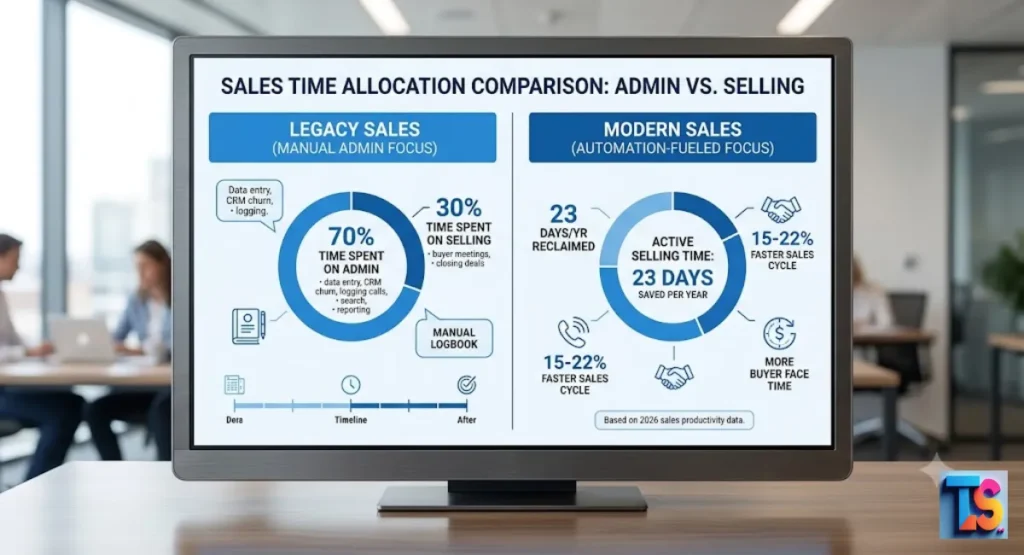
Salespeople now spend only 30 percent of their time on active selling because of a heavy tax that eats up their daily capacity. The other 70 percent disappears into manual updates and basic system maintenance.
So, companies use automated workflow efficiency to give reps their time back for building lasting buyer trust.
Data Entry, CRM Churn, and the Death of the Sales Pipeline
CRM churn happens when reps avoid using complex systems that feel like extra work instead of tools for their daily sales life. This leads to bad pipelines and stops managers from seeing which deals are moving forward.
But smart sales process optimization makes sure data entry happens in the background. It keeps pipelines healthy.
The Architecture of Modern Sales Automation: Core Features Driving Efficiency
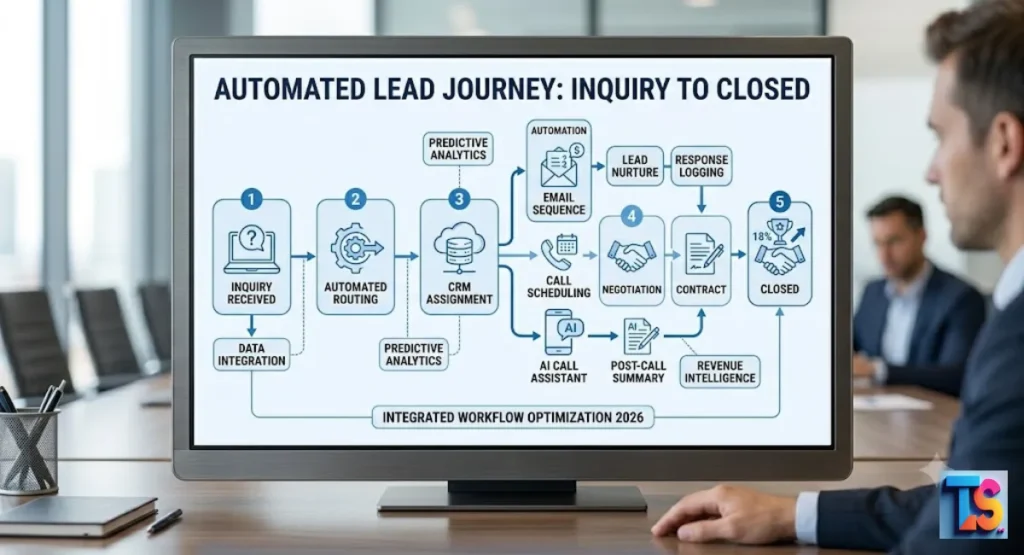
Modern sales automation acts as a digital backbone that links tools so that info flows without manual work for your revenue teams. This design cuts friction from every stage of the funnel.
It lets the team work at a faster, steadier pace. These core features give the structure needed to manage complex deals and boost pipeline speed.
| Feature | Primary Benefit |
| Automated CRM Hygiene | Keeps customer data clean and accurate automatically. |
| AI Call Assistants | Transcribes meetings and writes summaries instantly. |
| Workflow Orchestration | Routes the right lead to the right rep fast. |
| Dynamic Personalization | Customizes emails for prospects at a massive scale. |
Automated CRM Hygiene and Real-Time Pipeline Updates
Smart software now cleans and updates CRM records in the background to make sure data stays real for every member of your sales group. It spots duplicate entries, fills missing contact details, and logs activity without a human touch.
Because of this, leaders use smart math to forecast revenue with total trust and zero manual data errors.
AI Call Assistants and Instant Post-Meeting Summaries
New AI tools listen to sales calls and write accurate notes for the rep right away. They act as a core part of modern revenue intelligence. They capture key details like budget, timeline, and specific buyer needs without the rep typing a word.
As a result, the rep can prep for the next call without wasting time on paperwork.
Intelligent Workflow Orchestration and Speed-to-Lead Routing
When a new lead arrives, the system routes it to the right rep right away to ensure the best speed-to-lead results for your firm. If a lead waits too long, the chance of a sale drops fast.
Automation makes sure no lead sits in a queue. It lets the team talk while the buyer is still keen.
Dynamic Personalization and Scalable Email Sequencing
Automation tools change parts of an email based on the person’s specific industry, role, or recent company news to improve your automated engagement rates.
This lets reps send hundreds of emails that feel personal rather than generic or mass-produced. These sequences keep the brand in front of prospects constantly while keeping the high-quality touch expected by buyers.
The Data-Driven ROI: 3 Ways Automation Shrinks Sales Cycles and Boosts Conversions
Automation boosts performance by removing the common gaps where deals usually die due to slow responses or missed follow-ups during the cycle. When the process runs automatically, there is no delay between critical steps in the buying path.
This builds a smoother experience for the buyer and a steadier, scalable stream of revenue for your company.
Reclaiming 23 Active Selling Days Per Year
By removing admin tasks, the average rep saves about 23 days of work every year. That is a massive win for your output. This is nearly a full month of extra time to spend on high-yield jobs.
These saved hours act as the main driver for companies that outperform their rivals in 2026 by focusing on high-value buyer engagement.
Accelerating the Pipeline: Reducing Sales Cycle Length by 15% to 22%
When follow-ups happen automatically, the time it takes to move a deal from lead to close drops by 15 to 22 percent on average. Faster cycles mean the company gets cash sooner and can invest in growth more quickly.
This speed creates a big edge by keeping prospects engaged through the whole journey without any stalls. Using automation to optimize the B2B sales cycle length allows your team to maintain momentum and move deals to a close with greater predictability.
Eliminating Deal Slippage with Automated Lead Nurturing
Deal slippage happens when a prospect goes quiet. But automated nurturing keeps the brand present until they are ready to make a final buy. These systems send helpful content at the right time.
It stops deals from falling through the cracks. This steady contact makes sure that reps stay top-of-mind whenever the prospect reaches the final stage of buying.
The Human-AI Synergy: Balancing Technical Execution with Authentic Relationship Management
Automation should never replace the vital human bond that drives large B2B deals, even with the rise of new sales stack harmony tools. While software handles technical data, the rep must focus on empathy and knowing the buyer’s unique needs.
Success relies on balancing strong integration with real talks. Let the AI do the heavy lifting.
Content Governance: Why Generic Automation Fails and Customization Wins
Sending the same message to everyone leads to low response rates and hurts brand power. This hurts your long-term relationship building. Businesses must make sure all automated emails still sound human and provide specific value to the reader.
Customization stays the key to keeping trust high. Prospects will ignore messages that feel like robotic spam.
Building Your Stack: Essential Sales Enablement Tools to Maximize Rep Output
Building a modern department needs a linked stack where tools work together to create a single source of truth for your whole team. In 2026, the shift toward AI-assisted revenue intelligence means picking tools that prioritize data privacy and security.
These systems give clear insights while protecting sensitive buyer info. Move away from legacy automation that lacks security.
FAQs
Will sales automation replace human sales representatives?
Automation will not replace humans. But it will replace the boring tasks that teams hate doing every day in their work. Sales needs complex problem-solving and talking, which machines cannot do. Instead of replacing people, automation turns average reps into top pros by letting them spend more time on the human touch that wins deals.
How do you measure the direct impact of automation on a rep’s performance?
You measure impact by tracking time saved on admin tasks and the resulting increase in outbound activity levels across the whole sales team. Monitor stats like total calls made, response rates to automated sequences, and the total time to close a deal. If these key performance numbers jump while manual data entry hours drop, your automation is working. Leaders should also track (KPIs) for sales operations teams to ensure long-term alignment.
What are the biggest risks of over-automating the B2B sales process?
The biggest risk is losing the personal touch that builds long-term buyer trust in a tough market. If you automate too much, your messages will sound robotic and impersonal. This causes prospects to stop engaging. Always keep a human in the loop to review and approve major talks. Make sure technology serves the relationship rather than replacing it.