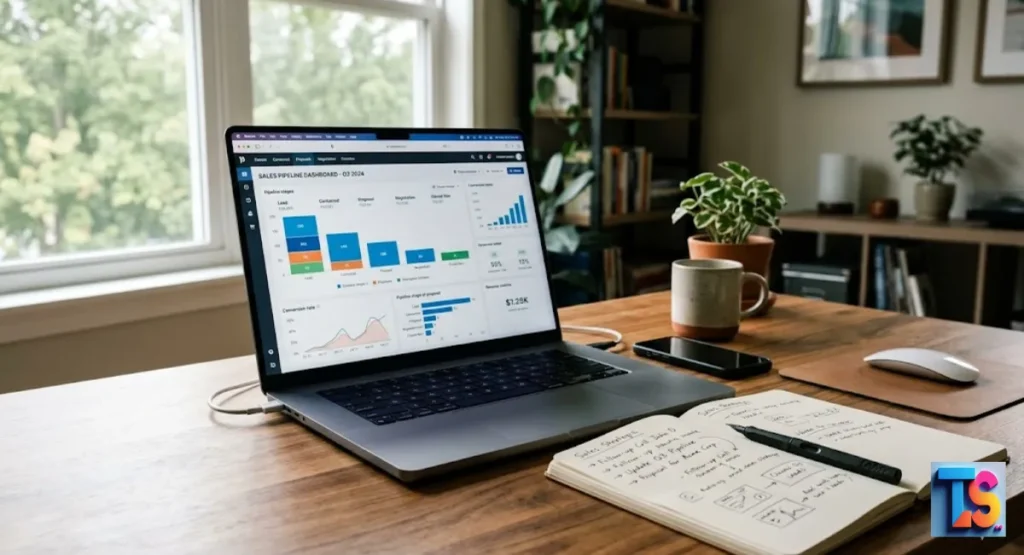
The local search customer journey is the bridge between a person’s urgent problem and your service solution. Today, customers expect instant answers; they don’t have time to dig through endless websites.
When a user has a need in your city, your business must appear immediately as the perfect choice. By mastering the path a client takes, from discovery to the final booking, you can gain a massive edge over your competition.
You need to focus on service proximity factors and clear localized conversion triggers to turn searchers into happy, paying clients. Understanding this journey is no longer optional; it is the most vital part of your digital marketing plan for lead generation and long-term business growth.
The Compressed Timeline of a Local Service Search
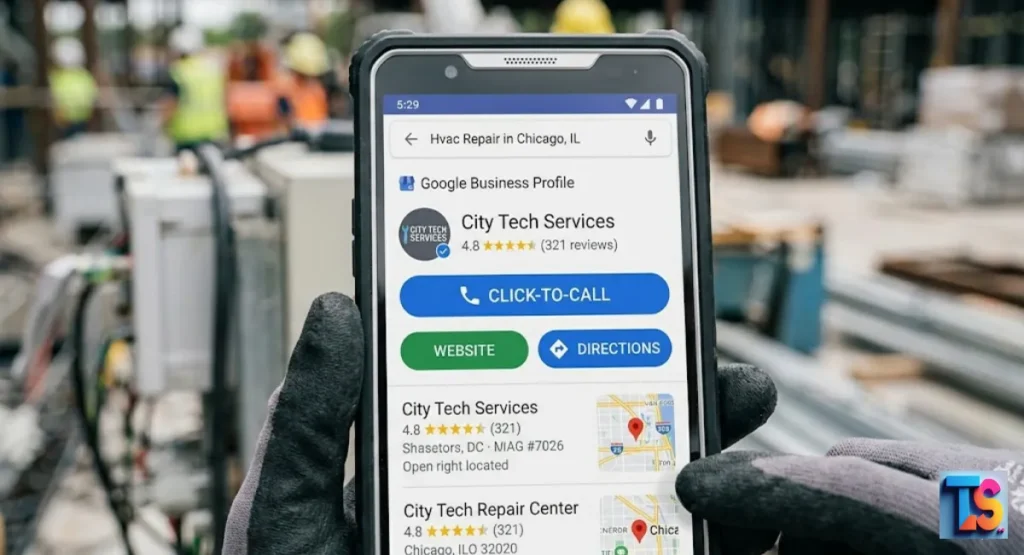
The journey from a blank search bar to a booked appointment is now very short. Most users do not browse multiple sites. They want speed. Instead, they rely on instant answers to make choices in seconds.
If your business is not visible and trusted in these first moments, you lose the consumer booking intent quickly.
Pro-tip: Implement service availability verification features directly on your listing. Add buttons that show your current status as “open” or “available for dispatch.” This simple change acts as a magnet for users who need immediate help. By cutting out the need to call, you satisfy the user’s need for instant confirmation. Fast. Simple. Done.
Why the Service Business Customer Journey Differs From E-commerce
Local service shoppers face urgent problems. Their journey is driven by need, not desire. They value speed, current availability, and proof that you are ready to help.
These customers look for quick solutions within their local intent signals. They do not spend days comparing prices like traditional online shoppers do for common retail goods.
Follow this step-by-step method to win: identify the primary stressor your client faces in an emergency. Update your main headings to address that exact pain.
Use language that highlights your “emergency response team” or “same-day fix” capabilities. These localized conversion triggers reassure the customer that you are the right choice for their immediate, stressful situation. Act now. Help them fast.
Mobile-First and Near-Me: The Instant Gratification Mindset
Most local searches happen on mobile devices while the user moves about. People expect immediate results when they type a search query. Systems now prioritize businesses that show strong service proximity factors and current availability.
If your digital presence is slow or hard to use on a phone, users will quickly choose another competitor.
Use a mobile-first approach to audit your site speed. Remove heavy images that slow down your mobile loading time. Ensure your “Click-to-Call” button stays fixed at the bottom of the screen.
This ensures service availability verification is always at the user’s fingertips, making it easier for them to transition from a searcher into a paying customer. Thumb-friendly is key.
The Role of Geo-Tweaks in Local Search VisibilityThe
The role of GEO-tweaks in local search visibility, modifying your digital presence to reflect specific locations, helps you stand out in crowded markets. By adjusting your service area radius and adding city-specific keywords to your profile, you reach the right people.
This strategy ensures platforms connect your business with local users who are actively searching for services in their own neighborhoods.
Apply these geo-tweaks by creating custom landing pages for each neighborhood you serve. Mention local landmarks or community-specific events to build hyper-local search intent.
If you serve a wide region, adjust your settings to focus on your most profitable zip codes. This keeps your visibility high among the people most likely to book your services today. Target local. Win local.
Stage 1: Discovery (Winning the Invisible AI and Map Search)
Winning the discovery phase means becoming the first choice when a user needs help. Modern systems show a list of top-rated, relevant businesses in your area.
Your goal is to be the primary entity identified by these systems as the best solution to the user’s specific problem within your current local service area radius.
Step-by-step discovery optimization: first, verify your business on every major map platform. Second, categorize your business with the most specific service labels possible.
Third, add photos of your crew at local job sites. These actions establish digital trust signals that prove to automated discovery systems that your business is both legitimate and active in the area. Be seen. Be verified.
Breaking Down Google Local Pack, Maps, and AI Overview Visibility
The local pack is a small map and a list of businesses at the top. The summaries show why you are a good fit. To appear here, you must be a recognized entity. Keep your name, address, and phone number consistent across all sites.
This builds the local intent signals needed to appear in these results.
Follow this 2026 industry insight: the “Entity Home” strategy. Ensure your website clearly defines your business name, address, and phone number in the site footer. Use this exact information to fill out every social media profile. This alignment creates strong digital trust signals that tell systems you are the correct business to feature in top-tier results. Consistency wins.
Local Service Ads (LSAs) vs. Organic Local SEO: Which Captures Intent First?
Paid ads appear at the top with a trust badge. They capture the most urgent consumer booking intent leads. However, organic methods build long-term authority.
The best strategy uses paid ads for immediate traffic while building organic rankings. This approach ensures growth without paying for every single click you receive from your local service area radius.
For immediate results, utilize LSA platforms to showcase your “guaranteed” status. This is your best tool for service availability verification. Pair this with organic content that answers “how-to” questions related to your trade.
This dual-path method ensures you own the top of the screen while building a long-term reputation that attracts leads without ongoing ad spend. Double up.
Actionable Checklist: Proximity, Relevance, and Prominence Optimization
Ensure your physical address is verified and visible to all. Clearly list your primary services to show your expertise. Get reviews and mentions to prove you are respected.
Match your offerings to the exact needs of your local customers. Follow these steps to build your profile and dominate your specific local service area radius today.
Pro-tip: Focus on “Relevance” by updating your list of services every quarter. If you add a new service, like emergency lockout repair, add it as a primary service.
This update reinforces hyper-local search intent and makes your profile more attractive to customers who are looking for that specific, newly offered skill in your immediate area. Stay relevant. Keep updating.
Stage 2: Evaluation (The Trust Filters That Weed Out Competitors)
Once a user sees your business, they look for reasons to trust or skip you. This evaluation phase relies on social proof. Users scan your profile for specific signs that confirm you are reliable, professional, and currently active.
You must present a clean image that matches the high level of consumer booking intent they possess.
In 2026, the most effective digital trust signals are high-quality, authentic photos of your actual work. Avoid stock images. Instead, post a picture of your truck, your team, and a completed project.
This human touch satisfies the user’s need for legitimacy. When a customer feels like they know you, they stop evaluating and start booking. Real faces. Real trust.
Decoding the Google Business Profile (GBP): Critical Data Points Users Scan First
Users look for three main things: star ratings, current hours, and photos. A profile with blank fields or old photos signals that a business is inactive. Keep your profile updated with current hours and real photos of your team or work.
Answer common questions in the section to strengthen your overall local intent signals today.
Use the “Q&A” section on your profile as an FAQ page. Ask your team to draft answers to the top five questions you receive, such as “Do you offer emergency weekend service?” or “What is your service area?”
These answers serve as localized conversion triggers because they clear up doubts instantly without requiring a phone call. Answer them. Get booked.
Review Velocity vs. Review Sentiment: What 2026 Users Actually Trust
It is not just about a high star rating. It is about having recent reviews. A business with hundreds of old reviews looks less trustworthy than one with fresh feedback.
Aim for a steady flow of new comments. This shows that your business is consistently providing great service right now within your service area radius.
How-to method: Use a “Review-First” policy. Immediately after closing a job, send a personalized message asking for feedback. Mention a specific detail of the work you performed.
When a review includes your city name or the service provided, it creates powerful hyper-local search intent and shows future customers that you are currently busy and successful. Fresh reviews. Real growth.
The Impact of Third-Party Directories and Hyper-Local Social Proof
Your presence on niche directories and local community sites acts as confirmation for users. If you appear on a local chamber of commerce site, it signals that you are a legitimate entity.
These mentions build the local intent signals that help search platforms trust your business over others that lack this important local verification today.
Pro-tip: Search for directories specific to your trade. If you are a plumber, ensure you are in the top three industry-specific local directories. Being featured here is a major digital trust signal.
It confirms your standing in your niche and acts as a filter that pushes competitors out of the user’s primary consideration set. Be everywhere. Stay ahead.
Advanced Local Marketing Attribution
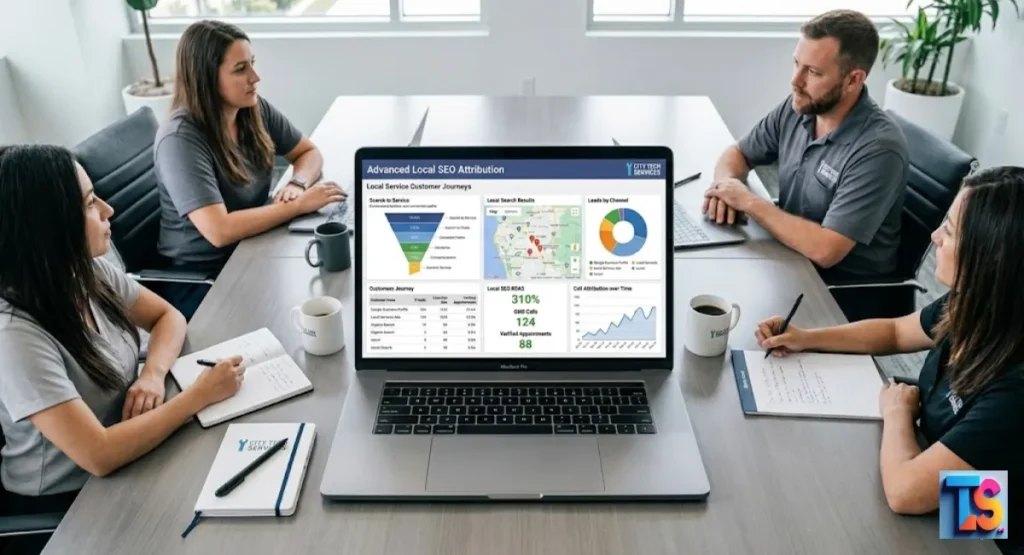
You must track where your leads originate to measure your true success. Use specific tools to connect your digital efforts to real-world bookings. Advanced local marketing attribution. Tracking these items proves that your digital presence directly drives phone calls and store visits for your service business.
This allows you to improve your performance within your local service area radius.
| Search Action | Tracking Method | Value to Business |
| Map Click | Use a unique tracking phone number | Measures discovery via maps |
| Website Visit | Use an analytics tool | Tracks user interest level |
| Booking Inquiry | Use a tracking form | Shows direct conversion intent |
| In-Person Visit | Ask how they found you | Confirms local reach success |
Use a tracking phone number for each source, such as one for your website and one for your map profile. This method provides service availability verification data that shows you which channels actually drive revenue.
By reviewing this monthly, you can see if your localized conversion triggers are working or if you need to adjust your approach. Track it. Fix it.
Stage 3: Decision (Eliminating Friction at the Point of Booking)
The decision stage is where you turn a searcher into a paying client. This is the moment where most businesses fail by making it too hard to get in touch.
To win, you must remove every barrier that stands between a customer and a booked service to satisfy their immediate consumer booking intent today.
Implement a “one-tap” booking system on your site. Avoid asking for too much info upfront. You only need a name, a phone number, and a brief description. By reducing the number of steps to book, you utilize localized conversion triggers to keep the momentum going.
This makes the transition from a search to a sale feel effortless. Simple steps. Fast bookings.
The Speed-to-Lead Rule: How Fast Response Times Dictate the Winner
If you do not respond to an inquiry within five minutes, you likely lose the lead. Customers are often contacting three or four companies at once. The first business to respond with a helpful, human-sounding reply almost always gets the job.
Speed is the most important factor in capturing high consumer booking intent today.
Pro-tip: Use an automated text response for after-hours leads. A message like “We received your request and will call you at 8:00 AM” satisfies the client’s immediate need for acknowledgment.
This provides essential service availability verification and keeps them from moving on to the next business while your team is away from the office. Be fast. Always.
Frictionless Booking: Integrating Online Scheduling, Texting, and Direct Calls
Give customers multiple ways to contact you. Some prefer a simple call button. Others prefer to book through an online calendar or send a text message. If your booking process requires a long form and a wait, they will go to a competitor.
Make it easy for them to choose you at this exact moment.
To create a frictionless experience, integrate a live calendar directly onto your main page. Allow clients to select a time slot that works for them. This creates hyper-local search intent results where your business appears as the most convenient option.
When a customer can book their own service in seconds, they feel a sense of control and relief. Total control.
Website User Experience (UX): Converting Mobile Scanners into Paying Clients
Your website must load instantly. Once it loads, the most important information, your phone number and booking button, should be at the very top. Use short paragraphs and clear headings so a user can see exactly what they need within three seconds.
This design helps users navigate your site while focusing on their consumer booking intent.
Ensure your site is optimized for one-handed use. Put your “Book Now” button in the center-bottom of your mobile display. This layout is a key localized conversion trigger for users on the move.
By making it easy to book with just a thumb, you remove the physical friction that often kills a potential sale. Easy mobile. More sales.
Stage 4: Retention & Advocacy (Fueling the Next Search Loop)
The customer journey does not end with the payment. A happy client is your best marketing tool. By following up after the service, you can turn a one-time job into a source of long-term trust.
This helps you rank higher in future searches by creating strong, positive local intent signals for your brand.
Create a “Loyalty Loop” by offering a small discount for their next maintenance check. Send this offer as a friendly reminder via text or email. This keeps your brand at the top of their mind and acts as a localized conversion trigger that brings them back.
Loyal clients are the cheapest way to grow your business over time. Keep them close.
Turning an Offline Service Experience into an Online Trust Asset
When you finish a job, you have the opportunity to capture real-world proof. Take a photo of the completed work with permission. Ask the customer to share their experience.
These real-world actions are what systems use to confirm that your business actually provides the services it claims to offer to the local community today.
How-to method: After completing the job, ask: “Would you mind if I took a photo for our local gallery?” Most clients are happy to help. Post this photo on your profile and social media.
These images act as digital trust signals that prove you are active in the community, helping you attract more clients in the exact same neighborhood. Capture the work. Post it.
The Post-Service Follow-Up: Automating Localized Keyword Review Requests
Send a follow-up text within 72 hours after the service. Include a direct link to your review page. Ask them to mention the specific service you provided. When a review includes your city or service name, it reinforces your relevance for those terms and builds stronger service proximity factors for your future local growth.
Use an automated template that includes your city name in the request. For example: “We loved helping you with your repair in [City Name]. Could you share your thoughts?”
This ensures that the resulting reviews contain the right keywords to boost your hyper-local search intent and make it easier for future neighbors to find your services. Use keywords. Get found.
Building Customer Loyalty in a Transactional Local Market
Even in transactional businesses, communication matters. Send seasonal reminders or helpful tips related to your service. Keeping your brand in their mind ensures that when they, or their neighbors, need help again, your name is the first one they remember.
This consistency turns one-time buyers into loyal clients who provide value to your business long-term.
Pro-tip: Send a “seasonal check-up” tip. If you are a landscaper, send a reminder to winterize sprinklers. If you are an HVAC tech, remind them to change filters in summer.
This content acts as a localized conversion trigger because it shows you care about their ongoing success. It positions you as their primary local expert for years. Stay helpful. Always.
Calculating ROI for Local SEO vs. Local PPC
Calculating ROI for local SEO vs. Local PPC: Both strategies serve different needs for your business. Use this table to understand the trade-offs between paid ads and long-term organic growth. Balancing these two methods helps you capture immediate leads while building a stable foundation for the future.
You will see better results when you use both to reach your ideal service area radius.
| Strategy | Speed of Results | ROI Potential | Best For |
| Paid Ads | Immediate | Lower over time | Urgent lead needs |
| Organic Local | Slower | Higher over time | Long-term growth |
Compare your results by measuring the “cost per lead” for both strategies. If your organic growth provides enough leads, you can dial back your ads to improve your overall profit. Use the data to identify which localized conversion triggers have the highest return.
This data-driven approach keeps your marketing budget healthy and focused on the highest-performing channels. Measure daily.
Case Study: Mapping a Real Service Business Customer Journey
A local HVAC company struggled to get leads despite having a decent website. After analyzing their journey, they realized their contact page required four clicks to find a phone number.
They moved the call button to the top of every page. Within 30 days, their booking rate increased by 40% because they eliminated the friction.
The 2026 insight here is “The Three-Second Rule.” If a user cannot find a contact method within three seconds of landing on your page, you have lost the lead. By making your phone number and booking button unmissable, this company created a clear path.
They prioritized service availability verification, which gave customers the immediate reassurance they needed to hire them. Fix the clicks. Grow fast.
The Pitfalls: Where Most Local Businesses Lose Leads in the Funnel
Inconsistent business data confuses potential clients on the web. Slow response times lead to lost bookings quickly. Ignoring reviews makes your business seem uncaring to locals.
A lack of clear local intent signals hurts your visibility. Focus on these areas to avoid losing leads before they ever reach your service area radius for help.
- Inconsistent business data: Different phone numbers on different sites confuse everyone.
- Slow response: Taking hours to return calls leads to lost bookings.
- Ignoring reviews: Failing to respond to feedback makes a business seem uncaring.
- Lack of local intent signals: Failing to mention your specific city or service area radius.
Step-by-step fix: Audit your online presence once a month. Search for your business name to see if old or wrong numbers appear. Correct these immediately. This accuracy builds digital trust signals that prevent your potential clients from ever encountering a dead end. Staying consistent is the simplest way to stay ahead of your local competition. Correct it. Today.
The Results: Revenue Impact of a Fully Optimized Local Journey
By ensuring consistency and speed, this business saw a lower cost per lead. Because their local presence was better, they relied less on expensive paid ads. Their organic leads grew over time as their review count and authority increased.
They successfully targeted their service area radius and matched their services to consumer booking intent.
The ultimate result of this optimization is a lower reliance on paid ads. When your organic presence is strong, you build a sustainable machine that draws in new work. This is the goal of every local business.
By focusing on your hyper-local search intent, you create a brand that customers naturally think of first, without needing to pay for every click. Organic power. Real profit.
Key Metrics to Track Your Local Search Conversion Funnel
You must track specific data to know if your efforts are working. Focus on these metrics to see how well you attract and convert local customers. Using these numbers allows you to adjust your strategy and improve your results. This ensures you always know how your investment is performing against your local goals.
| Metric | What It Tells You |
| Map Clicks | How many people found you in the map results. |
| Website Visits | How many people viewed your site from search. |
| Conversion Rate | What percentage of visitors actually booked a service. |
| Response Time | How quickly you reply to new customer inquiries. |
How-to method: Use a simple spreadsheet to track these four numbers weekly. If your map clicks stay flat, it’s time to update your photos. If your website visits are high but your conversion rate is low, your site design needs a clean-up.
Use this data to sharpen your localized conversion triggers and keep your growth on track. Track numbers. Get results.
Click-Through-Rate (CTR) on Maps vs. Website Click Metric
You should track both. A high map click rate means your profile looks good. A high website click rate means your brand is attractive. If your clicks are high but your bookings are low, your website experience is likely the problem.
Fix the friction on your site to increase your total consumer booking intent conversions.
Pro-tip: If your clicks are high but bookings are low, check your landing page on a mobile device. Is the booking button visible? Does the page load fast? This is often where service availability verification breaks down.
By fixing these simple UX issues, you can immediately boost the number of people who finish their journey and book your services. Optimize now.
Cost-Per-Lead (CPL) and Booking Conversion Rates
Calculate your cost per lead by dividing your total marketing spend by the number of new leads. If your cost is rising, it may mean your organic presence is slipping. You might be relying too much on paid ads.
Focus on strengthening your local intent signals to lower your costs and increase your organic success.
Review your CPL every quarter. If the cost is higher than your profit margin on a standard service, you must shift your focus to organic content. Use your organic site to build hyper-local search intent with neighborhood-specific articles.
This long-term strategy will lower your overall cost and protect your profit margins as your local business grows. Lower cost. Higher profit.
FAQs
How long do consumers spend researching a local service provider before booking?
Most local service customers decide in under 10 minutes. Because they usually have an immediate need, they prioritize providers who are available to talk or book right now rather than conducting hours of research. Speed and service proximity factors are the most important elements for these customers during their quick search process. Decide fast. Book now.
Does changing business hours on Google hurt local search visibility?
No, as long as the information is accurate. In fact, keeping your hours current is essential. If a customer tries to call when you are closed because your profile says you are open, you will receive negative reviews. This hurts your reputation and your ability to attract future customers in your service area radius. Stay accurate. Stay honest.
What is the minimum number of reviews required to build user trust?
There is no magic number, but most consumers look for at least 10 to 20 recent reviews to feel confident. The quality and recency of the reviews are far more important than the total volume. Aim for a steady, consistent growth rather than trying to get them all at once to prove your local authority. Grow steadily. Win trust.
Summary
By following these steps, you transform your GBP from a simple business listing into a revenue-generating asset. When you combine consistent review management with proper call tracking, you gain the ability to accurately attribute offline leads to local SEO, proving your true impact on the business’s bottom line