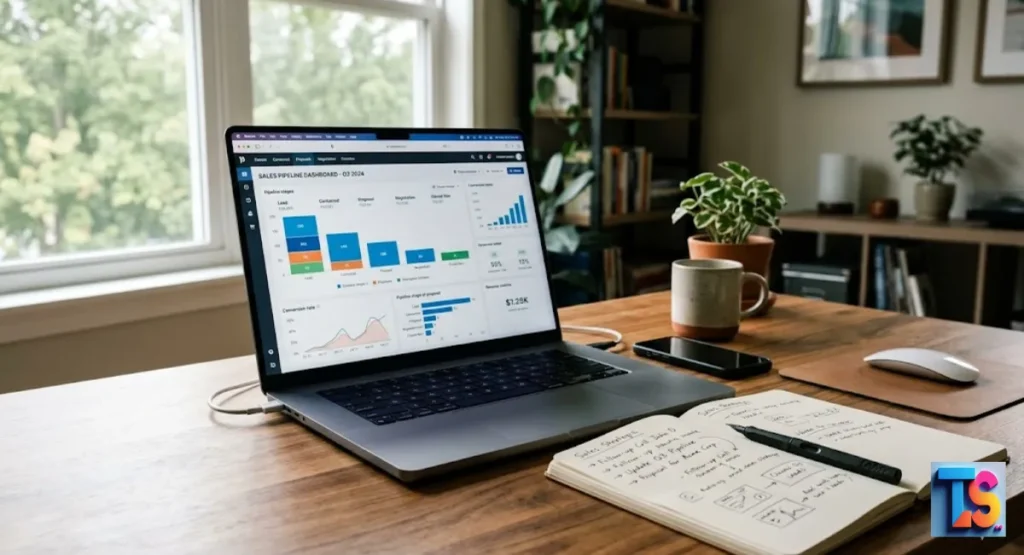
Calculating a clear ROI for local SEO vs. Local PPC is the most important step for any business owner wanting to grow in 2026. You might feel torn between the quick results of paid ads and the lasting power of organic search rankings.
But you don’t have to choose just one path. By tracking your marketing budget and understanding your customer acquisition cost, you can build a system that works around the clock.
This guide helps you weigh cost per lead against your total revenue growth. So, stop guessing where your money goes. Start using these conversion tracking methods to spend smarter, lower your expenses, and dominate your local area results today.
The Financial Framework: Core ROI Formulas for Local Businesses
You calculate your return by subtracting total marketing costs from your total revenue generated. Divide that profit number by the total cost to get your final percentage.
Proper conversion tracking protocols and Advanced Local Marketing Attribution allow you to compare these two channels and see which one drives the most growth. This ensures your business makes data-based financial decisions every month.
To measure success, you must look at your total investment versus your profit. If your business spends money on an agency, software, or ads, you must count those costs.
- List all monthly marketing expenses.
- Track the exact revenue from each lead.
- Subtract costs from revenue to see profit.
In 2026, experts agree that local search visibility requires a clear view of your financial data to stay ahead of competitors.
Calculating True Local PPC Returns (Accounting for Hidden Fees)
You must include every single fee when you calculate your PPC returns to see the full picture. Do not just look at your ad spend. Include management fees, software costs, and landing page maintenance.
If you spend $1,000 on ads and $500 on fees to make $3,000, your total cost is $1,500. This math shows your true business profit.
Management fees are often overlooked. If you pay a team to run your ads, add that cost to the bill. Landing page hosting and design tools also add up over time.
| Cost Item | Typical Monthly Impact |
| Google Ad Spend | Variable |
| Agency Fees | Fixed |
| Tool Subscriptions | Low |
In 2026, businesses that track hidden fees see 20 percent more profit than those that ignore them.
Calculating Local SEO ROI (Factoring in Your Setup Time and Retainers)
SEO is a long-term investment that requires patience and dedication from your team. You must include your monthly retainer, content creation, and time spent on your profile.
Because SEO builds a permanent asset, you should spread these costs over a full year. This strategy helps you understand the true value of your ongoing efforts in search.
Think of SEO as buying a house rather than renting an apartment. You pay for maintenance and content, but you own the rankings.
- Set a budget for 12 months.
- Include costs for reputation management.
- Factor in time spent updating your profile.
In 2026, search engine algorithms prioritize businesses that maintain consistent, high-quality local review signals over time.
Local SEO vs. Local PPC: Cost-Per-Lead and Conversion Benchmarks

You compare channels by looking at your cost-per-lead and how many leads become actual customers. PPC gives you fast traffic, but it costs money for every click.
SEO takes time to build map pack visibility, but it brings free, high-intent traffic. Use these benchmarks to decide where to put your digital marketing budget for maximum growth.
| Metric | Local SEO | Local PPC |
| Speed of Results | Slow | Fast |
| Cost per Lead | Low over time | High |
| Lead Quality | High intent | Mixed |
In 2026, data shows that organic leads are often more loyal than paid clicks.
Hidden Traffic Costs: Google Ads CPC vs. Organic Maps Maintenance
Google Ads uses a cost-per-click model that can change based on how many people bid on your keywords. SEO requires steady effort on your business profile, citations, and content.
While PPC stops working the moment you turn off your spend, SEO creates a footprint that continues to bring in new potential customers for free.
PPC costs rise during busy seasons. If a competitor bids more, your costs go up. SEO costs stay flat even if your traffic goes up.
- PPC depends on high bids for top spots.
- SEO relies on local citations and reviews.
- Free organic traffic replaces paid clicks.
Maintaining your organic presence saves money over the long term.
Conversion Rate Realities: Organic Intent vs. Sponsored Clicks
Users often trust organic map results more than paid ads. This leads to higher conversion rates for your business. You must track where your leads come from to see the difference.
Often, organic leads turn into loyal, repeat customers who cost you less than those who found your business through expensive paid search clicks.
Organic searchers have a clear problem. They want results. They trust local map rankings. Repeat customers increase your total revenue.
In 2026, user trust in organic search has reached an all-time high.
Step-by-Step Blueprint to Measure and Attribute Local Leads
How to attribute offline leads to local SEO efforts, attribution links your sales back to the marketing source that brought the customer. Without this, you are just guessing. Use tracking tools to watch the local search customer journey from the first search to the final sale.
This helps you understand how local search intent turns into actual revenue for your local service business and improves future marketing decisions.
Follow these steps to track your results correctly:
- Use unique phone numbers.
- Apply tracking codes to website links.
- Record the original traffic source for every lead.
This lead attribution modeling prevents you from wasting your budget on the wrong channels.
Step 1: Isolating Phone Calls and Map Clicks Using UTM Tracking
You need to use unique tracking codes for your website links and dynamic phone numbers for your business profile. These tools show you exactly if a customer found you through an ad or an organic result. This data lets you split your revenue sources clearly in your reports to see which specific effort brought profit.
UTM codes track where the visitor clicks. Call tracking records the source of every phone call. Digital marketing budget decisions become easy with this data. These tools clarify the journey of every single customer.
Step 2: Calculating Customer Acquisition Cost (CAC) by Channel
The role of GEO-tweaks in local search visibility, to find your customer acquisition cost (CAC), divide your total monthly spend by the number of new customers. If you spend $500 on SEO and get 10 customers, your cost is $50 per customer.
Compare this to your PPC costs. This simple math helps you put your money into the channel that brings the cheapest customers.
- Take the total spend for one channel.
- Divide by new customers.
- Compare the result against your target profit.
Low CAC means you have more room to grow.
Step 3: Factoring in Customer Lifetime Value (CLV) for Local Services
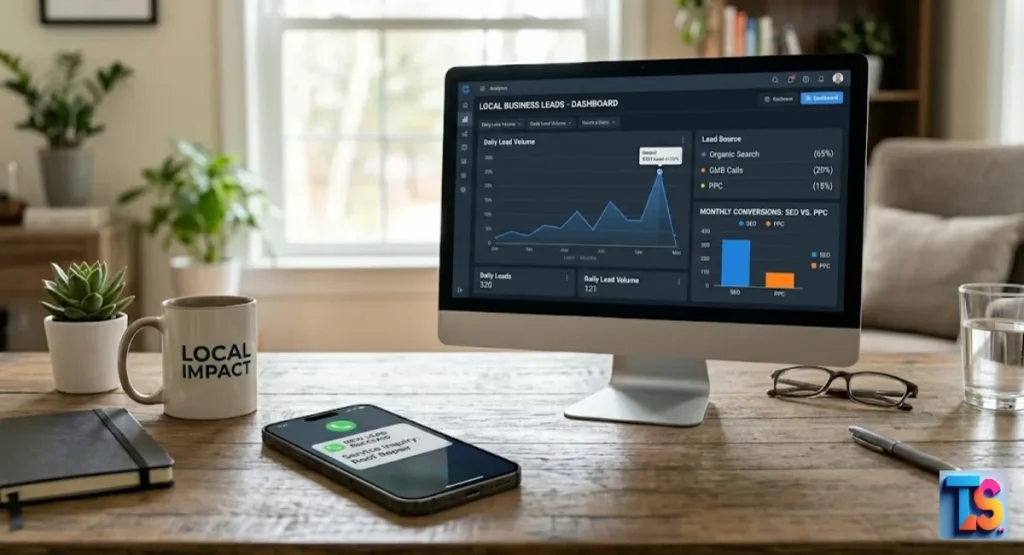
Understanding the local search customer journey for service businesses, a lead is more than just a single sale. You must calculate the total money one customer spends with you over several years. Local SEO usually brings in customers who stay longer because they trust your brand more.
Research shows that businesses with a strong organic presence often keep customers for a much longer time.
Calculate CLV by looking at average customer retention:
- Total yearly revenue per customer.
- Average number of years they return.
- Cost to serve that customer.
Long-term value makes SEO a very strong investment for any local business.
The 12-Month Timeline: When Does SEO Outpace PPC Profitability?
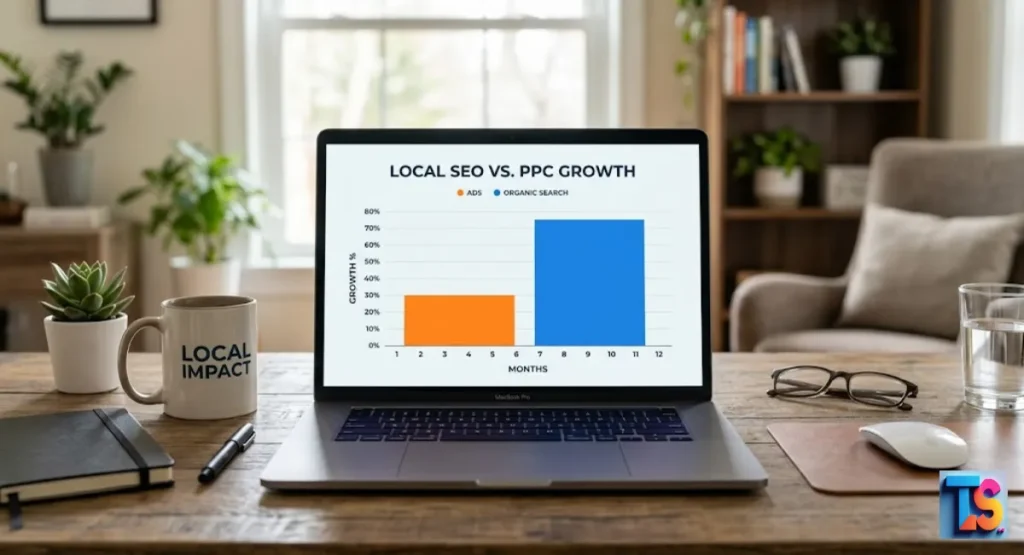
SEO builds value over time, while PPC offers a quick fix. In the first six months, PPC will likely bring more leads. However, as your organic visibility grows, your need for paid ads should drop.
This transition allows your overall marketing efficiency to improve as your organic presence becomes a powerful, self-sustaining business asset for your brand.
- Months 1-6: Focus on quick PPC leads.
- Months 7-12: Scale organic traffic.
- Year 1+: Benefit from free leads.
This timeline helps you plan your cash flow properly.
Months 1 to 6: Absorbing Upfront Costs and Building Equity
During these months, you are setting up your presence. You rely on PPC to get customers right away. Your SEO costs will seem high compared to your results, but you are building a strong foundation.
In 2026, building this equity early is vital for long-term dominance in the Google search engine rankings for your area.
- Start your Google Business Profile.
- Gather as many reviews as possible.
- Run PPC to fill your schedule.
You build trust and authority during these initial months.
Months 7 to 12: The Compounding Magic of the Google Local Pack
By month seven, your SEO efforts should start showing results. You will see your organic traffic climb. As your ranking improves, you can lower your PPC budget.
This lowers your total cost-per-lead and helps you earn more profit from every job you complete. This phase is where your strategy finally begins to pay off for your company.
- Watch organic traffic increase.
- Reduce paid ad spending.
- Increase profit margins per lead.
Your organic presence begins to do the heavy lifting.
Beyond Year 1: Calculating the Long-Term Asset Value of Rankings
After one year, your SEO rankings become a stable business asset. This asset drives traffic for free. You no longer need to pay for every click.
If you calculate the cost of that traffic at PPC rates, you will see the huge value you have built. Your business is now much more profitable than before for owners.
Your rankings act like a permanent billboard in your local market. No more per-click costs. Consistent flow of new leads. This equity is the biggest benefit of a successful SEO campaign.
Budget Allocation Framework: The Ideal Hybrid Investment Ratio
A hybrid approach is the smartest way to grow your business. You use PPC to fill your schedule quickly while SEO works in the background to build your authority.
This balance keeps your pipeline full while moving your business toward a cheaper, organic-heavy model. Use this mix to protect your growth against market changes effectively.
| Period | PPC Budget | SEO Budget |
| First 6 Months | 80% | 20% |
| After 1 Year | 20% | 80% |
This balance helps you survive today and thrive tomorrow.
When to Aggressively Fund Local PPC (Emergency Services & New Launches)
Use PPC when you need leads today. If you launch a new business or offer emergency help, you need to appear at the top immediately. When people have an urgent problem, they click the first link they see.
PPC ensures you are that first link while your organic search strategy is still developing in the background.
- Target keywords with high urgency.
- Show up instantly for new launches.
- Keep your schedule full during the startup phase.
This strategy ensures that you never run out of work.
When to Pivot Capital into Local SEO (Market Domination & Cost Reduction)
Once you have a steady stream of leads, move your money to SEO. Better organic rankings in the map pack lower your long-term costs. This makes your brand the top choice in your city.
This move is necessary for sustainable growth and helps you secure your market share against your local competitors in the long run.
- Focus on long-term authority.
- Lower your overall customer acquisition cost.
- Dominate the local search results.
As your rankings rise, you dominate the market while spending less per lead.
Real-World Case Study: Blending SEO and PPC to Slash Acquisition Costs by 50%
A local HVAC company needed to lower its high costs. They spent almost all their money on PPC ads. They shifted 30% of that budget to local SEO for six months.
This improved their map ranking. Their total cost to acquire a customer dropped by 50% because they gained more free, high-quality organic leads for their business.
The previous model relied on paid clicks. The new model combined organic and paid efforts. Costs dropped as rankings improved.
This shift shows the power of a balanced, data-driven approach to marketing.
FAQs
How long does it take for Local SEO to show a positive ROI?
Most local businesses see a positive SEO return between 6 and 12 months. This timeline depends on your local competition and how effectively you manage your Google Business Profile. Consistent, high-quality reviews are a major factor in 2026 that helps you rank faster and achieve profitability sooner.
Should I stop running Local PPC ads once I rank #1 organically?
You should keep a small PPC budget running even if you rank first. This provides a safety net for keywords where you do not rank yet and protects your market position against algorithm changes. A hybrid approach ensures you never miss a lead, even during competitive market shifts.
What is a good baseline ROI for a local service business?
A healthy baseline for local services is a 3:1 or 5:1 return on marketing spend. This means for every $1 spent, you earn $3 to $5 in revenue. You should always aim to lower your acquisition costs over time by building your organic reach for better long-term security. The bottom line is to stay consistent and keep tracking your numbers.