Mastering B2B lead research techniques is essential for any modern marketing team aiming to build a sustainable and high-quality sales pipeline. Instead of relying on outdated, static lists, successful organizations now utilize data-driven insights to uncover high-value prospects with precision.
By integrating lead-generation strategies with advanced outbound marketing tactics, businesses can identify decision-makers actively seeking solutions to their specific pain points. This proactive approach significantly improves your conversion rate and ensures your outreach remains relevant and highly targeted.
Ultimately, by combining deep market intelligence with automated sales prospecting tools, you create a robust foundation that consistently attracts qualified accounts, minimizes wasted efforts, and drives measurable revenue growth for your company.
The Shift in B2B Lead Research: Why Traditional Lists Fail
Traditional lead lists provide stale information that rapidly degrades in accuracy, leading to high bounce rates and damaged domain reputations. High-performing teams now replace these lists with custom research protocols that prioritize real-time data verification.
This transition protects your outreach infrastructure by ensuring every communication targets active, relevant, and verified business entities. It is vital.
Mass-purchased lists often result in high bounce rates, which trigger spam filters and damage long-term deliverability. Instead, successful teams now prioritize account-based research.
This involves identifying specific triggers, such as a company hiring for a new department or upgrading its technology stack. By targeting these signals, you reach companies when they face immediate needs, rather than relying on outdated contact databases. Do not use them.
1. Defining Your 2.0 Ideal Customer Profile (ICP)
A 2.0 Ideal Customer Profile identifies prospects by combining firmographic data with behavioral intent and technological markers. You must define your target by the specific tools they utilize and the active pain points they seek to resolve.
This granularity ensures your outreach focuses exclusively on accounts that offer the highest lifetime value. Get specific.
To build a high-performing ICP, analyze your current best customers for deeper commonalities. When you need to find a company website domain from name, use advanced search operators or reverse lookup tools to verify their digital footprint before adding them to your target list.
This proactive filtering prevents the accumulation of low-quality, unreachable leads in your sales pipeline. Stay clean.
2. Tracking Real-Time Intent Signals Over Static Data
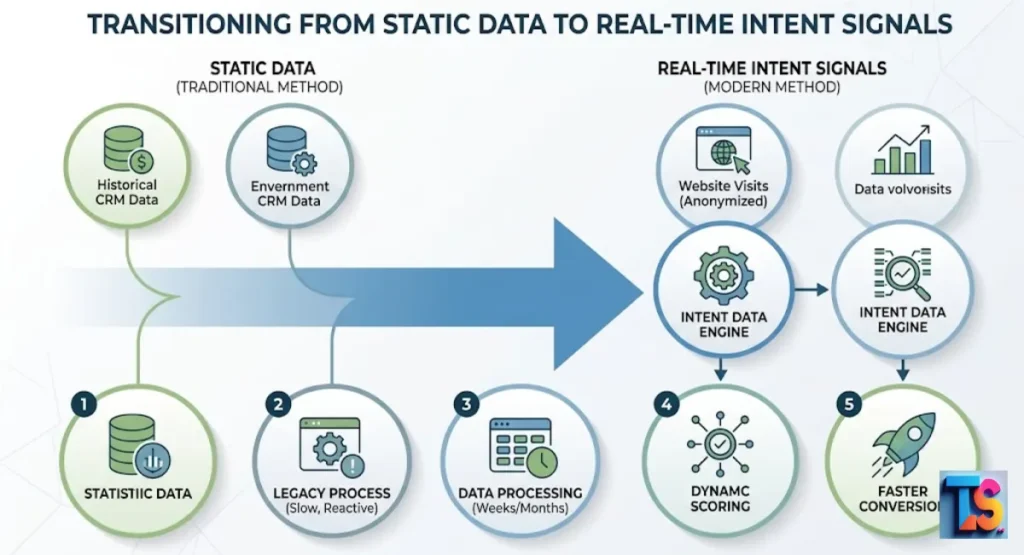
Real-time intent signals capture the precise moment a lead demonstrates a need for your services, allowing for timely and relevant engagement. Monitoring these triggers enables you to prioritize prospects who are actively researching solutions.
This strategy improves engagement rates by ensuring your outreach aligns with the current internal priorities of the target organization. Focus here.
Focus on primary signals like new job postings or recent funding announcements. To find a company name from an email domain, look for domain-to-company lookup APIs that map unknown contacts back to their parent organizations.
Prioritizing these verified connections prevents data decay, which ruins outreach performance in modern sales operations. Do this now.
3. Advanced Social Selling and LinkedIn Research Workflows
LinkedIn serves as a powerful intelligence hub when used for structured stakeholder mapping rather than generic connection requests. By mastering manual profile analysis, you uncover the decision-makers who truly influence purchasing behavior.
This focused research strategy allows you to bypass the noise and speak directly to the individuals responsible for solving the problem. It is powerful.
To find the right stakeholders, prioritize professional mapping. To find the CEO’s LinkedIn profile from the company domain, follow this workflow: Navigate to the company page on LinkedIn, select the People tab, and filter by current position to identify the primary leadership contact.
Review their recent comments to understand their professional priorities, allowing you to tailor your connection requests to their specific interests. Be smart.
4. The Multi-Channel Outbound Research Blueprint
A multi-channel research strategy cross-references data from multiple sources to ensure accuracy before outreach begins. By validating email patterns against the company infrastructure, you create a robust foundation for your sequences.
This rigorous validation process minimizes bounce rates and ensures that your technical setup maintains high deliverability across all your communication channels. Stay safe.
| Technique | Goal |
| Domain Enrichment | Find the company website domain from the name |
| Data Enrichment | LinkedIn profile: Find the company name from the email domain |
| Email Reverse Search | Contact Mapping |
| Web Scraping | URL Verification |
| Professional Mapping | Find the CEO’s LinkedIn profile from the company domain |
| Stakeholder Identification | Stakeholder Identification |
5. Beyond BANT: Modern Lead Qualification Frameworks
Modern qualification replaces static BANT models with frameworks focusing on mutual value and collaborative problem-solving. This approach evaluates whether your solution fits the specific ecosystem of the prospect and addresses a time-sensitive business challenge.
Successful qualification focuses on identifying the priority and internal infrastructure, ensuring your solution is a genuine fit. It is better.
Instead of asking if they have the budget, evaluate if they have the internal priority. If the problem is critical enough to the business, the budget will be allocated.
This strategic perspective requires an assessment of their current technical debt and operational maturity to confirm whether they are genuinely ready for your solution. Look closer.
6. Building Your Lead Research Tech Stack

A high-performance research stack integrates automated scraping tools with manual verification workflows to maintain extreme data quality. By utilizing API-level validation, you ensure that every contact is deliverable and relevant.
This setup empowers your team to spend their time on revenue-generating conversations rather than managing bad contact data or repairing reputation. Build this.
Essential components of your stack should include domain intelligence tools for finding company information from web footprints. Integrate LinkedIn automation tools to streamline the identification of stakeholders.
Always employ data validation APIs to ensure email addresses are live and deliverable before outreach, and maintain a centralized CRM to store verified intelligence. Keep organized.
Actionable B2B Lead Research Checklist for Sales Teams
Consistency in data verification represents the secret to high-value account acquisition. Teams that adhere to a strict vetting process before initiating outreach see significantly higher conversion rates.
This checklist ensures that every prospect in your funnel is thoroughly qualified, minimizing wasted effort and protecting the health of your outbound domain. Check this list.
- Confirm the company website domain is accurate and active.
- Verify the target decision-maker is still currently employed at the firm.
- Identify at least one relevant trigger event or pain point for the company.
- Check for recent news or press releases to provide context for your outreach.
- Cross-reference the company name against your current CRM to avoid duplication.
- Review the LinkedIn profile of the key stakeholder to find common ground.
- Validate the primary contact email address using a professional verification tool.
The Bottom Line
You must verify everything. Stop guessing. Start winning.