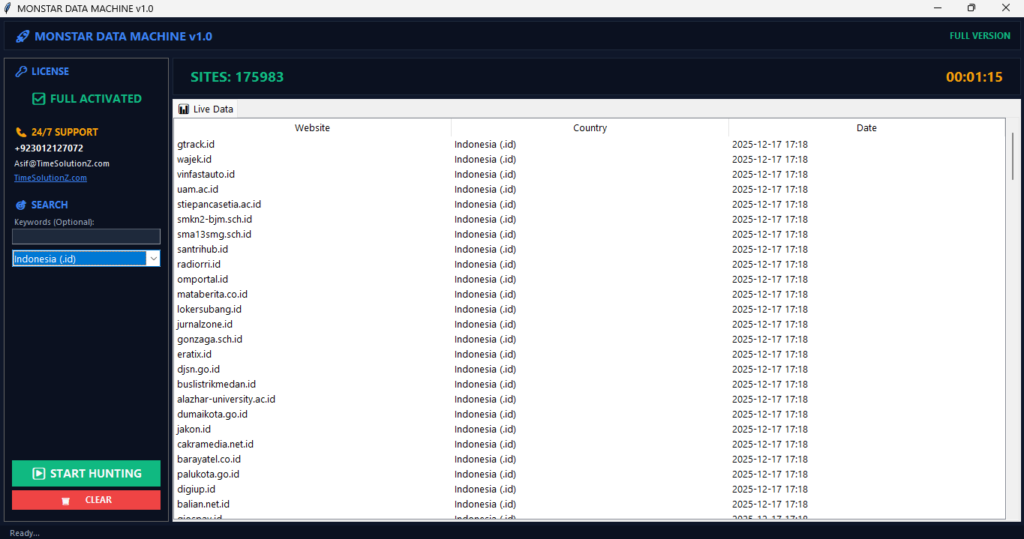
Advanced Data Harvesting & Scraping is the secret weapon for businesses that want to win in 2026. Instead of manually copying info, you use smart code to gather millions of rows of data automatically.
This process turns the messy internet into a gold mine for your company. To succeed, you must understand the difference between simple web crawling and complex data pipelines. High-level operations use automated extraction to feed your databases with fresh, accurate facts every single day.
By using the right proxy management and data parsing tools, you can stay ahead of your rivals. Stop wasting your precious time on slow work. Build a reliable system to gain the clear, actionable intelligence you need to grow fast.
Understanding the Landscape: Data Harvesting vs. Web Scraping
Data scraping is like using a sharp knife to cut one specific piece of info from a page. Data harvesting is the whole big factory system that collects massive piles of data from websites over a long time.
You need to know this difference to build good systems that feed your business databases.
- Data Scraping: It is targeted work. You pick exact spots on a page and take text, prices, or photos from a list of links.
- Data Harvesting: It is wide-scale work. You crawl through thousands of pages at once to build a big, searchable pile of data.
Think of it this way. Scraping is reactive, meaning you do it when you need one thing. Harvesting is proactive, meaning you set it up to run on its own. You use custom scraping scripts as the engines.
They push the data flow you need for a strong system. It must handle millions of rows of data without crashing.
The Legal and Ethical Framework of Data Harvesting in 2026
Staying legal in 2026 means you must know the difference between public stuff and private stuff. You can grab info that anyone can see. But you must be nice.
Do not hurt the website’s speed. Follow privacy laws. This stops lawsuits. It keeps your work safe.
Responsible harvesting needs these rules:
- Respecting Server Load: Do not flood the site. Slow down your speed. This keeps the site from crashing like a bad attack.
- Identifying Your Bot: Tell the site who you are. Use a clear name in your header. Site owners like this.
- Data Minimization: Take only what you need. Stop there.
Before you start, check the site’s terms of service. Courts protect private, hidden data. Always stay inside the lines.
Only take what the public can see. Do not break through login walls. This keeps every row of your data safe and clean.
Advanced Techniques for High-Scale Data Harvesting
To get lots of data, you need a smart setup. You need to rotate your proxies. You need to copy human headers. You need to run browsers that act like real people to keep your connection alive.
You should separate your request work from your reading work. This lets you handle many tasks at once across many computers. You can even extract B2B Leads from Niche Directories to help your sales team reach new people at a huge scale.
Architecting Scalable Scrapers
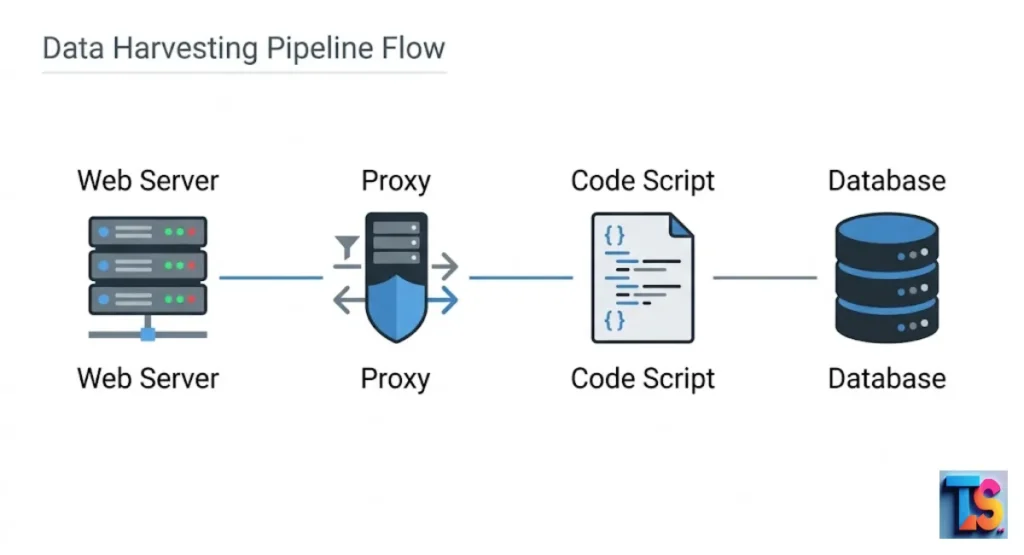
Scalable scrapers work by pulling apart the request part and the reading part. Use a message queue. This sends tasks to many different computers. If one part breaks or gets blocked, the whole thing keeps going.
This is a must when you process millions of pages. It stops your pipeline from choking on data.
Recursive Filtering to Bypass Pagination Limits
Many sites hide their best data behind buttons. Or they use hard-to-follow links. Don’t waste time typing page numbers. Use recursive crawling. Scan the code for links that lead deeper into the site.
This lets your script map the whole site map on its own. It moves like a spider.
Extracting Hidden Data from JavaScript-Heavy Pages
Modern websites use a lot of code to load stuff after you open the page. A basic request will miss all of this. Use headless browsers. Or grab the network files.
This pulls the raw JSON data that the page uses to show content. It is often much faster. And it is easier to read than messy HTML.
Essential Tools and Technologies for Modern Developers
Modern data harvesting needs a full toolkit. You need to handle dynamic loading. You need proxy rotation. You need to organize your data. Python is still the king here. It has the best libraries.
You also need special services to manage IP rotations. These tools help you Clean Raw Scraped CSVs for outreach, so your list is ready for real people.
- Programming Frameworks: Playwright and Puppeteer take over your browser. Scrapy handles fast, async requests.
- Infrastructure: Use residential proxy networks. These use real home internet connections. They are not like data centers.
- Data Management: PostgreSQL or MongoDB are perfect for storing your raw work. Keep it there until you scrub it.
Challenges in Data Harvesting and How to Overcome Them
The biggest headaches are IP bans and bot blockers. Websites change their look often. You have to be ready. You need to avoid IP Blocking While Scraping by using rotating residential proxies.
You also need to track your own work. Use monitoring tools to spot when things go wrong.
To beat structural changes, use a schema-validation layer. If a website changes its layout, your parser will hit a wall. Stop it right away.
Do not let bad, corrupted data get into your charts. Catch the error. Fix the parser. Keep the data flow perfect.
Choosing the Right Approach: In-House vs. Outsourced Services
Should you build it yourself or pay someone else? It depends on your volume and your tech skills. Building it yourself gives you full control. It saves cash over time.
Outsourcing gets you moving faster. Look at your team. Look at your budget. Choose the path that lasts.
| Feature | In-House Development | Outsourced Services |
| Control | Full control over logic | Limited to service capabilities |
| Maintenance | Requires dedicated headcount | Handled by provider |
| Cost Structure | High fixed costs | Variable subscription costs |
| Scalability | You manage infrastructure | Instant scaling |
Build in-house if your data is a secret weapon. Build it if you need deep links to your software. Outsource if you need standard data fast.
Outsource if you hate managing proxies. Let the pros handle the messy tech.
The Future of Data Harvesting: AI, Automation, and Beyond

Future systems will be self-healing. They will fix their own scrapers when sites change. The world is moving to dynamic loading. Static scripts will die out.
Smart systems will see a layout shift. They will change their own code to match. They won’t need you to fix them. They just run. They stay fast.
FAQs
What is the difference between data harvesting and data mining?
Data harvesting is the collection part. You pull it from the web and store it. Data mining is the brain work. You study the stored data to find trends or facts. You cannot mine until you harvest.
Is data harvesting legal in 2026?
Yes, if the data is public. It is legal. But if you jump a wall, that’s bad. Don’t ignore terms of service. Don’t break privacy laws. Talk to a lawyer if you aren’t sure. Keep it clean.
How can developers overcome pagination limits when scraping large datasets?
Stop using page numbers. Find the hidden API calls the site uses. Send requests directly to the API. This gets the data in chunks. It is faster. It hurts the server less.
How do you ensure compliance with data privacy laws when harvesting data?
Clean the data fast. Take out names and IDs if you don’t need them. Follow “do not track” signals. Lock up your storage. This protects your users. It protects you from the law.
Can you harvest data from websites that require a login?
Yes. But it’s hard. You must manage tokens and cookies. It is risky. It often breaks site rules. Only do this if you have real access. Don’t get your IP blacklisted.
Summary
Advanced data harvesting is the secret sauce for winning. It builds the base for your big wins. Move past basic scraping. Build systems that are smart, fast, and steady.
You will get a huge edge in the market. You will find better leads. You will win. The bottom line is that a strong setup respects the site while grabbing the high-value data you need to grow your business.