Strategic planning for scaling a marketing agency is the definitive turning point between a chaotic, unpredictable workflow and an automated, highly profitable growth engine.
Many agency owners struggle to move past delivery pipelines because they rely on broken, manual systems that drain billable hours. To experience true business expansion, your leadership must transition from general operations to long-term agency growth.
By mapping out repeatable client onboarding frameworks, standardizing core deliverables, and expanding your specialized team, you protect your bottom-line revenue. This guide details exactly how to build a Scaling Agency Infrastructure that enhances profit margins without sacrificing work quality.
Why Most Marketing Agencies Hit a Growth Plateau (and How to Break It)
Most marketing firms stop growing because the owner stays completely trapped inside the daily client fulfillment work. When every single account relies on your personal approval, you quickly run out of usable hours.
To break this growth ceiling, you must build independent systems and train your workers to handle delivery without your supervision. You are trapped. It feels terrible.
Many agency founders get stuck at a specific revenue level because they treat their business like a job they own. To break through this wall, you must stop doing the technical work and start designing the workflows.
This means establishing documentation for every major process and building an intermediate layer of management. By giving your team ownership over separate accounts, you stop being the bottleneck.
This shift changes your agency from a stressful freelancing group into a self-sustaining corporation that can handle double the clients without breaking. You become a true boss.
Run the business. Do not let the business run you. This is the core of Strategic planning for scaling a marketing agency. If you copy your own brain into clear rules for your team, they will win. And you will finally get your free time back.
The Difference Between Growth vs. Scaling Your Agency
Understanding the true difference between growth hacking and traditional marketing agency methods helps you expand correctly. Growth means adding expensive resources at the exact same rate you add fresh revenue. Scaling means your company increases income much faster than internal costs by utilizing efficient operational systems that allow your team to handle more work. Look at the math. It does not lie.
- Growth: +10% Clients = +10% Staff = +10% Overburdened Systems
- Scaling: +50% Clients = +5% Smart Automation = +45% Net Margin Profit
When you simply grow, you add a client and immediately have to hire a new account manager. Your profit margins stay flat because your overhead costs match your incoming money. When you scale, you use standardized playbooks and flexible tools to handle more accounts using your current head count.
Specialized agencies targeting a narrow niche often achieve 30% net profit margins, compared to the industry average of just 13%. True scaling focuses on expanding your financial intake while keeping your core operational costs relatively flat. You keep more cash. It is that simple.
Growth alone can actually kill your bank account if you are not careful. Scale instead.
The “Forest and the Trees” Framework: Thinking Ecosystem, Not Day-to-Day Survival
The forest framework requires modern business owners to look directly at the whole company ecosystem instead of single tasks. The trees are your daily emails, urgent client calls, and immediate fires.
The forest represents your overall market positioning, your total financial health, and the long-term operational foundation that keeps your business running smoothly. Open your eyes. Look up.
If you spend every morning writing social copy or fixing ad accounts, you are looking only at the trees. You cannot see the structural issues that might cause client churn later.
To build a healthy ecosystem, you must step back and analyze how different departments connect. For example, look at how your client acquisition model impacts your fulfillment team.
When you adjust the framework rather than fighting daily fires, you create a smooth, predictable environment where every component supports long-term health. Stop answering every random text. Let your team handle the small issues while you fix the big machine. If the machine works, the fires stop burning.
Moving from Operator to Leader: The Mindset Shift Required to Scale
Moving from operator to leader means you completely stop being the primary daily problem solver for your demanding accounts. You must transition fully into a strategic director who builds capable teams and sets clear goals.
This vital change requires letting go of micro-management and fully trusting your documented procedures to run the company. Let go now. Trust your people.
Many agency founders struggle with this shift because they believe nobody can do the work as well as they can. This mindset keeps you trapped doing low-value tasks instead of high-level strategy.
To become a leader, you must accept that a trained employee using a clear workflow can finish tasks effectively. Your new job is to provide resources, clear away team roadblocks, and monitor high-level business metrics.
When you stop controlling every small detail, you empower your staff to step up and handle account delivery successfully. They will surprise you. Give them the keys to the car. Watch them drive it perfectly while you build the next highway.
Phase 1: Building a Scalable Operational Infrastructure
Building a strong operational foundation requires a complete focus on your internal processes and structural team setups. You cannot grow your active client base safely if your current staff is completely overwhelmed by disorganized tasks.
Establishing a solid operational infrastructure ensures your company handles double the work while maintaining excellent quality and client safety. Fix the back office first. Otherwise, it collapses.
To scale successfully, an agency must completely transform how work gets done across all departments. This structural transformation involves mapping out current bottlenecks and creating workflows that function smoothly without direct owner intervention.
When your infrastructure is built correctly, the business can seamlessly absorb sudden market demands while keeping your internal team members protected from extreme exhaustion.
No more sleepless nights. No more crying at desks. Just clean, smooth work that flows like a river from one step to the next every single day.
Standardizing Operations: Creating SOPs for Repetitive Tasks

Standard operating procedures are clear written instructions that show your team exactly how to complete recurring daily tasks perfectly. Standardizing your daily work ensures that every single client receives high-quality service regardless of which employee handles the account.
This smart practice simplifies new training and significantly cuts down on expensive operational mistakes across your firm. Write it down. Make it clear.
Without clear instructions, every team member completes tasks differently, creating chaotic results for your clients. Sit down and record screen videos of your most common processes, like keyword research or monthly report generation.
Turn these videos into short checklist documents. Store these playbooks in an accessible central library. When your daily operations follow a repeatable blueprint, your business can onboard new employees quickly and maintain consistent quality. It works like magic.
A new hire can walk in on Monday and do perfect work by Tuesday just by reading your list.
Optimizing the Client Onboarding Process to Prevent Early Churn
A messy onboarding process remains a primary cause for early client loss and massive internal team frustration. Your core onboarding framework must guide new accounts from the initial contract signing to campaign launch smoothly and clearly.
A structured start builds deep client trust and sets clear, healthy operational boundaries for your business relationship. First impressions matter. Do not drop the ball.
The first 30 days of a client relationship determine how long that client stays with your firm. Create an automated welcome sequence that gathers necessary login permissions, schedules kickoff meetings, and explains communication expectations instantly.
Use pre-made dashboard templates to show progress without requiring long status calls. Giving clients immediate visibility into your initial steps eliminates anxiety, prevents buyer remorse, and reduces early turnover.
They feel safe with you. They see you know what you are doing. That keeps them paying month after month.
Streamlining Your Tool Stack: Essential Technology for Agency Growth
A bloated tool stack quickly drains your company profits and deeply confuses your active workforce during delivery. Streamlining your technology means choosing a few all-in-one tools that connect together seamlessly.
The ideal business technology stack always includes solid project management, customer tracking systems, internal communication channels, and completely unified analytics for your strategic team. Cut the waste.
| Tool Category | Core Function for Scaling | Primary Benefit |
| Project Management | Centralized task tracking and templates | Eliminates communication gaps |
| Unified Analytics | Automated client dashboard reporting | Saves worker time on manual sheets |
| Centralized CRM | Pipeline tracking and contract history | Prevents data loss between teams |
Many firms purchase separate software for every new problem, leaving data scattered across different platforms. Instead, select comprehensive systems that serve as a single source of truth for your entire staff. Keep your software expenses close to the industry average of 3.7% of total revenue.
Removing duplicate tools simplifies employee workflows, lowers technical costs, and keeps your project data highly organized. Stop buying shiny new apps. Use what you have to the max.
From Manual to Magical: Implementing Smart Automation and AI Workflows in 2026
Modern digital automation tools easily handle repetitive administrative duties without requiring constant human intervention. In 2026, successful marketing firms use intelligent workflows to summarize long client calls, sort support tickets, and build draft data reports.
This operational upgrade quickly frees up your human workers so they can focus on creative campaign strategy. Let robots do the boring stuff. Humans do the thinking.
Over 80% of modern marketing professionals use smart automation within their daily production lines. You can connect your communication channels to your project management software to create tasks automatically from client emails.
Set up backend systems to pull advertising metrics into client-facing dashboards every morning. Using smart tools to handle basic data entry allows your account managers to spend more time consulting directly with clients. This makes clients happy. It builds strong relationships that survive any market downturn.
Phase 2: Agency Financial Management and Scalable Pricing Models
Proper financial management is the cornerstone of expanding your business without running into sudden cash flow shortages. You must understand your exact operational costs and implement pricing models that protect your profit margins.
Managing your money correctly allows you to invest in better talent while maintaining long-term financial safety for everyone. Know your numbers. Count every single penny.
Financial tracking provides the baseline visibility needed to make major corporate decisions with absolute confidence. Without realistic financial systems, an agency might increase its client numbers while actually losing money on complex fulfillment operations.
Leaders must carefully monitor their agency margins to protect their net profits during phases of fast market expansion. If you do not watch your cash, you will wake up broke despite having fifty clients on your roster.
Why “Managing by the Checkbook” Limits Your Agency’s Growth
Managing by the checkbook means you judge your total financial health based only on your current bank balance. This dangerous habit hides upcoming tax bills, delayed vendor invoices, and true client profitability.
Proper scaling requires proactive accounting that accurately tracks future revenue pipelines and historical expense patterns across your entire business ecosystem. Stop doing this. It is a trap.
When you only look at your current cash balance, you might make bad hiring or buying decisions based on temporary cash peaks. You must separate your immediate cash flow from your earned monthly income.
Implement accrual accounting practices to view exactly when revenue is earned relative to when expenses hit. This financial clarity allows you to make safe investments in your infrastructure without risking sudden cash shortages. You will always know exactly how much real money you own.
Choosing the Right Model: Retainer vs. Project Revenue vs. Tiered Solutions
Your core pricing model directly determines your company’s cash flow stability and long-term scaling potential. Regular retainers offer predictable monthly revenue for ongoing services, while project fees cover one-time builds.
Modern tiered solutions allow different clients to choose specific service levels that fit their budgets perfectly without any hidden extra costs. Pick the retainer model. It wins every time.
[Project Billing]–> Unpredictable Cash Flow (High Churn Risk)[Monthly Retainer]–> Stable, Predictable Income (36-Month Average Lifespan)
Project-based firms suffer from fluctuating income because they must constantly close new deals to cover monthly payroll. Moving to a recurring retainer model builds a predictable financial foundation.
The average client lifespan for hybrid retainer models is around 36 months, providing long-term safety. Offer clear, tiered packages so clients can easily upgrade their service level as their own businesses expand. This locks in steady revenue you can count on.
How to Calculate the True Cost of Service and Protect Profitability
The true cost of service includes all direct labor hours and overhead software costs required to deliver a client project. To calculate this metric accurately, you must track employee time spent on specific client accounts.
Subtracting these direct expenses from your total client fee easily reveals your true gross profit margin for the business. Track every single minute. Do not guess.
Many agency founders believe an account is highly profitable just because the monthly fee is large. If your senior strategist spends 40 hours a month fixing problems for a difficult client, that account might actually be losing money.
Track employee hours against individual client accounts diligently. Aim for a gross margin of 50% or higher on every service line to ensure your agency has enough capital to fund internal growth. Fire clients who eat up too much time without paying for it.
Overcoming Pricing Pitfalls: Underpricing and Overlooking Overhead Costs
Underpricing your core services forces your business into a highly dangerous cycle of huge work volume and low profit margins. Overlooking hidden overhead costs like software licenses, payroll taxes, and legal fees completely destroys your net margins.
You must price your services based on the market value you deliver instead of basic production. Charge what you are worth. Stop being cheap.
When you price your work too low, you cannot afford to hire top-tier talent, leaving you stuck doing production work yourself. In 2026, clients frequently question traditional hourly billing because automated tools complete tasks much faster.
Switch to value-based pricing or flat-rate package models. Ensure your pricing covers all administrative overhead so your business maintains a healthy net profit margin between 18% and 32%. This keeps your business safe, strong, and highly profitable through the years.
Phase 3: Service Delivery, Diversification, and Specialization
Shaping your service delivery model is essential for expanding your business without reducing campaign service quality. You must balance deep specialization with smart diversification to protect your revenue streams.
Managing how you deliver your work allows your team to execute great campaigns while keeping your overall operational costs low across all departments. Focus your energy. Do not try to do everything.
Organizing your delivery methods prevents your agency from offering too many different services to too many different industries. This operational framework allows your creative teams to build massive authority within a specific section of the commercial marketplace.
A unified delivery methodology keeps your campaigns highly effective while significantly lowering your total production costs. When you build things the same way every time, you get faster. You get better. And your profit grows.
Scaling with Specialization: Finding and Dominating Your Target Niche
Deep specialization means focusing your entire company services on a highly specific industry or a single marketing channel. Dominating a target niche makes your sales process much easier because you become the obvious choice for those buyers.
It also simplifies operations because your team executes identical campaigns repeatedly for every single client. Pick one lane. Stay in it.
Generalist agencies try to sell every marketing service to every type of business, which makes their internal operations highly complex. Specialized firms can build highly optimized, repeatable delivery structures.
Agencies that focus on a narrow niche achieve average net margins of 30%, which is more than double the margin of generalist competitors. Specialization allows you to charge premium fees while lowering your production costs. You become the king of your small hill.
Expanding Service Offerings Without Overstretching Your Team
Expanding your service offerings should only happen after your core service line is fully profitable and automated. You can introduce complementary services that your existing clients are already buying from other outside vendors.
This smart adjustment increases your average deal size without requiring you to source entirely new clients for your firm. Grow slowly. Do not rush it.
If you run a successful search firm, consider adding website conversion optimization or email follow-up sequences. Do not add completely unrelated services that require hiring distinct, expensive specialists right away.
Test new offerings with your best current clients first to refine your internal delivery systems. This careful expansion protects your team from exhaustion while increasing your revenue per account. It is the safest way to build your empire.
The Benefits of White-Label Services and Outsource Strategies for Fast Growth
White-label services let you hire external partner firms to complete client work under your own brand. Knowing When to outsource vs. build an in-house lead gen team protects your capital.
This outsourcing strategy allows you to offer advanced services without hiring full-time employees immediately, helping you scale capacity quickly while keeping fixed overhead low. Use outside help. Save your money.
Building an internal lead generation or creative team can be slow and expensive. Using trusted white-label partners allows you to fulfill complex client projects immediately.
This approach keeps your operational costs flexible because you only pay for delivery when you have active client revenue. It provides an efficient bridge for your agency to test new service concepts safely before committing to permanent hires. It shields you from financial risk while letting you grow fast.
Preventing Revenue Concentration: Why You Shouldn’t Rely on a Few Key Clients
Dangerous revenue concentration occurs when a single large client accounts for more than twenty percent of your total company income. If that major client leaves unexpectedly, your business could face sudden financial distress or immediate staff layoffs.
Maintaining a balanced client portfolio always protects your long-term operational safety and financial stability. Spread your risk. Do not trust one whale.
It is comforting to land a massive client that pays a huge monthly fee. However, that client often demands special treatment, which pulls your team away from building scalable frameworks. Work to build an omnichannel pipeline that distributes your financial risk across 10 to 20 active accounts.
A diversified client roster ensures that losing a single account will never jeopardize your entire company. You can sleep easy knowing one bad phone call won’t ruin you.
Phase 4: Talent Management and Nurturing High-Performance Teams
Hiring and managing the right people is the most important factor in sustaining long-term company growth. You must build an environment where workers take complete ownership of their tasks and remain highly accountable.
Organizing your talent management processes keeps your workers happy, reduces employee turnover, and ensures consistent quality delivery. Your team is everything. Treat them right.
Managing top-tier professionals effectively allows an agency owner to step away from daily management tasks completely. This human resource framework focuses heavily on building clear tracking methods so everyone understands their separate operational responsibilities.
A supportive company culture improves your overall production quality while keeping your top performing workers highly motivated. When they love their jobs, they work harder for your clients.
Smart Hiring: Finding the Right Fit for Exponential Agency Growth
Smart hiring means selecting great employees based on their core cultural values and problem-solving skills rather than technical resumes alone.
For a business to scale properly, you need team members who adapt well to changing tools and take ownership of their metrics. Always hire slow to protect your internal culture. Take your time. Never rush a hire.
Personnel costs make up 40% to 60% of total agency revenue, making talent your biggest single investment. Do not hire out of desperation when you land a new account. Instead, use a structured multi-step interview process that includes a brief, paid skills test.
Look for self-motivated workers who communicate clearly and thrive inside documented systems. They are the bricks that build your permanent corporate home.
Efficient Onboarding and Upskilling to Keep Your Team Ahead of the Curve
Efficient onboarding ensures that new workers fully understand your company tools and standard procedures within their first two weeks. Continuous upskilling programs keep your current team educated on modern marketing tactics and updated workflows.
This regular training protects your overall service quality from slipping over time as the fast market changes. Train them well. Keep them sharp.
A weak worker onboarding process leaves new hires confused, leading to mistakes that damage client relationships. Build a standardized training portal containing your operational playbooks and video guides.
Dedicate time each month for your team to test new tactical approaches and earn professional certifications. Regular skill development improves your employee retention rates and keeps your agency ahead of standard competitors. They win, and you win too.
Building a Remote-Friendly Work Culture of Ownership and Accountability
A healthy remote-friendly culture relies completely on clear performance outcomes rather than hours spent sitting at a physical desk. To scale a distributed workforce, you must establish transparent tracking dashboards where everyone can see project deadlines.
This open environment builds mutual trust and encourages strong individual accountability across your business. Stop watching the clock. Watch the results.
Micro-managing remote employees with invasive tracking software destroys company morale and drives top talent away. Instead, focus entirely on project delivery dates and client satisfaction metrics. Use centralized chat spaces to keep your team aligned without overwhelming their inboxes.
When workers understand exactly what they are responsible for, they work independently and maintain high standards. They do not need a babysitter. They need a leader.
Staying on Top of Team Productivity Without Micro-Managing
Staying on top of team productivity requires clear project management tracking systems and regular check-ins. You must use digital boards to monitor the exact status of client deliverables in real time.
This high visibility allows you to spot bottlenecks early without constantly bothering or interrupting your active workers during the day. Look at the data. Leave them alone.
Set up short, weekly synchronization meetings where team members share what they finished, what they are working on next, and any current roadblocks. Use your project management tool to track your agency’s revenue per full-time employee, aiming for a healthy target of $163,000 or more.
This data-driven approach lets you judge team performance objectively based on actual output. It takes the emotion out of management completely.
Phase 5: Client Acquisition, Retention, and Relationship Mastery
Developing Sustainable client acquisition models for long-term growth ensures your business never runs out of fresh opportunities. You must balance finding new accounts with keeping your current clients happy and successful.
Mastering these relationship systems builds a reliable pipeline that supports steady expansion without unexpected drops in monthly recurring revenue. Keep the bucket full. Fix the holes in the bottom.
Managing accounts correctly involves building strong commercial frameworks that protect your internal team from unreasonable consumer demands. This operational strategy ensures your sales professionals bring in the exact type of clients who match your fulfillment capabilities.
A balanced relationship model ensures steady business growth while maximizing the long-term lifetime value of every account. You get better clients who stay longer and pay you more money willingly.
Building an Omnichannel Agency New Business Pipeline
An omnichannel pipeline uses multiple marketing channels to attract new high-value client opportunities consistently. Relying on a single source for incoming leads makes your business growth fragile and unpredictable.
A strong pipeline combines regular content production, targeted outbound messaging, and strategic partnerships to bring in fresh clients reliably month after month. Do not rely on luck. Build a system.
Over 75% of marketing firms rely on client referrals as their main source of new business, which can leave their sales pipeline vulnerable. To scale predictably, you must build active outbound systems.
Share case studies on professional networks, host educational webinars, and run targeted direct outreach campaigns. A multi-channel pipeline ensures a steady stream of incoming leads to support consistent growth. You always have a backup plan ready.
Client Retention as a Growth Strategy: Maximizing Lifetime Value (LTV)
Direct client retention focuses heavily on keeping your current accounts active and profitable for as long as possible. High client churn quickly destroys growth because you must constantly spend time and money replacing lost revenue.
Increasing your average client retention rate directly improves your overall company net margins over time. Stop losing clients. Keep them happy.
- High Churn: Acquire 3 Clients -> Lose 3 Clients = 0% Revenue Growth
- High Retention: Keep 3 Clients + Acquire 1 Client = 33% Revenue Growth
It is much cheaper to retain an existing client than it is to close a new one. Focus on delivering consistent campaign performance and send clear, regular progress updates. Schedule quarterly strategy reviews to show your long-term value and uncover new ways to help them grow.
Keeping clients happy for years builds a predictable financial foundation for your business. It is the ultimate growth hack.
Setting Boundaries with Clients: Managing Scope Creep Effectively
Dangerous scope creep happens when a client asks for extra tasks outside of your original contract without paying more money. Allowing this pattern to continue destroys your profit margins and completely overwhelms your delivery team.
You must establish clear, firm boundaries during your initial client onboarding phase to protect your operational safety. Say no nicely. But say it firmly.
When a client asks for extra work, reply politely with a structured change-order document that outlines the additional fees required. Ensure your initial contracts specify exactly what deliverables are included each month.
Setting firm, respectful boundaries protects your worker capacity and ensures you are paid fairly for all work completed. Never work for free. It devalues your brand and exhausts your best people.
Leveraging Existing Clients to Secure High-Value Referrals
High-value referrals come from current happy clients who introduce your business to other company owners in their networks. This powerful word-of-mouth introduction creates warm sales leads that convert quickly and close at higher rates.
You can collect these introductions easily by setting up a structured referral system for your agency. Use your fans. Let them sell for you.
Do not just wait around hoping your clients will talk about your work. Ask for referrals directly when you deliver an exceptionally successful campaign or a glowing monthly report.
Offer clear incentives, like a service credit or a bonus strategy session, to thank them for the introduction. A systematic referral approach turns happy clients into an active marketing team for your agency. It opens doors you could never open alone.
Measuring Success: Leveraging Data-Driven Insights for Agency Scaling
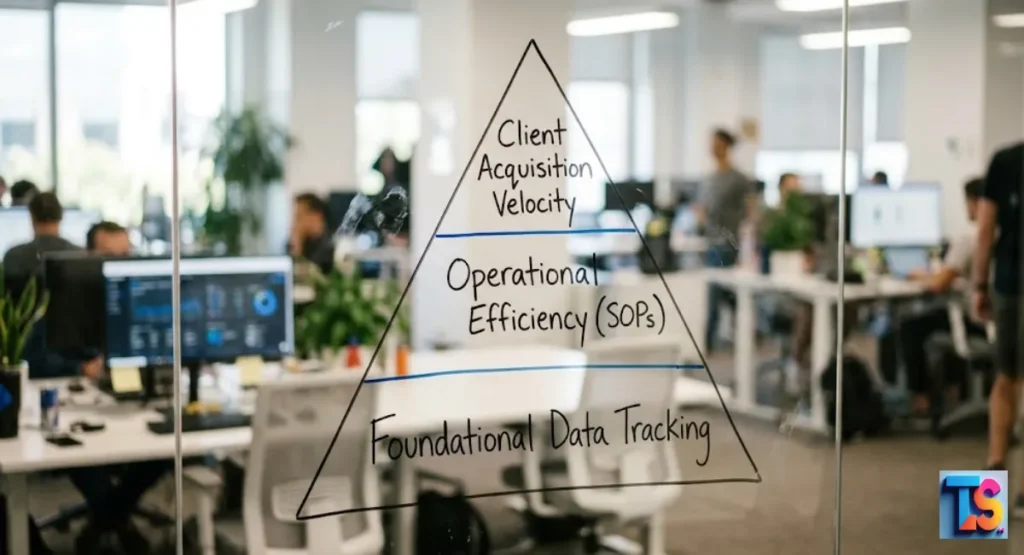
Measuring your business success requires a deep look at exact numbers rather than relying on gut feelings. You must track your operational and financial data consistently to understand how your company performs.
Turning these clean insights into clear decisions allows you to guide your business expansion safely and confidently without any guesswork. Trust the hard data. Ignore your emotions.
Analyzing corporate data correctly ensures that you discover minor system glitches before they turn into major structural emergencies. This regular accounting practice turns confusing marketplace variables into clear visual performance metrics that guide your daily workflows.
When you manage your metrics diligently, you eliminate emotional decisions and protect your entire company ecosystem. You run the business like a scientist in a lab.
Establishing Key Performance Indicators (KPIs) for Predictable Revenue
Key performance indicators are specific mathematical metrics that track the overall health of your daily business operations. To scale predictably, you must carefully track metrics like customer acquisition cost, monthly recurring revenue, and employee capacity utilization.
Monitoring these figures regularly allows you to make safe, data-driven decisions for long-term company success. Pick your key stats. Watch them daily.
Without clear internal metrics, you are running your business on guesswork. Track your pipeline conversion rates to see exactly how many leads you need to close a single account.
Monitor your monthly recurring revenue to understand your baseline budget before each month begins. These numbers show you exactly where your agency is succeeding and where your operations need adjustment. They remove the dark fog from your future.
Cash Flow Forecasting: Turning Financial Stress Into Strategic Confidence
Financial cash flow forecasting is the helpful practice of projecting your future cash inflows and expenses over the next ninety days. This smart habit helps you anticipate slow months, plan your hiring schedule, and manage software investments safely.
It completely replaces financial anxiety with clear, data-driven strategic planning for the business. Look into the future. Prepare for it now.
Create a simple financial sheet that tracks your active client retainers alongside your fixed overhead costs. Update this forecast every two weeks to account for any changes in client accounts or unexpected expenses.
Knowing your financial position three months in advance gives you the confidence to make smart investments or adjust your sales activity before facing a cash crunch. It keeps you clear of panic mode entirely.
Turning Data Insights into Actionable Agency Evolution
Turning data into real action means using your financial and operational metrics to upgrade your overall business structure. If your internal data reveals low profit margins on a specific service line, you must fix its delivery framework or raise your pricing.
Use your business metrics to guide all future strategic adjustments safely. Change with the facts. Do not freeze up.
Review your agency’s performance data thoroughly at the end of each quarter. If you notice a specific industry has a long client lifespan, focus your sales team on that target niche. If an internal process regularly goes over its budget hours, rebuild that standard operating procedure from scratch.
Using real data to drive your organizational adjustments ensures your business evolves efficiently. It guarantees you are always moving forward toward higher profits.
Marketing Agency Growth Trends in 2026: Staying Ahead of the Curve
The global marketing agency market is valued at 473.57 billion dollars, showing steady annual growth as businesses demand specialized support. The agencies growing fastest now move completely away from traditional hourly billing toward performance-based pricing models.
This major structural shift remains driven by automated tools compressing asset creation timelines everywhere this year. Things change fast. Keep up or die.
With smart automation handling basic content execution, clients now purchase a high-level strategic perspective and measurable business outcomes. Agencies that remain, generalist providers face tightening margins and intense competition.
Success requires mastering specialized workflows, maintaining strong multi-channel acquisition pipelines, and focusing heavily on long-term client retention. The year 2026 demands absolute excellence and hyper-focused execution from top agency leaders who want to scale their operations successfully.
Embracing Constant Experimentation and Creating Your Personalized Scaling Plan
Scaling a marketing agency remains a continuous process of testing workflows, analyzing data, and constantly refining your operations. There is no single template that fits every firm perfectly.
You must design a personalized scaling plan that aligns with your specific industry niche, financial targets, and personal management style for the best long-term results. Test everything all the time. Find your own way.
Start by auditing your current operational infrastructure. Identify your biggest business bottleneck this week, whether it is an unorganized onboarding process, messy tool usage, or a weak sales pipeline.
Build one clear standard operating playbook to fix that specific issue immediately. As you slowly remove yourself from daily production work, your marketing agency will build the structural strength required to scale sustainably.
The Bottom Line
You must step up and build a real machine that functions smoothly without your constant personal touch.