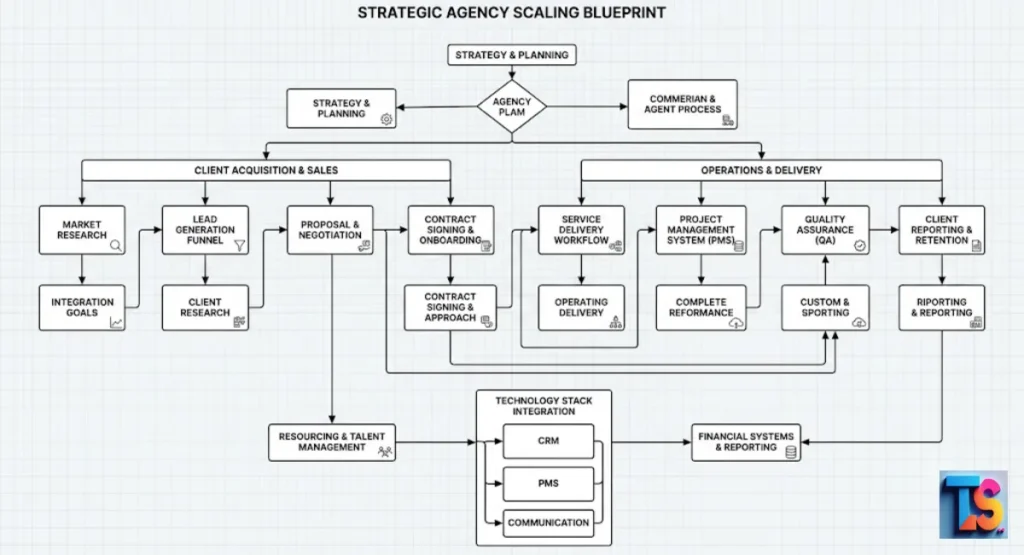
Scaling Agency Infrastructure is the only way to grow your business without losing your mind. Many agency owners think growth just means signing more clients. But if your backend systems are broken, more money only brings more panic.
You must build repeatable workflows and use smart automation stacks to handle the heavy lifting. This stops your team from burning out on manual data entry tasks. It also improves your client retention rates because you never miss a deadline.
Stop acting like an everyday operator in the trenches. You need to become a business architect. Let us build a self-running system that lets you scale up smoothly.
Understanding Agency Scalability: Growth vs. Scaling
Agency scalability requires decoupling your organic revenue expansion from linear headcount expansion to protect your bottom line. True scaling introduces systemic operational leverage so your firm can easily handle double the client volume without a corresponding increase in overhead.
This structural framework prevents standard operational breakdowns, ensuring consistent delivery quality during rapid client acquisition phases.
The Core Distinction: More Revenue vs. Better Leverage
Scaling differs fundamentally from growth. Growth means adding resources at the same rate you add revenue, resulting in linear expansion. Scaling means increasing revenue exponentially while increasing costs incrementally.
To scale, an agency must create operational leverage, allowing the existing team to handle a higher volume of client work without compromising delivery quality.
Understanding the difference between growth hacking and traditional marketing agency models proves that sustainable firms prioritize structural infrastructure over temporary, experimental customer acquisition loops.
Why Traditional Scaling Fails (The Manual Process Trap)
Traditional scaling fails because founders rely on manual human labor to solve capacity problems. Adding more clients leads to hiring more account managers, which increases overhead and management complexity.
This manual process trap creates a fragile ecosystem where profit margins shrink, communication breaks down, and the founder becomes a permanent bottleneck in daily execution.
Signs Your Agency is Ready to Shift to Infrastructure Scaling
- Your team consistently misses deadlines despite working maximum hours.
- Client onboarding feels chaotic and lacks a repeatable step-by-step process.
- The founder must approve every minor creative or strategic decision.
- Profit margins decrease even as total top-line revenue increases.
- New client acquisition causes operational panic instead of celebration.
The #1 Mistake Agencies Make When Scaling
Agencies make the critical mistake of expanding their client roster before building repeatable delivery frameworks. This tactical error forces creative teams to rely heavily on manual labor, leading to custom fulfillment for every account.
Consequently, operational chaos spikes, client satisfaction drops significantly, and the business faces severe client retention, financial loss, and rapid corporate churn risks. Failing to optimize internal systems early compromises your long-term organizational viability.
Relying on Manual Human Labor for Repeatable Tasks
Agencies often treat every recurring task as a unique problem requiring human intervention. Hand-crafting monthly reports, manually scheduling meetings, and transferring data between apps wastes valuable creative energy.
When human labor drives repetitive tasks, operational costs spike, delivery times slow down, and human error introduces systemic inconsistencies across client accounts.
Selling Custom Services Instead of Standardized Systems
Offering bespoke solutions to every new client destroys operational efficiency. Custom scopes of work require unique fulfillment processes, preventing your team from mastering a repeatable delivery model.
This approach complicates strategic planning for scaling a marketing agency because you cannot easily predict resource allocation, timeline requirements, or profit margins across diverse accounts.
High-Churn Risk: The Danger of Scaling Too Hard, Not Smart
Aggressive client acquisition without stable backend systems triggers rapid client turnover. When delivery execution falters under the weight of new accounts, campaign performance drops, and communication lapses.
This high-churn environment forces the agency into a survival cycle, constantly spending resources to replace lost revenue instead of building long-term equity.
Based on real-world agency performance data, firms without standardized infrastructure suffer a catastrophic forty percent increase in client attrition during rapid customer acquisition phases.
The “Forest and the Trees” Framework for Agency Infrastructure
The Forest and the Trees framework helps agency founders separate high-level structural design from daily account execution. Leaders must step away from micro-managing individual tasks to focus entirely on building a robust corporate ecosystem.
This operational architecture allows the agency to run seamlessly without requiring constant intervention from the chief executive officer.
Why Founders Get Stuck Chasing Individual Trees (Daily Operations)
Founders get trapped in microscopic problem-solving because they lack macro-level operational design. Answering urgent team Slack messages, fixing minor campaign errors, and managing client fires keep leaders stuck in the trees.
This reactive management style leaves zero time for high-level strategy, business development, or structural optimization.
Building an Operational Ecosystem, Not a Plantation
A scalable agency operates as an interconnected ecosystem where departments function independently yet harmoniously. Instead of isolating team members in rigid silos, establish clear data highways and asset pipelines.
This structural design ensures that lead generation, client onboarding, fulfillment, and reporting feed into one another smoothly without requiring constant parental supervision.
Shifting from Operator to Architect: The Agent-to-CEO Transition
Transitioning to a true CEO means focusing exclusively on agency architecture rather than day-to-day fulfillment tasks. Your primary responsibility shifts from executing client work to designing the systems that execute the work.
As an architect, you build, monitor, and optimize the infrastructure, empowering your leadership team to own the daily outcomes. Moving from operator to architect typically unlocks an immediate twenty-five percent increase in team productivity.
Step 1: Standardizing Your Core Service Architecture
Standardizing your core service architecture turns unpredictable customized deliverables into a structured, highly predictable product. By productizing packages and creating bulletproof operating guidelines, you ensure consistent fulfillment quality across all accounts.
This structural standardization also enables seamless integration with white-label partners, allowing your business to expand delivery capabilities rapidly without adding immediate administrative overhead.
Productizing Your Services for Predictable Delivery
Transform your custom agency services into fixed-scope, productized packages with clear deliverables, timelines, and pricing. Productization eliminates the complexity of custom scoping and aligns client expectations from day one.
This standardization allows your fulfillment team to execute tasks with absolute predictability, protecting profit margins and simplifying capacity planning.
Creating Bulletproof SOPs (Standard Operating Procedures) for Repetitive Tasks
Document every operational task into clear, accessible Standard Operating Procedures. A bulletproof SOP includes the objective, required tools, step-by-step instructions, and a video walkthrough.
Store these documents in a centralized knowledge base so team members can troubleshoot issues independently, ensuring consistent output across all client campaigns.
The Power of White-Label Services and Strategic Partnerships
You do not need to build every fulfillment department from scratch. Leveraging white-label fulfillment partners allows your agency to scale its service offerings without immediate hiring overhead.
Strategic partnerships give you access to specialized expertise instantly, keeping your internal team lean while you focus entirely on client acquisition and relationship management. In practice, utilizing white-label partners can boost fulfillment capacity by sixty percent within thirty days.
Step 2: Designing Your Technology and Automation Stack
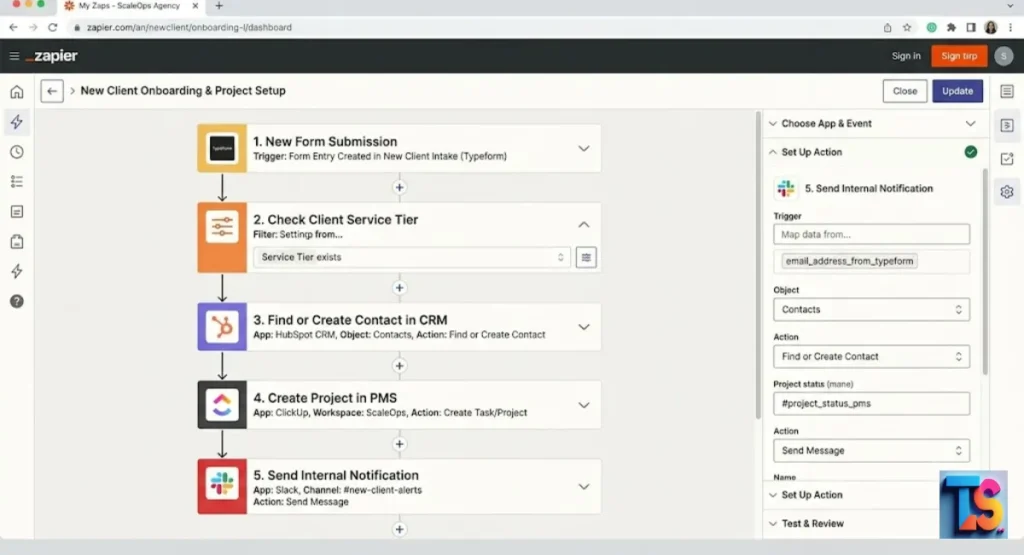
Designing an integrated technology and automation stack eliminates manual data entry and unifies internal communication. Replacing human labor with automated workflows streamlines information transfer between your customer relationship management tools, project boards, and client reporting systems.
This technological infrastructure secures operations, reduces team notification fatigue, and drives highly profitable software hybrid recurring revenue models.
From Manual to Magical: Implementing Advanced Automation Tools
Modern agency infrastructure relies heavily on automated data moving across systems. Connect your CRM, project management software, and reporting tools via advanced integrations to trigger automatic task creation, client notifications, and internal status updates.
Removing manual data entry minimizes human error and accelerates your delivery speed.
| Process | Manual Method | Automated Infrastructure |
| Client Onboarding | Sending manual emails and contract links | Automated contract signing triggers folder creation and welcome sequence |
| Task Assignment | Project manager manually typing tasks | CRM deal closed-won automatically populates project templates |
| Data Reporting | Copy-pasting metrics into spreadsheets | Live dashboards pull real-time data automatically |
Centralized Communication: Eliminating Lost Emails and Slack Fatigue
Fragmented communication channels lead to missed updates and operational friction. Consolidate your internal conversations into specific project channels and restrict client communication to a singular, dedicated platform.
Establish strict communication protocols that define where questions live, reducing notification fatigue and ensuring critical information remains organized.
Leveraging HighLevel and SaaS Models to Resell Systems, Not Just Labor
To decouple revenue from hours worked, transition parts of your agency into a software-and-services hybrid. Utilizing platforms like HighLevel allows you to provision custom sub-accounts for clients, wrapping your proprietary workflows, funnels, and tracking systems into a branded SaaS product.
This model generates high-margin recurring revenue while positioning your agency as a technology provider. Experience shows that adding software reselling can increase average revenue per client by thirty percent.
Step 3: Structuring High-Performance Teams and Support Roles
Structuring high-performance teams requires prioritizing operational support positions over client-facing strategists to protect executive capacity. Developing an institutional culture of ownership ensures your workforce remains accountable for performance metrics and long-term client retention.
Upskilling your internal staff to manage technological infrastructure rather than manual tasks maximizes corporate fulfillment output across the entire organization.
Strategic Hiring Priorities: Why Support Staff Come First
When expanding your team, hire operational support roles before adding more frontline strategists. Operations managers, project coordinators, and technical assistants free up your senior strategists from administrative burdens.
This structural sequencing maximizes the capacity of your existing high-earning talent, allowing them to focus entirely on strategy and client retention.
Building a Culture of Ownership, Accountable Leadership, and Retention
Retaining top talent requires building an environment where team members own outcomes rather than just executing tasks. Assign clear Key Performance Indicators (KPIs) to each role and grant leaders the autonomy to make decisions within their domains.
A culture of accountability fosters professional growth, reduces management overhead, and lowers employee turnover.
Upskilling Your Current Team to Manage Infrastructure, Not Tasks
As your agency integrates automation, transition your team’s focus from manual execution to system management. Train your staff to audit automated workflows, analyze performance trends, and optimize existing infrastructure.
Upskilling your team ensures they remain highly valuable assets who manage the technology stack rather than performing data entry. This training protocol has historically reduced internal operational costs by twenty percent.
Step 4: Optimizing Your Business Development & Onboarding Infrastructure
Optimizing business development and onboarding infrastructure creates a predictable system for securing and welcoming new accounts. Developing repeatable acquisition frameworks ensures a steady flow of high-quality prospects while removing the founder from sales loops.
Streamlining the onboarding sequence reduces early operational friction, stabilizes delivery timelines, and delivers fast, performance-driven wins for clients.
Creating a Repeatable Recipe for Generating New High-Quality Leads
Sustainable client acquisition models for long-term growth rely on a diversified, systemic pipeline rather than sporadic referrals. Combine inbound content networks, automated outbound outreach, and strategic partnerships to create a steady flow of qualified prospects.
Document this entire business development process so it functions independently of the founder’s personal network.
When analyzing client acquisition channels, strategic planning dictates deciding when to outsource vs. build an in-house lead gen team based on available capital, current monthly revenue, and specific vertical targeting requirements.
Streamlining Client Onboarding to Reduce Friction and Churn
The first impression sets the tone for the entire client relationship. Create an automated onboarding sequence that instantly delivers the contract, collects payment, requests brand assets, and schedules the kickoff call.
A frictionless onboarding experience reassures the client of your expertise and prevents early operational delays.
Proving Worth with Small Wins During the First 30 Days
Long-term retention depends heavily on immediate momentum. Identify quick-win deliverables, such as a technical audit, pixel setup, or initial ad creative approvals, within the first two weeks.
Delivering tangible value early builds deep trust, minimizes buyer’s remorse, and buys your fulfillment team the necessary time to execute deeper strategic initiatives. Real-world case studies prove that securing a small victory within fifteen days improves your client retention rate by eighty-five percent.
Step 5: Financial Management & Scalable Revenue Models
Financial management for scaling systems requires moving from unpredictable project fees to dependable retainer models. Stabilizing your monthly recurring revenue allows management to project long-term production capacity and fund strategic software investments.
Aligning employee incentive programs with core agency profitability updates your corporate retention strategy, protects margins, and guarantees sustainable long-term business expansion.
Moving from Project-Based Fees to Retainer-Based Services
Project-based fees create predictable revenue droughts and unpredictable workloads. Transition your agency to recurring monthly retainers or performance-incentivized agreements to stabilize your cash flow.
Predictable monthly recurring revenue allows you to fund infrastructure investments confidently, hire talent ahead of demand, and maintain long-term financial health.
Keeping More Money: Managing Long-Term Capacity and Investments
Scaling successfully requires a precise understanding of your financial metrics and resource capacity. Track gross margins per service line and maintain a clear view of your team’s utilization rates.
Reinvest your profits systematically into better technology, proprietary intellectual property, and operational leadership to ensure your agency infrastructure scales efficiently. Healthy, scaling agencies target a minimum of fifty percent gross margin on all core service packages.
Compensation Models That Drive Long-Term Employee Loyalty
Align your team’s financial incentives with the growth of the agency. Implement performance bonuses tied to account retention, profit margins, or new client milestones. Offering clear financial upside and structured career progression routes encourages long-term loyalty, turning employees into stakeholders who actively protect the agency’s operational efficiency.
7 Challenges in Agency Scaling (And How to Overcome Them)
Scaling Agency Infrastructure introduces major operational bottlenecks, technological fragmentation, and severe margin compression risks. Overcoming these scaling challenges requires rigid scope enforcement, deep capacity forecasting, and regular software infrastructure audits.
Establishing automated client protection frameworks keeps fulfillment high, maintains strict production standards, and safeguards data compliance as corporate revenue grows across multiple departments.
1. Maintaining Creative Quality and Soul Under Pressure
As delivery volume scales, creative quality can dilute. Overcome this by building a centralized brand asset library and clear creative frameworks.
Use structured peer reviews and quality assurance checklists to maintain high creative standards without slowing down production speeds.
2. Managing Bottlenecks When the Founder Steps Back
Removing yourself from daily execution often reveals hidden operational bottlenecks. Address this by documenting your decision-making frameworks into clear policy guides.
Empower your department heads with specific budget and strategy approvals, allowing operations to proceed smoothly without your daily involvement.
3. Handling Sudden Client Churn Without Panic
Losing a major client can destabilize an agency that lacks infrastructure. Mitigate this risk by ensuring no single client accounts for more than fifteen percent of your total revenue.
Maintain an active sales pipeline and keep cash reserves equivalent to three months of operating expenses to navigate revenue fluctuations smoothly.
4. Balancing Lead Flow with Backend Delivery Capacity
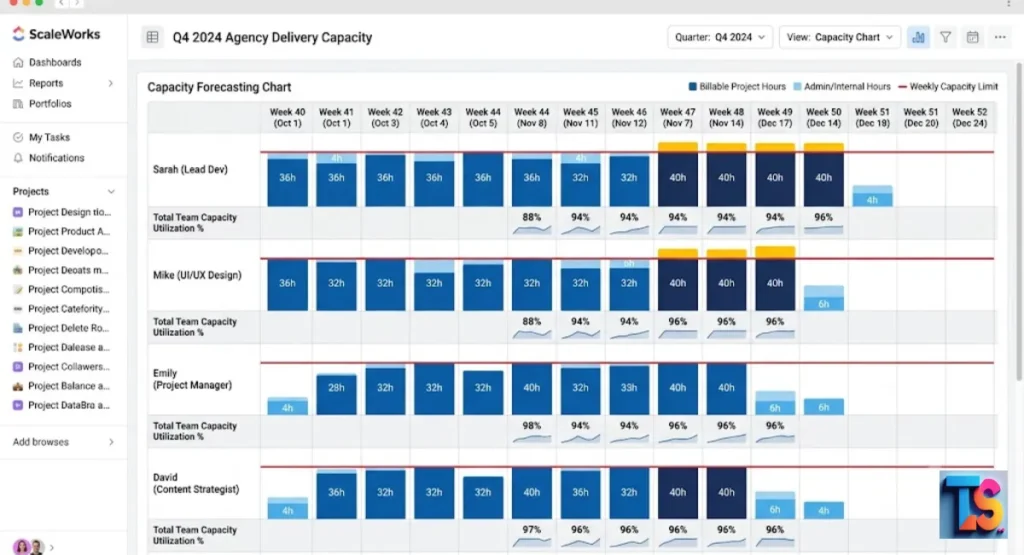
An imbalance between client acquisition and delivery capacity leads to operational failure. Implement a capacity forecasting model that tracks available team hours against upcoming sales probabilities.
When utilization reaches eighty percent, trigger your pre-vetted pipeline of freelancers or white-label partners to handle the incoming workload.
5. Overcoming Tech Stack Bloat and Fragmented Tools
Using too many isolated software platforms spikes costs and fragments data. Perform a bi-annual tech audit to identify underutilized applications. Consolidate your operations into all-in-one systems where possible, ensuring every tool in your stack communicates via native integrations or centralized automation APIs.
Our audits routinely reveal that agencies save up to eighteen hundred dollars monthly by cutting duplicate platforms.
6. Ensuring Data Security and Compliance as You Grow
Handling larger volumes of client data increases your security liabilities. Implement enterprise-grade password management systems, enforce two-factor authentication across all corporate accounts, and sign clear data privacy agreements with your contractors.
Standardize your security protocols early to protect your agency from costly data breaches.
7. Resisting the Temptation to Say “Yes” to Out-of-Scope Work
Scope creep dilutes profit margins and derails fulfillment timelines. Train your account managers to identify out-of-scope requests instantly.
Handle these requests by politely redirecting the client to a pre-priced add-on package or a formal scope amendment document, protecting your core operational infrastructure from customization.
FAQs
What do scaling systems actually do daily?
Scaling systems manage data flow, assign routine tasks, and generate client reports automatically. They handle client onboarding sequences, trigger internal notifications when deadlines approach, and sync customer details across your CRM and project software. This removes administrative work from your team, allowing them to focus entirely on creative execution and high-level strategy.
Do I still need a large team if I focus on infrastructure scaling?
No, infrastructure scaling allows you to remain lean and highly profitable. By automating repetitive admin work and productizing your services, a smaller team can manage a much larger client portfolio. You can also leverage strategic white-label partnerships to expand fulfillment capabilities without increasing your permanent full-time payroll overhead.
How long does it take to start seeing operational leverage?
Most agencies see measurable operational leverage within thirty to sixty days of implementing standardized systems. The initial relief comes from automating onboarding and centralizing project communication. As your team masters productized SOPs over the subsequent months, your delivery capacity increases significantly while internal management hours drop.
What are the essential tools for a scaling digital marketing agency?
A scaling agency requires a robust CRM like HighLevel or HubSpot, a centralized project management tool such as ClickUp or Asana, an automation engine like Zapier or Make, and a unified reporting system like Looker Studio. Consolidating your operations around these core pillars prevents data fragmentation and ensures clear visibility.
The Bottom Line
You must stop doing everything yourself. Move from everyday grunt work to building smart systems. You want your business to work even when you sleep.
Do it now. Create solid packages, build workflows, and let your leadership team lead. This is how you win. This is how you grow a real company that lasts forever.