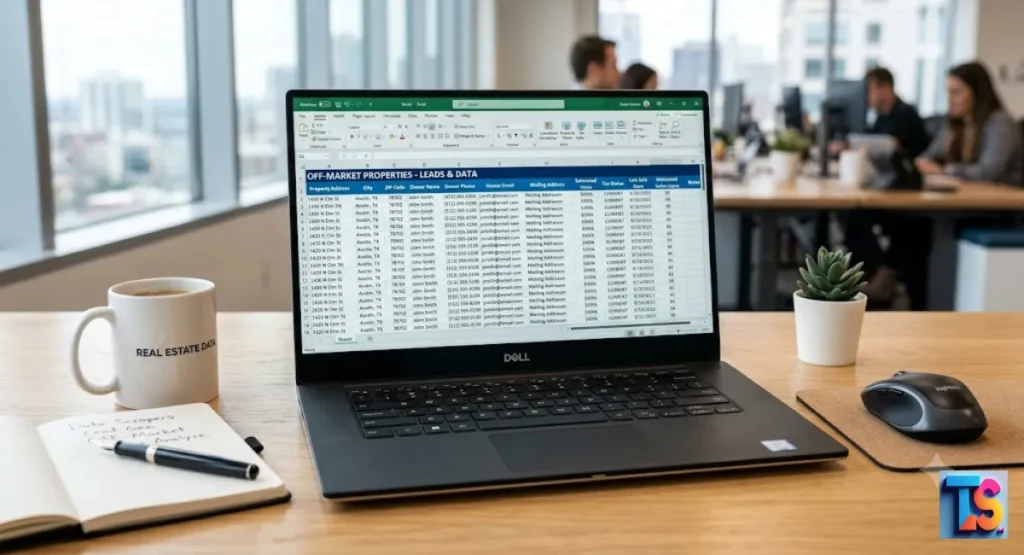
Finding hidden real estate deals can feel like searching for a needle in a haystack. However, learning how to discover off-market properties using data scrapers changes the game for modern real estate investors.
Instead of fighting over competitive public listings, automated web extraction tools allow you to scrape local government portals, tax assessment sites, and foreclosure boards to build an exclusive list of motivated sellers. By focusing on uncovering premium market properties using data scrapers, you can easily bypass the crowded Multiple Listing Services (MLS).
This approach lets you gather critical homeowner information, identify vacant properties, and secure deeply discounted real estate deals completely under the radar before anyone else even knows they exist.
What Is An Off-Market Property?
An off-market property is any home or piece of land available for purchase that does not appear on traditional public listing channels. Finding these hidden assets requires modern data harvesting techniques instead of waiting for a real estate agent to post them.
This strategy gives buyers an exclusive look at motivated sellers before anyone else.
The modern unlisted housing landscape moves incredibly fast, making traditional manual search methods completely outdated for active investors. By monitoring public records and digital footprint changes, buyers can find properties where owners face sudden life changes or financial strain.
This data-driven path allows you to open direct conversations with homeowners and close profitable deals smoothly.
What Does off-Market Mean?
An off-market property is a house that is for sale but does not appear on public listing websites. Because owners do not advertise these homes openly, you cannot find them through normal web searches.
Instead, you must use smart data collection, personal networking, or direct research to find these hidden deals before anyone else.
In 2026, finding these houses requires fresh data because public sites hide their best leads. Owners often sell this way to keep their business private or avoid noisy open houses.
Investors want these properties because they do not have to fight other buyers, which means they can buy the houses for much less money.
The Benefits of Buying Off-Market Properties
Why Is Off-Market Sourcing a Quantifiable Advantage
Sourcing properties off the market gives you a clear benefit because it stops other people from bidding on the same houses. You get to talk directly to the homeowner instead of dealing with competitive real estate agents.
This direct path keeps your buying costs low and helps you make a much bigger profit.
When you collect data directly from the source, you win. This model works just like client acquisition for bootstrap saas startups, where finding hidden users before anyone else creates fast growth.
Getting to the owner first lets you set the rules of the deal and avoid expensive, stressful public bidding wars entirely.
What Creates The Discount
The price drop on unlisted houses happens because you remove the middleman and skip expensive public marketing fees. Sellers often agree to a lower price because they want a fast cash payment without making repairs or paying huge agent fees.
This setup saves them time and puts money back into their pocket.
In the modern 2026 housing market, people value speed more than top dollar. Homeowners love avoiding the traditional selling process because it takes too long and costs too much money up front.
You get a great discount because you solve their problems quickly by buying the property exactly as it stands.
Why This Is An Operational Edge
Automated data collection gives you a great working edge by replacing slow manual searches with fast computer power. Instead of driving around every weekend looking for single houses, your software checks thousands of web pages at the same time.
This lets you spot ready sellers instantly and grow your real estate business fast.
This process matches how digital companies look for new customers. It falls under the wider strategy of Industry-Specific Lead Generation.
For example, when software companies figure out how to find Shopify store owners email addresses, they use automated tools to scrape contact lists in minutes.
Gathering your real estate leads automatically gives you the same powerful speed advantage over your local competitors.
Why Do Owners Sell Off-Market Properties to Investors?
Homeowners sell their properties off the market to avoid the stress, high costs, and public eyes of regular home listings. Many sellers face sudden money problems, bad property damage, or big life changes like a divorce.
They prefer a fast, private sale over showing their messy house to strangers for months.
Working with cash investors lets owners skip expensive fixing costs, formal inspections, and home staging fees. Investors offer real cash and can close the deal on any day the seller chooses.
This absolute certainty makes a direct sale highly valuable to a stressed owner who needs to sell their house quietly.
Where Can You Source Actionable Property, Data
Sourcing actionable real estate records requires finding public and private digital portals that store deeply detailed property histories. These platforms include national real estate directories, county tax books, court logs, and local agent databases.
Accessing these channels automatically lets you build a giant pool of potential off-market targets very quickly.
While most public platforms want users to browse houses one page at a time, smart data buyers extract these lists in bulk. Collecting this raw data gives you instant access to hidden details like overdue property taxes or homes owned by out-of-town landlords.
These specific data layers reveal exactly which homeowners have the strongest reason to sell.
Major Real Estate Data Sources
Good property data sits inside big real estate websites and public county record files. While these web pages show active homes for sale, they also store old sales history, local price trends, and agent contact details.
Scraping these sites helps you build a strong database to spot great market deals early.
The data landscape changed in 2026 because major websites now block cheap scraping tools instantly. To get good information, your tools must look and act like real human viewers.
Gathering this data cleanly lets you see which neighborhoods have the highest numbers of unlisted homes and motivated sellers before your competitors notice.
Zillow
Zillow stores millions of useful property records across the country, including past sales numbers, county tax bills, and foreclosure updates. The site also features special sections for homes sold directly by the owner without an agent.
This makes it a perfect target for finding direct homeowner phone numbers and old pricing facts.
When you scrape this platform, you can find people who tried to sell their homes alone but failed. These owners are often very tired of the process and highly open to a direct cash offer.
Your data tools can easily pull these old listings and sort them by zip code automatically.
Redfin
Redfin updates its home database every few minutes using direct local feeds, which gives you highly accurate property prices and neighborhood facts. The platform tracks how fast homes sell in specific towns and notes when prices drop.
Scraping Redfin helps you make perfect cash offers based on real-time market shifts.
In 2026, the site uses heavy security code to stop computers from stealing its information. A good custom script can bypass these walls to see which areas are slowing down.
Finding these slow markets tells you exactly where homeowners are starting to panic and drop their prices.
Realtor.com
Realtor.com connects straight to national real estate group systems, providing very clean property histories and neighborhood profiles. It gives deep details about local school scores, true property boundaries, and old home updates.
Investors use this information to check the quality of a house before they call the owner.
The site is excellent for checking physical house details at scale. You can write a script to pull thousands of home profiles and filter out houses that are too small or too new.
This ensures you only spend time and money contacting people who own the exact type of house you want.
Regional MLS Platforms
Regional listing platforms are the private local databases where licensed real estate agents log every single home sale. This data gives you the absolute best accuracy for active, pending, or old expired listings.
Scraping these local feeds lets you find owners whose listings just expired without a sale.
Owners with expired listings are prime targets because they still want to sell but do not want to hire another agent. Getting this data requires connecting with a friendly local agent or utilizing a clean data tool.
Once you have the list, you can reach out directly with a fresh offer.
What Data Can You Extract From Realtor Property Listings
Extracting data from professional real estate portals lets you pull highly specific facts that show if a home is a good investment. This information includes structural features, old selling prices, tax values, and regional movement indicators.
Gathering these details automatically saves you from clicking through thousands of individual web pages manually.
By pulling this deep data into an organized local file, you can instantly spot patterns that regular buyers miss completely. You can see how long an owner has held a house or if they have lowered their asking price multiple times.
This clean information forms the foundation of your direct outreach plan.
Property Listing Data
Property listing data includes the basic physical facts about a house found inside online records. This means the street address, home size, number of rooms, land acreage, and the year the home was built.
It also tracks how the price changed over time and what the city charges for property taxes.
Investors use these specific facts to remove homes that do not match their buying goals. For example, your software can scan a town and show only small homes built before 1970 that have not changed hands in thirty years.
These old houses usually need major repairs, making them perfect investment targets.
Agent and Brokerage Data
Agent and brokerage data includes the real names, phone numbers, email addresses, and office locations of professional real estate workers. It also tracks which specific agents close the most deals in your target towns.
This information helps you build strong working friendships with the most active local professionals.
By pulling these agent lists, you can quickly find the top performers in any market. You can contact these specific brokers and tell them you have cash ready for quick deals.
They will often bring you quiet pocket listings before they ever put the houses on the public market.
Market Trend Data
Market trend data tracks the general financial health and selling speed of a specific local zip code. This data includes the average days a home sits on the market, normal selling prices, and total available inventory.
This valuable information shows you exactly where buyer demand is rising or falling.
Studying these numbers helps you avoid buying houses in dying neighborhoods where values are crashing. If your data scraper shows that price drops are growing fast in one part of town, it means sellers are getting worried.
You can use this trend to ask for much bigger discounts.
How to Find Off-Market Properties Using Data Scrapers (Step-by-Step Guide)
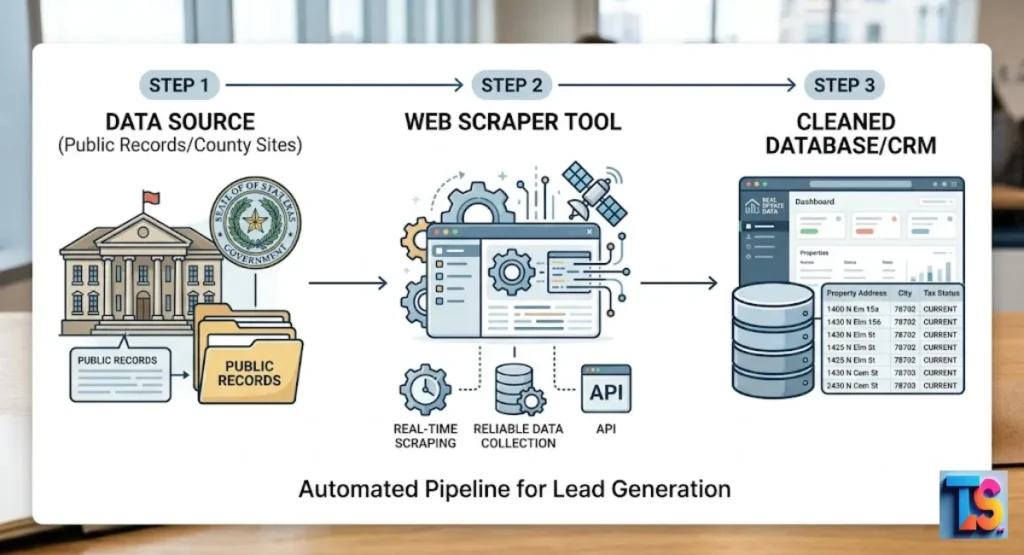
Using data scrapers to find unlisted houses requires setting up an automated system that reads web pages and saves their text facts. You can either use a prebuilt scraping tool from a software company or write a custom piece of computer code.
Both methods deliver a neat spreadsheet full of premium real estate leads. This whole plan reveals how to find off-market properties using data scrapers without breaking a sweat.
The main goal is to build a steady flow of fresh data that enters your database every week without manual work. This automated pipeline ensures you always know about new off-market opportunities before other local buyers.
Following a systematic step-by-step setup keeps your data collection clean, safe, and highly efficient.
Use a Prebuilt Realtor Property Listings Scraper (Recommended)
Using a prebuilt software tool is the fastest way to pull property data without writing complex code. Specialized data companies build these tools and update them automatically whenever real estate websites change their design layout.
You just paste a target web link, hit start, and save the data to a spreadsheet.
Prebuilt tools save you from endless technical headaches and constant software errors. These systems come with built-in features that hide your computer from website security guards.
This safety allows you to spend your time talking to motivated sellers instead of fixing broken software code or buying costly proxies.
Method 2 – Build Your Own Realtor Property Listings Scraper
Building your own custom scraping script gives you total control over the exact data you pull and where you keep it.
A custom tool uses simple computer code to open web pages, grab specific text lines, and save them to a file. This method lets you build highly unique property filters.
A custom script can find hidden details that prebuilt tools often skip over entirely. You can build a system that alerts your phone the second a house matches your favorite buying criteria.
It takes more work to start, but a custom tool gives you a massive data advantage.
Step 1: Install dependencies
To start building your custom script, you must install a programming language like Python along with special web automation tools. Common code packages include Beautiful Soup for reading web page text and Playwright for opening interactive web browsers.
These tools work together to let your computer view websites automatically.
These files act as the foundation for your data gathering system. They allow your script to talk to the internet, open complex pages, and download raw text safely.
Keeping these tools updated ensures your custom scraper can interact with modern websites without crashing or causing errors.
Step 2: Define your property extraction schema
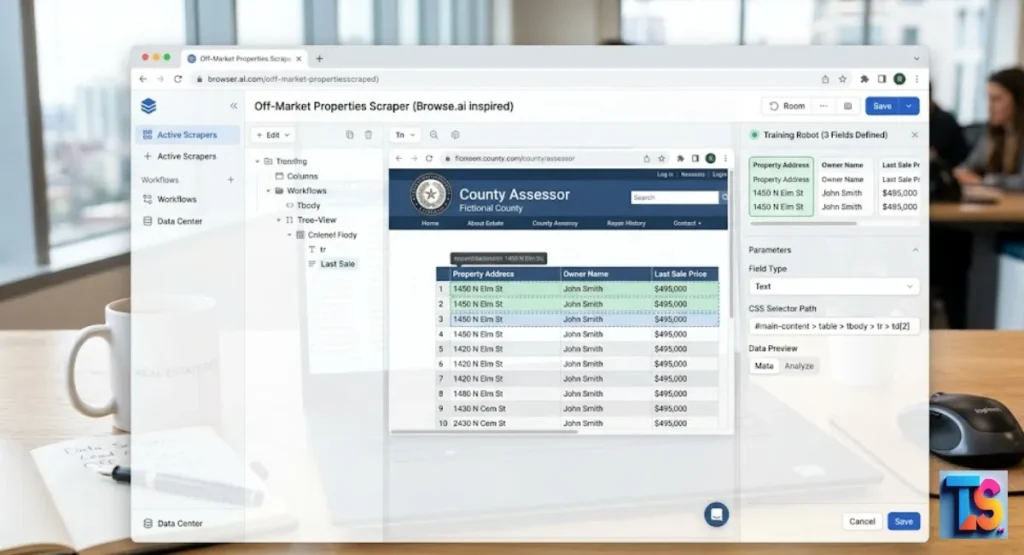
A data schema is simply a map that tells your script exactly what facts to take from a web page. You must find the specific code tags that hold the house price, street address, and sale status.
Mapping these tags ensures your tool places every piece of data into the right column.
Without a clean map, your scraper will pull useless text and ruin your final files. You need to look at the hidden structure of the target website to find where the home data sits.
Once you map these locations, your script will run smoothly across thousands of different property pages.
Step 3: Run the pipeline
Start your custom script to begin pulling data across your targeted real estate search pages automatically. The software will open your list of web links, grab the mapped data points, fix any formatting mistakes, and save the results.
The final output is saved into a clean, simple spreadsheet file.
Once the script finishes its work, you will have an organized list of high-value leads ready for use. You can sort this list by price drops or building age to find the best deals.
Running this automated pipeline every week keeps your real estate business full of fresh opportunities.
Technical Considerations And Anti-Bot Protections When Scraping Realtor
Scraping modern real estate sites requires a deep understanding of web security walls and advanced bot detection systems. Large property portals use heavy protective shielding to keep automated tools from accessing their valuable public data.
To gather information successfully, your script must look, move, and pause exactly like a normal human visitor.
Managing these technical blockades requires using rotating proxies, smart browser emulation, and clean data organization tools. If your script runs too fast or uses bad formatting, website security blocks will stop your pipeline instantly.
Building a highly resilient data scraper ensures you receive steady property leads without constant system crashes.
Handling Dynamic Real Estate Sites
Modern real estate websites use complex code that loads home data slowly as a human user scrolls down the page. Old text scrapers cannot read this data because it does not exist when the page first opens.
To capture this information, you must use special browser tools that mimic real human eyes.
In 2026, websites use these dynamic layouts specifically to break simple computer bots. Your software must load the full page, wait for the data to appear, and scroll naturally.
Using advanced tools ensures you capture every single house listing instead of getting blank text files.
Rate Limiting and Proxy Rotation
Websites keep track of how many pages a single computer views to stop automated scripts from slowing down their systems. If your script clicks links too fast, the website will block your internet connection immediately. To avoid this, you must use a proxy network that shifts your digital location constantly.
Rotating your digital location makes your scraper look like thousands of different people browsing from different homes. This step is completely necessary in 2026 because security systems block static scripts within seconds. Spreading your requests out across different locations keeps your data pipeline running safely without interruptions.
Data Freshness vs. Completeness
Investors must balance how fast they scrape data against how much detailed information they actually pull from the web pages. Fast scans give you quick price updates but miss deep historical notes buried inside old files. Deep scans collect total property records but take much more computer time to finish.
If you move too fast, you might miss a hidden note about a tax lien or a broken roof. If you move too slowly, another investor might buy the house before you even find it. The best strategy uses fast scans to spot changes and deep scans to check the details.
Address Normalization
Raw address data from different websites often arrives with messy formatting, like mixing the word “Street” with “St” or leaving out direction labels. Your software must handle fixing data errors by converting every entry into a single matching format.
Clean records stop you from making duplicate profiles for the same house.
Fixing these data errors prevents you from sending two identical marketing letters to the same homeowner. It also ensures that the postal service can deliver your letters without losing them.
Clean, uniform addresses make your entire database more valuable and keep your mailing costs as low as possible.
How to Turn Raw Data Into Actionable Leads
Turning raw property text into closed real estate deals requires sorting your scraped spreadsheets to find homeowners with genuine money problems. A huge list of random homes is completely useless without proper filtering and verification steps.
You must narrow your list down to find houses that show true signs of physical neglect or financial stress.
Once you isolate these high-value property targets, you must use smart skip tracing tools to find the owner’s true location and phone number. After verifying this data, you launch a multi-step marketing campaign using letters, calls, and text messages over several weeks.
Consistent outreach turns cold spreadsheet data into highly profitable off-market deals.
How to Define Your High-Intent Property Profile
A great property lead starts with a smart data profile that focuses only on houses with clear money problems or physical damage. Do not waste money contacting every single homeowner in your city.
Instead, look for specific signs of empty houses to keep your marketing costs low and your response rates high.
Targeting the right homes saves you thousands of dollars in wasted advertising. You want to look for properties where the owner has a strong reason to sell immediately.
Finding these specific houses through your data filters turns raw spreadsheet rows into real estate deals.
Start with the asset, not the seller
Begin your automated search by filtering for physical house traits that match your buying plan, like the age or style of the home. Look for older houses with low values in good, quiet neighborhoods.
Finding the right physical building ensures the house fits your investment business before you look at the owner.
If a house is too new or sits in a bad location, the owner’s situation does not matter. Use your data tools to clear away these bad matches first.
Once you have a clean list of good houses, you can start looking for signs of a motivated seller.
Then stack seller signals
Once you have a list of good houses, layer on money problems to find the most motivated owners. Use public county data to find homes with unpaid property taxes, city code violations, or recent family deaths.
Stacking these different signals helps you find owners who truly need to sell fast.
A house with just one issue might not be a deal, but a house with three issues is a goldmine. For example, an empty house with back taxes and an old roof is a perfect lead.
Your software can find these multiple signals and bubble them to the top of your list.
Verification changes the economics
Before you spend cash on big mailing campaigns, verify the owner’s details using skip tracing tools to find real phone numbers and home addresses. Check your lists against recent bankruptcy files and official public records.
Clean data stops you from mailing letters to dead links and saves your marketing budget.
This verification step saves you from wasting money on bad leads. It ensures that your letters actually reach a real person who has the power to sell the house.
Verifying your data first makes your business highly efficient and beats sloppy competitors who use old lists.
Use a sequence, not a single touch
Reaching out to off-market homeowners requires a multi-step marketing campaign instead of just one phone call or a single postcard. Combine polite letters with professional phone calls and online messages over many weeks.
Sending multiple notes builds human trust and ensures owners call you when they feel ready to sell.
Most owners will throw your first letter into the trash bin. However, when they see your name three or four times, they start to trust your business.
Staying consistent ensures that you are the first person they think of when their house problems become too big to handle.
How to Automate Your Sourcing Funnel With An API
An application connection link, called an API, links your data scraper straight to your customer management software. When your scraper finds a new distressed house lead, the link moves the information over instantly without any manual typing.
This automation keeps your real estate records completely updated every hour.
Connecting your tools this way lets you start automated marketing campaigns the exact second a house matches your criteria. For example, a new tax default lead can instantly tell your system to print and mail a custom offer letter.
This fast system beats slow human investors who check files manually.
Top 7 Real Estate Data Scraping Companies
Buying high-quality property leads from professional data companies is the most reliable way to fuel your investment business without writing custom code.
These specialized web companies manage massive server networks to bypass website blocks and harvest clean public data continuously. They deliver organized property spreadsheets directly to your local computer database safely.
Using a professional scraping service eliminates the technical frustration of managing proxies and handling website design changes. These companies ensure your sales pipeline stays filled with fresh, verified homeowner leads every morning.
Choosing a reliable enterprise partner lets you focus on closing deals instead of fixing broken software systems.
| Company Name | Primary Data Focus | Key Feature for Investors |
| BrightData | Global web scraping infrastructure | Large proxy network for bypassing site blocks |
| Apify | Prebuilt real estate web actors | Ready-to-use scrapers for Zillow and Realtor |
| Octoparse | Visual point-and-click scraping | No-code interface for custom data collection |
| ScrapeWorks | Enterprise data extraction | Fully managed data delivery directly to your database |
| Dataflow | Custom API building | Continuous syncing of regional property data |
| LeadSherpa | Real estate skip tracing | Provides verified phone numbers for property owners |
| PropStream | Nationwide investor property data | Built-in filters for tax liens and foreclosures |
How to Choose a Real Estate Data Scraping Partner
Picking the right data gathering vendor requires checking their system capacity, delivery speed, and legal safety standards carefully. A bad data partner will deliver old lists full of broken phone numbers and duplicate addresses, which drains your marketing cash quickly.
You need a team that can scale its extraction operations as your business grows.
A great provider offers easy system connection links to feed new leads straight into your sales management software every single hour. They must also follow strict data privacy laws to keep your real estate firm completely safe from costly legal fines.
Checking these core features guarantees a smooth, highly profitable data partnership.
Data Volume & Scalability
Your data provider must have the power to handle huge extraction requests as your investment business grows into new cities. A great partner can pull thousands of new property rows every day without dropping its connection speed.
Make sure their tech can grow alongside your business goals without breaking down.
If your provider runs out of steam, your marketing funnel will dry up. In 2026, look for companies that use modern cloud networks to fetch your data.
A strong partner ensures you always have a steady stream of fresh leads to call every single morning.
API Access & Integration
Pick a data company that gives you a clean API link to stream house facts straight into your sales software. Downloading files by hand every day slows down your team and creates annoying typing mistakes.
Smooth system connections mean your sales workers always see live, fresh property leads on their screens.
Automated data delivery keeps your business moving fast. You do not want your team spending hours uploading old spreadsheets when they could be talking to homeowners.
Look for data partners that offer simple plug-and-play connections for your existing database software.
Legal Compliance
Your data partner must follow strict ethical rules and regional privacy laws when they harvest information from the web. Using property data that comes from illegal hacking or security tricks creates massive legal dangers for your investment business.
Always check that your provider uses clean, open collection methods.
In 2026, privacy laws are much tighter than before, and courts punish companies that use stolen lists. Ask your provider for clear proof that they respect website rules and public data laws.
Buying clean data protects your brand name and keeps your business safe from fines.
8 Proven Ways to Find Off-Market Properties In Your Market
Finding the best unlisted housing deals requires combining smart automated web scraping with proven local field strategies. Relying on a single acquisition channel leaves your business vulnerable to sudden market shifts and rising lead generation costs.
Using multiple sourcing channels ensures your pipeline stays full of highly profitable investment opportunities.
By connecting data-driven insights with physical neighborhood research, you can uncover hidden deals before retail buyers notice them. These active, local strategies put you in direct contact with tired landlords and financially stressed homeowners.
Implementing these eight proven methods creates a highly resilient, predictable real estate acquisition machine.
1. Driving For Dollars
Driving for dollars means traveling through local neighborhoods by car to spot visible signs of broken or empty houses. Look for properties with very long grass, boarded-up windows, peeling paint, or piles of old newspapers. Log these physical addresses into a mobile app so you can research the owners later.
This classic method works incredibly well when combined with modern data scraping. Once you find a broken house, you can use your web tools to find the owner’s true location instantly. It turns a simple neighborhood drive into a highly accurate data-gathering mission.
2. Juice Your Data
Get the most value from your scraped lists by matching your data against multiple public county records. Combine local water shut-off notices with county tax default files to find the most desperate sellers.
The more problems you find on a single house, the higher your chance of buying it cheaply.
Juicing your data means looking deeper than other buyers. A simple house list becomes a goldmine when you layer on extra facts like probate court records or bankruptcy filings.
This deep filtering work ensures you only spend time talking to people who really need your help.
3. Facebook Marketplace
Many independent homeowners post their houses directly on Facebook Marketplace because they want to avoid paying high agent commissions. These listings are usually messy and miss common search words, which causes normal retail buyers to skip right past them.
Checking these local pages daily reveals cheap deals.
Because these listings are unorganized, you can use a basic scraper to watch the site for you.
Have your tool look for terms like “must sell” or “cash only” in your city. This automation lets you message the seller minutes after they post their home online.
4. Craigslist
Craigslist remains a very popular website for older landlords who want to sell off their rental houses quickly. Investors search the local real estate sections using words like “selling out” or “needs work” to find these owners.
Talking directly to these landlords often leads to great owner-financing deals.
Many of these older owners do not know how to use modern real estate platforms. They post simple text ads on Craigslist and wait for a phone call.
Scraping this site weekly ensures you catch these tired landlords before they pass their properties to an agent.
5. Word Of Mouth
Tell local shop owners, handymen, and estate lawyers exactly what kinds of old houses you want to buy. These neighborhood workers often hear about family deaths or sudden money issues long before the facts hit public county files.
Offering small finder fees builds a local network that sends deals right to you.
6. Be Consistent
You need to take action every single day if you want your real estate business to make money. Do not stop. Marketing plans fail because investors quit after sending just one round of letters.
They get zero answers. And then they give up. Steady weekly outreach ensures owners see your name when life gets tough for them.
Real estate sourcing is just a numbers game. It takes time. An owner who ignores your letter in January might hit a massive financial emergency by May. They will call you instantly. Staying top-of-mind through steady marketing ensures you win the deal when the timing is perfect.
This is a core part of Industry-Specific Lead Generation.
7. Property Auctions
County courthouses host regular public auctions to sell off houses. Local governments do this to clear unpaid property taxes or unpaid bank loans. These fast-paced events require buyers to pay with total cash.
This is tough. It blocks normal retail buyers who need slow bank loans. Attending these auctions lets you buy houses at massive discounts.
You get a huge advantage if you learn how to find off-market properties using data scrapers to clean foreclosure files before the auction happens. Run the numbers.
You can research the properties, check the values, and pick your target houses ahead of time. This data preparation keeps you from making bad bids when the auction action gets hot.
8. Wholesalers
Real estate wholesalers spend their time finding deeply discounted off-market deals. They are great at it. Then, they sell those contracts to other investors for a fee.
Building close friendships with top local wholesalers gives you fast access to pre-vetted investment houses. This lets you buy great properties without running your own big ads.
Think of wholesalers as your personal off-market data team. They do the heavy lifting. They do the hard work of calling sellers and negotiating low prices for you. Paying their small finder fee is a smart move that saves you time and keeps your buying pipeline full of deals.
Legal And Ethical Notes
Using data extraction tools requires a strict commitment to digital privacy laws and fair property data rules. Collecting public facts for personal market analysis is completely safe. Do it right.
But abusing website networks or republishing copyrighted lists creates severe financial dangers. You must ensure your automated tools operate safely without breaking structural platform guidelines.
In the modern real estate compliance landscape, tracking data ethically protects your company name and keeps your operations out of court. You must respect website usage rules and protect the data you download by keeping it strictly internal.
Following clean extraction practices ensures long-term business success without any sudden legal shutdowns.
ToS Compliance By Site
Every real estate website posts a strict rules page that tells visitors how they can use the site data. Read them. Many platforms openly ban automated scraping tools from opening their pages or downloading text.
Breaking these rules can get your internet address blocked or bring formal legal warnings to your office.
In 2026, major websites use smart security software to detect and block bad computer scripts. They are smart. You must ensure your scraping partner follows these rules or uses ethical extraction methods that do not hurt the target website.
Staying safe keeps your business out of court.
Fair Use In Real Estate
Using data scrapers to collect public property facts for your own private market studies falls under fair use legal protections. It really does. However, taking that copyrighted text and posting it on a public website to compete with the original platform breaks the law.
Keep your extracted data private to protect your investment firm.
You can freely use public facts like home sizes or tax numbers to guide your own buying choices. The trouble only starts if you try to resell that data or use it to build a matching search engine.
Do not do that. Keep your spreadsheets internal, and you will stay completely safe.
MLS Clear Cooperation Policy
The Clear Cooperation Policy states that licensed agents must put their listings on the public MLS within one business day of marketing a home.
This industry rule limits how licensed brokers can market quiet, off-market properties to private buyers. Investors must understand this rule when working with local agents.
If an agent tells you about a secret house, they must follow this rule carefully or face big fines from their board. To buy true off-market deals through agents, you need to look for non-licensed options or buy from owners directly.
Knowing this policy helps you navigate agent relationships cleanly.
FAQs
Is scraping Zillow legal?
Yes, it is generally legal to pull public, logged-out data for market research. Do not bypass logins, hack security gates, or overload servers. Keep your tools moving slowly to stay safe.
How do I get MLS (Multiple Listing Service) data legally?
You should become a licensed agent or partner with a local broker to get real login keys. Another great path is to buy access from approved data platforms. This keeps your records updated without any messy legal battles.
Can I add price-tracking functionality?
Yes, you can code your database to save past prices and send alerts for sudden drops. This helps you spot desperate sellers fast. It is an amazing trick for client acquisition for bootstrap saas startups or matching property deals.
How do I handle listings with missing data?
Set your cleaner to flag empty boxes and route them to tax records or skip tracing. Never throw data away. It is like finding how to find Shopify store owners email addresses; it takes work, but it beats lazy competitors.
What’s the best way to deduplicate properties?
Use the unique county parcel number or a clean street address as your main database key. Run a quick script to block matching entries before mailing out letters. This saves your cash and keeps you from looking sloppy.
The Bottom Line
That finding off-market properties using automated data scrapers transforms your real estate sourcing from a slow manual chore into a fast, scalable system. By pulling clean property facts from major websites and public county files, investors skip retail bidding wars and win much deeper home discounts.
Success in 2026 requires picking the right automated data tools, keeping your lead spreadsheets clean, and running steady weekly marketing campaigns to turn raw property numbers into highly profitable real estate deals.