Client acquisition for bootstrap saas startups requires a totally different playbook than funded companies use. You cannot just burn money on big ads. Instead, you have to build a reliable organic growth engine that brings in users naturally.
By focusing your time on zero-dollar marketing channels, you can reach your buyers directly without going broke. The key is finding a painful bottleneck your users face and fixing it with simple, helpful solutions.
Once you prove your tool works, word-of-mouth loops will start spinning to bring in more signups. This smart approach protects your personal savings and creates sustainable, lasting monthly cash flow.
Why Bootstrapping a SaaS Demands a Different Growth Playbook
Self-funded software companies cannot buy sales with big ad budgets. Winning users requires a smart plan that fixes major, specific problems for buyers instead of running broad ads.
Success comes from maximizing free search channels, building real human connections, and turning helpful tools into long-term user loyalty without running out of your own money quickly.
In 2026, the digital marketplace requires direct value rather than generic sales pitches. Modern buyers demand simple software that answers their immediate needs instantly.
To grow without outside investors, you must focus entirely on helpful, direct customer interactions, clear privacy protections, and organic traffic systems that prove your business is reliable from day one.
What Is Bootstrapping a Startup? (And Why SaaS Is the Best Model)
Bootstrapping means building a business completely on your own terms using your personal savings, early customer sales cash, and very lean spending habits.
You do not take any outside investor money to run the company. This approach keeps your business safe from outside interference and lets you scale naturally as your revenue increases over time.
This self-funded path gives you total control over your business choices. Because you do not answer to strict boards, you can change your software features as fast as your market changes.
It forces you to build things people actually pay for, which creates a healthy, stable business foundation that survives long-term.
Understanding the Challenge: Why Getting First Customers is Tough for SaaS
1. Market Saturation and High Noise Levels
The digital world is crowded with thousands of software products competing aggressively for the same limited customer attention span every day. New platforms struggle immensely to break through this heavy background noise because target buyers are already overwhelmed.
People automatically block out standard cold emails, repetitive sponsored posts, and aggressive sales pitches that offer no value.
To win in 2026, you must speak directly to your users’ exact daily tasks. Buyers quickly ignore generic marketing talk, so your message needs to stand out by offering an immediate solution to a painful bottleneck they are dealing with right now.
2. Trust Issues and Lack of Brand Authority
Modern business consumers are highly hesitant to link their sensitive company files or credit cards to an unverified software application. When a new startup enters the market without established user reviews, public case studies, or trusted security certifications, proving reliability becomes very difficult. Customers naturally worry about potential software bugs, data safety leaks, and sudden system failures.
People need to know their data remains safe and private. You must display clear trust signals, like simple privacy policies and secure checkouts, to make users feel safe.
Giving early buyers amazing support helps build the essential proof that your business is genuine.
3. Extremely Limited Resources and Zero Ad Budget
Enormous competitors use massive budgets every single month to buy expensive premium web keywords, run heavy video ads, and hire massive sales departments.
A small bootstrapped startup must discover creative ways to attract web visitors completely free because they lack the deep financial reserves needed to outbid major corporations on mainstream advertising networks.
This budget pressure means you must use clever, creative methods to find buyers. Instead of paying for views, you win by creating incredibly useful guides or tools that customers actively search for, turning your small budget into an advantage by being more helpful.
4. Convincing Customers to Adopt New Tech
Migrating from an old workflow to a brand new software program demands a lot of personal effort, team retraining, and file format adjustments. Business owners frequently resist switching tools because they fear the sudden downtime and confusion during the setup phase.
Founders must prove their system provides massive benefits that outweigh this initial friction.
You can beat this issue by making the setup process incredibly fast and simple. If a new user can log in and see a win within five minutes, they will gladly leave their old habits behind and join your platform permanently.
The “Service First, Software Second” Model: How to Build and Fund Your SaaS

Why Starting With Services Builds a Stronger SaaS
Offering manual agency services or personal consulting before writing software code reveals the exact business bottlenecks your target audience experiences daily.
By solving these painful client problems manually using your own human labor, you master the industry workflows completely, validate real market demand, and learn precisely which automation features your software must include.
For example, you might manually help real estate agents with Industry-Specific Lead Generation and learn how to find off-market properties using data scrapers to see where they get stuck. This deep, hands-on work gives you the perfect plan to build software that automates that exact painful process for them later.
Using Consulting Cash Flow to Fund the Tech Stack
Upfront service sales generate fast, dependable cash revenue that can easily pay for your early software engineering fees, web hosting servers, and initial marketing content.
This reliable income stream allows self-funded founders to compensate their technical development teams on time and handle basic business operations without taking on high-interest bank debts.
Using your own business cash keeps you safe from bad funding deals. It gives you a longer timeline to perfect your tool because you do not have investors demanding fast growth before the product is truly ready to help users.
Why This Matters to Investors Down the Line
If you eventually decide to pursue venture capital backing, investment firms highly value founding teams that began their journey by delivering high-touch manual services.
This practical background proves to outside groups that you possess profound industry experience, understand buyer psychology, and designed your application around verified market facts rather than unproven personal guesses.
When you prove you can solve problems manually, investors know your software has a high chance of working. It shows you possess the discipline to build a product that serves an actual, proven market need instead of chasing unverified ideas.
8 Proven Strategies and Tactics to Secure Your First SaaS Customers
Tactic 1: Tapping into Networks: How Personal and Professional Connections Can Be Your First Customers
Your existing personal contact list, previous workplace colleagues, and local industry acquaintances represent the fastest path to securing your very first active product users.
You should reach out to these familiar people individually to gather their genuine thoughts, offer complimentary early account access, and secure the vital first text reviews that build initial public credibility.
These close contacts give you honest feedback without judging early product bugs. Their early support helps refine your main features and provides the first real-world proof that your system works, making it much easier to sell to strangers later.
Tactic 2: Content is King: Using High-Quality, Content-First Approaches to Build a Pipeline
Publishing deeply educational web articles, clear troubleshooting guides, and unique industry data reports draws a consistent stream of valuable organic search traffic to your platform.
By continuously answering the exact long-tail technical questions your ideal prospects enter into search engines, you establish your business as a trusted authority within your niche market.
Your content should provide quick answers that people can use right away. When readers see that your free advice fixes their minor daily hassles, they will naturally trust your paid software tool to handle their bigger, more complicated business problems.
Tactic 3: Lowering the Barrier: How Free Trials and Freemium Models Can Win First Customers
Eliminating high upfront financial requirements encourages hesitant web visitors to test the core capabilities of your new software application with zero monetary risk.
Providing a frictionless free trial period or a basic free account tier drives rapid initial product adoption, giving you multiple valuable opportunities to demonstrate real-world utility before asking for payment.
Make sure the free version gives real utility without hiding the best solutions. Once a user integrates your tool into their daily morning routine, upgrading to a paid monthly plan becomes an easy, logical choice for their growing business needs.
Tactic 4: Strategic Alliances: Partnering for Mutual Growth and Customer Acquisition
Forming close commercial relationships with friendly, non-competing companies that serve your identical target audience can instantly unlock a massive pipeline of warm business leads.
Look for practical opportunities to cross-promote services, build useful product integrations, or co-author deep industry reports to get your software in front of an established user base.
Partnerships allow you to borrow trust from an established company. This method skips the long months spent building an audience from scratch, helping a self-funded founder scale their user numbers fast through simple, shared growth agreements.
Tactic 5: Getting Out There: The Role of Industry Events in Customer Acquisition
Attending highly specific niche meetups, regional business gatherings, and specialized commercial trade shows allows self-funded founders to build authentic, face-to-face relationships with high-value buyers.
These genuine personal interactions build deep trust far quicker than cold digital outreach, making it easy to demonstrate your live software directly to decision-makers.
Handing someone a solution during a live conversation leaves a lasting mark. These human connections often turn into your most loyal users, who will gladly spread your name through word-of-mouth recommendations within their professional circles.
Tactic 6: Investing in Visibility: Maximising Customer Acquisition with Targeted Paid Advertising
When managed with strict financial discipline, highly targeted search engine ads aimed at low-cost intent phrases can deliver immediate, high-converting buyers to your landing pages.
You should allocate your limited marketing budget exclusively toward capturing users who are actively searching for direct alternatives to dominant competitors or seeking immediate technical solutions.
Avoid bidding on broad keywords that cost too much cash per click. Keep your ad groups small and highly specific, sending people to a clear landing page that addresses the exact problem they typed into their screen just seconds before.
Tactic 7: Nurturing Leads: How to Grow and Leverage an Email List for Early Customer Acquisition
Maintaining a clean business email database using valuable free downloads ensures you capture contact details from interested website visitors who are not ready to purchase immediately.
Sending regular text updates packed with actionable industry tips, clear strategies, and brief case studies slowly nurtures these prospects until they feel confident enough to buy.
For instance, you could share a safe guide on client acquisition for bootstrap saas startups or a tutorial explaining how to find Shopify store owners’ email addresses using public records. This useful data builds high trust over time without using spam tactics.
Tactic 8: Word-of-Mouth Magic: Driving Customer Acquisition with Referral Programs
Motivating your most satisfied early product adopters to recommend your software application to their professional peers creates a highly cost-effective and powerful growth engine.
Providing clear incentives such as recurring subscription discounts, premium feature upgrades, or direct cash back rewards transforms your active user base into a motivated, external sales team.
People trust recommendations from their trusted friends far more than any paid advertisement. A simple referral tracking system rewards your fans for sharing your tool, driving a steady stream of highly qualified new signups to your platform.
How to Develop an Advanced Customer Acquisition Strategy
1. Identify Your Ideal Target Market
Directing your limited daily energy toward a highly defined subgroup of users ensures your marketing message resonates powerfully and drives immediate signups.
You must analyze their exact daily responsibilities, the online communities where they gather, and the precise phrases they use to describe their frustrations so your product matches their needs.
Knowing your audience deeply stops you from wasting time on the wrong leads. It allows you to tailor your software features perfectly for their specific needs, making your product look like a custom-made tool built just for them.
2. Review Closed/Won Deals in Your CRM
Examining your historical customer sales records regularly reveals which specific marketing channels, messaging angles, and software features consistently cause prospects to purchase your tool.
You should double down on these high-performing user acquisition paths while immediately halting the complex marketing activities that produce low-quality trials or take too long.
Your data shows the truth about what works. By tracking where your best-paying users came from, you can focus your limited energy on high-value channels and stop wasting time on activities that fail to grow your revenue.
3. Don’t Put All Your Eggs in One Basket (Channel Diversification)
Relying entirely on a single web traffic source or one specific advertising platform exposes your recurring business revenue to sudden algorithm changes or unexpected price spikes.
You must gradually build a resilient marketing mix composed of organic search content, structured email campaigns, strategic partner networks, and direct outbound messages.
A balanced growth plan protects your business from sudden drops. If one channel stops working tomorrow, you will still have three other reliable paths bringing in fresh signups and consistent revenue every single week.
4. Review Your Pricing Strategy (LTDs vs. Monthly Subscriptions)
Offering a lifetime deal can generate a rapid influx of upfront cash to cover early engineering costs, but predictable monthly subscription plans are required to build a healthy business.
You should use limited lifetime promotions strategically to attract early testers, then quickly transition to recurring models to fund your daily operations.
| Plan Type | Upfront Cash | Long-Term Value | Best Use Case |
| Lifetime Deal | Very High | Low | Gathering early beta testers and fast launch funds. |
| Monthly Plan | Low | Very High | Sustaining daily operations and long-term scaling. |
5. Use SaaS Metrics to Reiterate, Test, and Improve
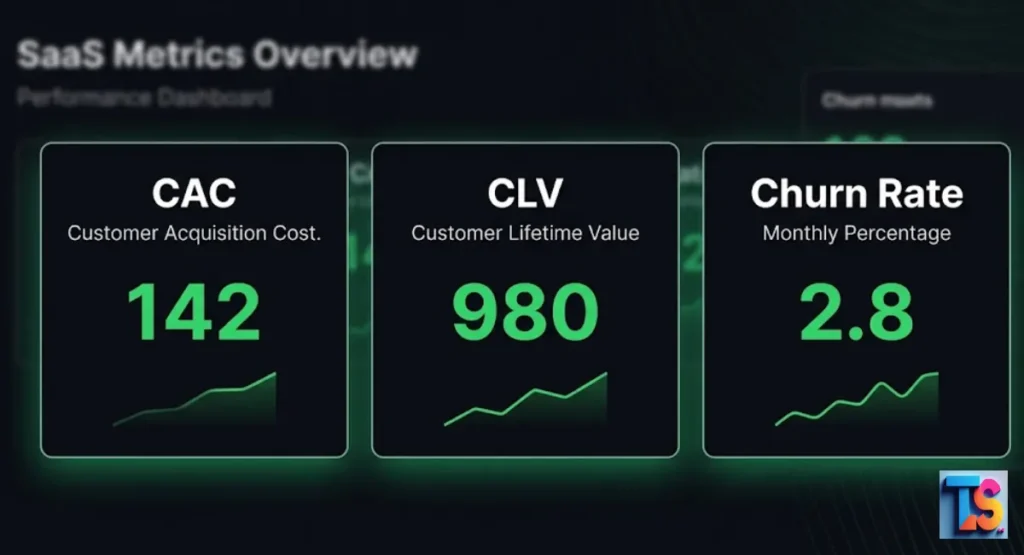
Monitoring your performance dashboard constantly allows you to track real user behavior, isolate drop-off points in your registration funnel, and systematically optimize conversion paths.
Understanding these core numbers keeps your business spending efficient and ensures you stay on a profitable growth track.
Customer Acquisition Cost (CAC)
Customer Acquisition Cost measures the total amount of sales and marketing money spent to acquire a single new user. Keeping this number low ensures that your marketing efforts stay highly profitable and that your business does not burn through its available cash reserves on inefficient campaigns.
Customer Lifetime Value (CLV)
Customer Lifetime Value represents the total gross revenue a single user account generates for your business throughout their entire subscription lifecycle.
Calculating this exact value helps you determine precisely how much marketing money you can safely spend upfront to win a new customer to your platform.
Churn Rate
Churn Rate tracks the percentage of existing subscribers who cancel their paid software memberships during a specific monthly time frame. A low churn percentage proves that your application is delivering high daily utility and holding long-term value for your active customer base.
| Metric | Definition | Why It Matters for Growth |
| Customer Acquisition Cost | All sales and marketing cash spent is divided by the new users won. | Keeps your marketing budget safe and sustainable. |
| Customer Lifetime Value | Total cash earned from one account while they stay with you. | Tells you exactly how much to spend to win a user. |
| Churn Rate | The share of users who cancel their monthly plans each month. | Proves if your software gives actual daily value. |
How to Bootstrap a SaaS Startup: Stage by Stage
Stage 1: Validate ($0 – $1K MRR): Focus on Paint Points, Not Features
During this initial introductory phase, your single objective is to confirm that real business owners will spend actual money to resolve their daily administrative problems.
You must conduct deep customer interviews, build basic explanatory landing pages, and deliver simple manual services before investing resources into writing complex software code.
Do not worry about automation yet. Focus completely on learning what makes users pull out their credit cards, ensuring you build a product based on real market demand instead of your personal wishes.
Stage 2: Build ($1K – $10K MRR): Launching Your MVP Before Full SaaS
Developing a minimum viable product involves building a highly streamlined tool that solves the single most critical bottleneck your validated target users face daily.
You must launch this basic working version quickly to gather real user data, eliminate bugs, and establish steady monthly recurring subscription revenue.
Keep the tool clean and simple. Avoid adding extra bells and whistles during this step, focusing all your efforts on making sure your core tool works flawlessly and keeps early buyers happy every day.
Stage 3: Grow ($10K – $50K MRR): Reinvesting Profits, Not Just Revenue
Once your software product aligns perfectly with verified market needs, you must systematically channel your incoming subscription profits directly back into organic content production, instructional guides, and core system performance upgrades.
Maintain minimal personal overhead to protect your cash runway and accelerate customer acquisition velocity completely debt-free.
This is the time to build your content engine. Use your incoming money to scale up the free channels that already bring in users, turning your early success into a permanent traffic asset for your business.
Stage 4: Scale ($50K – $200K MRR): Building the Team in the Right Way
Transitioning your self-funded startup from a solo operation into a structured organization requires hiring specialized support agents, product engineers, and marketing professionals.
You must document your daily operational workflows clearly to ensure your software delivery speed and customer service quality remain world-class during periods of heavy user growth.
Hiring lets you step away from daily tasks to focus on big-picture growth. Standardizing your workflows ensures that new team members can serve users perfectly without needing your direct help for every single customer issue.
Stage 5: Compound ($200K+ MRR): Expanding Creativity and New Channels
Possessing a secure market position and robust monthly cash reserves allows you to safely explore advanced customer acquisition paths like acquiring micro-tools, entering international markets, and launching major brand campaigns.
Continually optimize your established conversion funnels while carefully testing creative marketing channels to win broader segments of your industry.
Look for creative ways to dominate your market. You now have the cash to fund long-term projects, buy out minor competitors, and create unique features that separate your business from everyone else.
What to Prioritise: Bootstrapped vs. VC-Backed Growth Playbooks
Self-funded business models prioritize achieving immediate operational profitability, maintaining positive net cash flow, and securing long-term customer retention from their initial product launch.
Conversely, venture-backed organizations focus heavily on aggressive market capture, explosive user acquisition metrics, and high capital burn rates, deliberately deferring net profitability for multiple financial quarters.
A self-funded company grows naturally based on real customer money. This path means you build a highly stable business that does not rely on constant investor checks to survive, giving you a safe and secure foundation for long-term financial success.
Avoiding Pitfalls: Channels and Activities to Defer Initially
Early-stage self-funded startups must strictly avoid expensive general brand awareness campaigns, unproven premium advertising networks, and highly complex enterprise sales cycles that require months of negotiation.
You should refuse to spend your limited financial runway or development hours building secondary features or courting giant corporate entities before your core software operates flawlessly.
Stick to short sales cycles where you can talk to the decision-maker directly. This focus keeps your cash flow moving and prevents your business from getting stuck waiting on a single giant client who might change their mind.
Common Bootstrapping Mistakes to Avoid
Underpricing your core software application out of fear of market rejection deprives your company of the daily organic revenue required to sustain basic operations and maintain server infrastructure.
Developing excessive numbers of auxiliary tool features based on personal intuition rather than listening intently to what your paying consumers explicitly request represents a major waste of time.
- Ignoring user retention and support trends, which creates a broken funnel where you lose old subscribers as fast as you sign up new ones.
- Failing to look at your real business costs, marketing spend, and total cash runway carefully every single month.
When Bootstrapping Is Not the Right Path
The self-funded path is generally inappropriate if your software concept demands substantial upfront capital expenditures for specialized hardware arrays, complex international legal compliance protocols, or exhaustive laboratory testing before launch.
If your product requires millions of simultaneous active users to deliver any measurable marketplace value, securing venture capital early is necessary.
Evaluate your market entry hurdles before using your savings. If the path to launch requires years of pure development without any chance of early sales, outside funding is a safer choice for your project.
The Path From Bootstrap to Backed: What Investors Look for Beyond Revenue
Metrics That Matter to Modern VCs
Venture capital organizations inspect performance efficiency metrics like capital efficiency ratios, long-term user retention curves, and the percentage of total customer acquisition originating from completely organic channels.
They want transparent analytical proof that every dollar they invest will expand predictably within an already functional and stable digital sales system.
They want to see that your business does not require heavy spending to win users. High organic traffic and excellent customer loyalty prove to investors that your company is a safe, high-growth home for their capital.
Team, Execution, and Product Discipline
Investment firms evaluate how resourcefully a founding team navigated initial budget limitations, maintained product focus, and iterated software features based on direct user reviews.
Demonstrating a clean history of disciplined spending, agile engineering deployment, and exceptionally low customer cancellations confirms your leadership team can manage larger sums of capital responsibly.
Your ability to reach major goals without outside cash is your biggest selling point. It shows you know how to build a real business, making you a much lower risk for investors looking for great teams.
When to Raise Capital vs. Staying Self-Funded
You should consider raising institutional investment capital only when you have developed a highly predictable, repeatable customer acquisition system and need immediate funds to capture a massive market opening before competitors step in.
Remain entirely self-funded if you value absolute operational freedom, wish to protect total equity ownership, and enjoy scaling at your own pace.
Never raise money just because you ran out of ideas. Capital should be used like fuel for a fire that is already burning brightly, helping you scale an acquisition system that works perfectly.
FAQs
What is the Most Cost-Effective Way to Get First Customers for a SaaS Product?
The most economical strategy involves conducting direct personal outreach to highly specific ideal prospects within targeted web communities, combined with creating highly educational content. By helping potential software buyers solve their minor daily business frustrations in public channels, you naturally build deep professional trust and generate organic traffic without paying for advertising.
How long does it typically take to acquire the first 100 customers for a SaaS start-up?
For the vast majority of self-funded software startups, acquiring your first 100 paying customers usually requires between three and nine months of concentrated marketing effort. This timeline fluctuates based on your specific industry complexity, your monthly subscription price points, and how effectively your tool addresses an urgent, painful commercial problem. Should I focus on inbound or outbound marketing initially?
Founders should implement a balanced combination of both approaches by executing direct outbound campaigns to win immediate initial customers while concurrently building long-term inbound content assets. Outbound activities provide rapid market feedback and fast cash flow, whereas your educational blog posts establish a reliable source of free search traffic over time.
How can I measure the success of my customer acquisition strategies?
You can calculate the success of your strategy by tracking the exact mathematical relationship between the time or capital spent on a marketing channel and the recurring revenue it generates. A highly effective acquisition system demonstrates a continuously declining acquisition cost alongside expanding user lifetimes and very low cancellation rates.
What are some common mistakes to avoid when trying to get first customers for SaaS?
The most damaging mistakes include targeting an overly broad target audience, avoiding asking for financial payment early in the process, and hiding your software pricing structure behind mandatory demonstration calls. Make it incredibly easy for web visitors to register independently, experience immediate value, and submit their credit card details securely.
How important is customer feedback in the early stages of a SaaS start-up?
Early user insights are the absolute lifeblood of a bootstrapped software business because they inform you precisely which features deliver high value and which ones should be removed. Interacting closely with your initial customer base allows you to refine your product onboarding steps, minimize cancellation trends, and identify winning marketing language.
The Bottom Line
Building a successful self-funded software company requires deep focus on smart spending, real customer care, and highly disciplined daily work.
By focusing on immediate value, picking free marketing channels that scale, and listening closely to user comments, you can build a highly profitable, self-growing business without ever giving up ownership of your company.