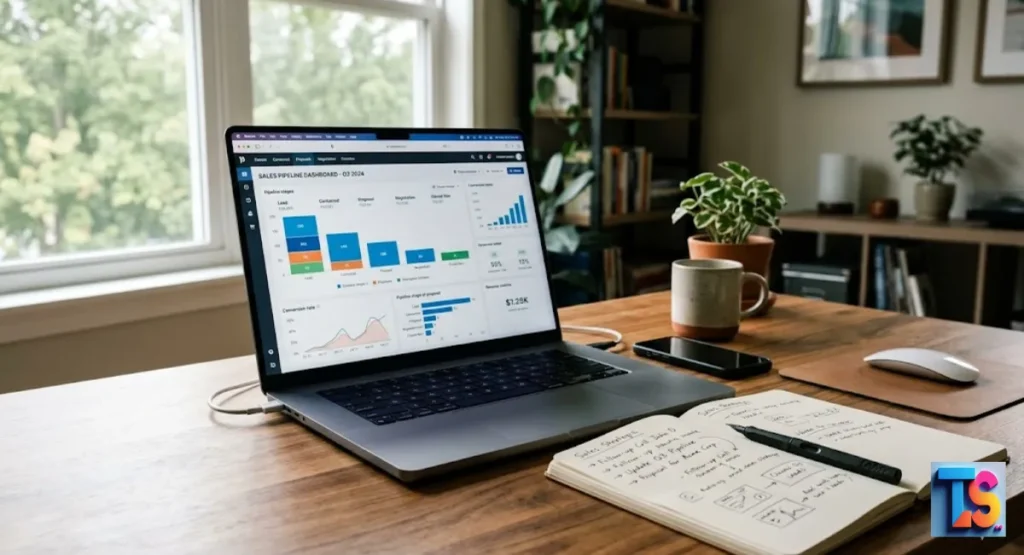
Staying ahead in today’s fast-moving market requires more than just guessing. You need a Real-time competitor pricing tracker to keep your business profitable and sharp. Prices shift in seconds across the web. If you rely on old, manual spreadsheets, you lose money while rivals grab your customers.
This smart system monitors every change, giving you the Hyper-Local Competitive Intelligence you need to act fast. By using automated pricing tools, you stop the guesswork and start winning.
You protect your profit margins and keep your brand on top. Whether you are a small shop or a big player, real-time data is your best weapon for strategic growth and lasting success.
What is a Real-Time Competitor Pricing Tracker?
A real-time competitor pricing tracker is a clever piece of software that keeps a close eye on the prices your rivals charge for their goods and services throughout the day.
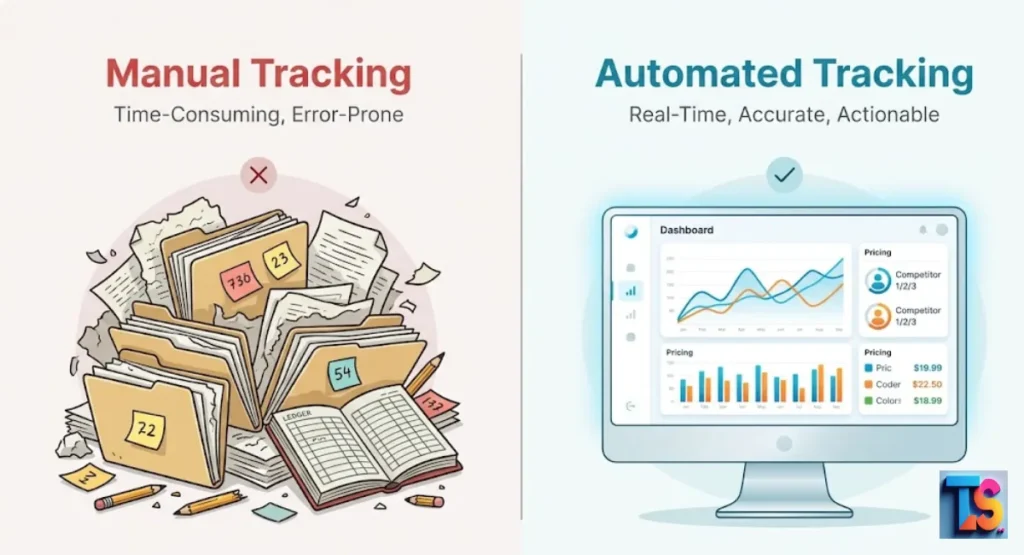
It watches their websites and sends you a fast update the moment a price changes. You stay informed. You gain control. Manual tracking is just too slow. It causes errors.
You lose chances. By using this automated tool, you fix the issue of old, bad data. You make quick, smart choices that help your business stay profitable. You beat rivals who still rely on slow, hand-written spreadsheets.
Defining “Real-Time” in the Marketplace Context
Today, real-time means watching prices as they happen, not just once at the start of your workday. Many smart shops change their prices many times each day to match current demand, supply levels, or what they have left in their warehouse.
A real-time tracker uses automated systems to visit your competitors’ pages constantly. You see price drops. You see price hikes. You react instantly.
Why Manual Price Tracking Breaks Down
Manual price tracking fails because it moves too slowly and people make mistakes. When you check prices yourself, you only get a quick snapshot of one single moment in time.
By the time you finish your research, your competitors may have already updated their prices again. Your data is old. Your work is useless. You fall behind.
The Structural Threats to Pricing Integrity
Relying on manual checks creates giant, dangerous blind spots in your business. If a rival runs a flash sale at 2:00 PM and ends it at 4:00 PM, a manual check at 9:00 AM misses the whole thing.
You miss the truth. You lose visibility. This gap prevents you from understanding the full market cycle. Over time, these gaps lead to bad, costly choices.
Why Competitor Price Monitoring Matters
Effective monitoring is the backbone of a successful business strategy. It helps you see your place in the market compared to others. By tracking competitor movements, you identify patterns and protect your profit margins.
You avoid bad price wars that hurt everyone involved. It turns raw market data into a clear, solid path for growth.
How Real-Time Price Tracking Works
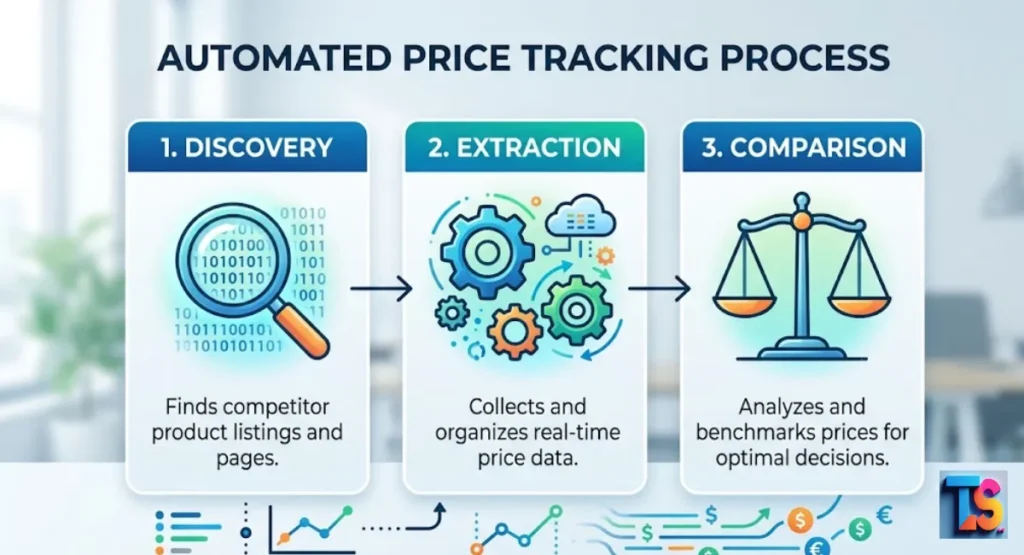
Real-time tracking works by using automated bots to scan competitor websites for specific product prices. These systems pull the price data, compare it against your own, and save the information in a central, easy-to-read dashboard.
This happens in the background. You see trends. You stay ahead. You perform zero manual searches.
How does automated competitor price tracking work in practice?
The process involves three simple steps: discovery, extraction, and comparison. First, the tool finds the right products. Second, it scrapes the current price from the competitor’s site.
Third, it stores that value and compares it to yours. This cycle repeats over and over. You always have the latest, most accurate price information.
How AI & ML Revolutionize Price Tracking
Artificial intelligence and machine learning make price tracking much smarter. Basic tools just look for simple numbers, but AI can recognize products even if the names or descriptions look slightly different between sites. By 2026, decentralized AI agents are the industry standard.
They normalize and standardize price comparisons across every global digital marketplace.
AI’s Role in Product Matching and Trend Analysis: Practical Applications
AI helps identify trends that humans often miss. For example, it can spot that a rival always lowers prices on weekends. By looking at these past patterns, the system guesses when a rival will drop prices next.
You adjust your strategy now. You act first. You stay one step ahead of them.
Key Features of Competitor Price Tracking
A strong tracker must be fast, accurate, and very easy to use. It should provide more than just raw data; it should offer insights that allow you to take action.
When you pick a system, choose tools that handle large amounts of data and provide clear, simple reports for your team to use every single day.
Speed and Accuracy: The Non-Negotiables
Speed is vital in a market where prices change in minutes. If your tracker is slow, you miss the chance to adjust your own rates. Accuracy is just as important.
If the tool records the wrong price, your automated choices will be based on bad data. You lose revenue. You hurt your reputation.
Scalability: From Niche to Broad Marketplace Coverage
Your business will likely grow, and your monitoring needs will grow too. A good tracking tool scales easily, allowing you to track ten products today and ten thousand tomorrow.
It should handle many sources, including big stores, social media markets, and independent supplier websites without slowing down or failing on you.
Actionable Alerts and Automated Insights
Data is useless without action. High-quality trackers send instant alerts via email or dashboard notifications when a price changes.
Some tools go a step further by suggesting price changes based on your own rules. This removes the guesswork. You maintain an edge. You save your time.
Integration Capabilities: Connecting Intelligence to Action
Your pricing tool should talk to your other business software. Integration with your store or inventory management system is essential.
This allows for a smooth flow of information, enabling your business to update prices across your entire store automatically the moment a competitor moves. You keep your revenue stream fully protected.
Strategic Advantages of Competitor Price Monitoring
Monitoring competitors is not just about copying prices; it is about strategic positioning. It allows you to protect your bottom line while identifying chances to win more sales.
By using data-driven insights, you move away from guessing and toward a scientific approach to your retail or service pricing for long-term growth.
Margin Protection and Buy Box Ownership Wins
Tracking helps you keep your margins healthy. By knowing the absolute lowest price in the market, you avoid dropping your prices when you do not need to.
If you compete for a top spot on a site, the tracker tells you the exact price you need to win the sale. You win. You profit.
Competitive Advantage Through Strategic Repricing
Strategic repricing means you choose when to be cheaper and when to be premium. With real-time data, you decide to match a competitor on high-traffic items while keeping higher prices on items where you have unique value.
This flexibility is a massive advantage in a crowded market. You build brand authority.
Accelerating Revenue Growth with Pricing Agility
Agility is the ability to adapt to market shifts quickly. When you see a competitor run out of stock on a popular item, real-time data allows you to safely increase your prices to make more money.
This responsiveness creates a faster, more efficient business cycle that grows with the market and improves your overall performance.
Identifying areas for optimization
Local contractors often lose jobs because they do not know the service areas of their nearby competition. By choosing to Scrape service areas for local contractors, you identify coverage gaps and strategically expand your own service zone to capture neglected local demand.
You stay competitive. You stay visible. You capture potential customers.
How to Build Your Pricing Intelligence System
Building a system requires a mix of good software, a clear strategy, and human oversight. You do not need to be a coder to get started.
Many modern platforms offer simple, no-code solutions that allow you to set up your first price tracking dashboard in less than an hour. You build a foundation. You grow.
Mapping Your Competitive Landscape
New competitors entering your niche can quickly steal market share if you are unaware of their arrival. To solve this, you should implement automated systems to Track new local business registrations.
This provides an early warning and allows you to adjust your local marketing and pricing strategies before new rivals can take hold.
Bridging the Gap: No-Code Automation for Price Analysis
Websites with security issues, such as expired certificates, lose customer trust and often see a drop in traffic. You can proactively Find businesses with expired SSL to identify vulnerable competitors.
By highlighting your own secure site status, you draw customers away from these less reliable alternatives and capture their lost market share.
Human Insight Meets AI Efficiency: The Strategic Overlay
Inconsistent business listings across the web confuse customers and hurt local search rankings. You lose local traffic. You can Extract local citation gaps for SEO to identify where your business information is missing or incorrect.
This allows you to clean up your data and improve your visibility compared to competitors with broken, messy citations.
Challenges and Limitations
Price tracking is powerful, but it comes with challenges. Some websites use advanced methods to hide their prices from automated tools.
Understanding these limits helps you manage your expectations and seek out the right tools that have the technical power to bypass common obstacles while maintaining your own business’s integrity and data ethics.
Dynamic Pricing
Some competitors use complex math to change prices based on who visits their site. If a competitor’s price changes for every user, a standard tracker might struggle to find the true price.
You need a tool that accounts for these variations by using different locations to get an accurate, honest reading.
Personalized Pricing
Personalized pricing targets specific users based on their shopping history. If your tracker does not act like a normal browser, it might record an incorrect, personalized price.
Ensure your tool uses clean, anonymous connections to retrieve generic market prices rather than restricted, user-specific data. This keeps your internal data clean and highly reliable.
Anti-Bot Detection
Major websites have security systems to block bots. If your tracker gets blocked, you stop receiving data. Look for professional-grade tracking services that use rotating IP addresses and smart request handling to mimic human behavior.
This keeps your data stream consistent even when competitors try to block automated access to their price data.
Price Behind Login
Some pricing data hides behind a member login or a B2B portal. Standard scrapers cannot access this information.
If your key competitors hide their pricing this way, you may need a custom solution that can securely log in to those platforms to extract the necessary information and maintain your competitive market advantage.
FAQs
How often should competitor prices be updated?
Prices should be updated based on your market’s speed. In fast, moving markets like electronics, checking hourly is best. For slower markets, daily updates are usually enough. The key is to match your update frequency to the speed at which your competitors change their own prices to stay relevant.
How does AI improve product matching accuracy in price tracking systems?
AI uses smart analysis to compare product titles, images, and specifications. Even if one store calls an item a Blue Running Shoe and another calls it a Men’s Athletic Sneaker, the AI knows they are the same. This prevents bad data. You compare apples to apples.
What is the difference between dynamic pricing and competitive pricing?
Competitive pricing is the act of setting your price based on what others charge. Dynamic pricing is a method where prices change automatically based on real-time factors like demand and inventory. You use competitive data as an input to power your own dynamic pricing strategy for the best results.
Can these tools effectively monitor international competitors?
Yes, but you must ensure your tool supports international data collection. This involves using proxy servers located in the specific countries you wish to monitor. This ensures you see the exact price, currency, and deals that local customers see in those regions. You scale your business presence across the globe.
What are the risks of competitor price tracking?
The main risks are data inaccuracies and legal compliance. If you rely on poor data, you make bad pricing decisions. Additionally, always ensure your tracking methods comply with the terms of service of the websites you monitor. Using a professional, reputable tracking service is the best way to mitigate these risks. The bottom line is, you gain an edge by using the right tools to watch your market closely.
Hyper-Local Competitive Intelligence
- Real-time competitor pricing tracker: Watch rival prices change instantly to stay ahead.
- Scrape service areas for local contractors: Find where your rivals work to grow your own reach.
- Track new local business registrations: Spot new shops before they take your customers.
- Find businesses with expired SSL: Beat rivals who have weak, unsafe websites.
- Extract local citation gaps for SEO: Fix your business info to rank higher than others.