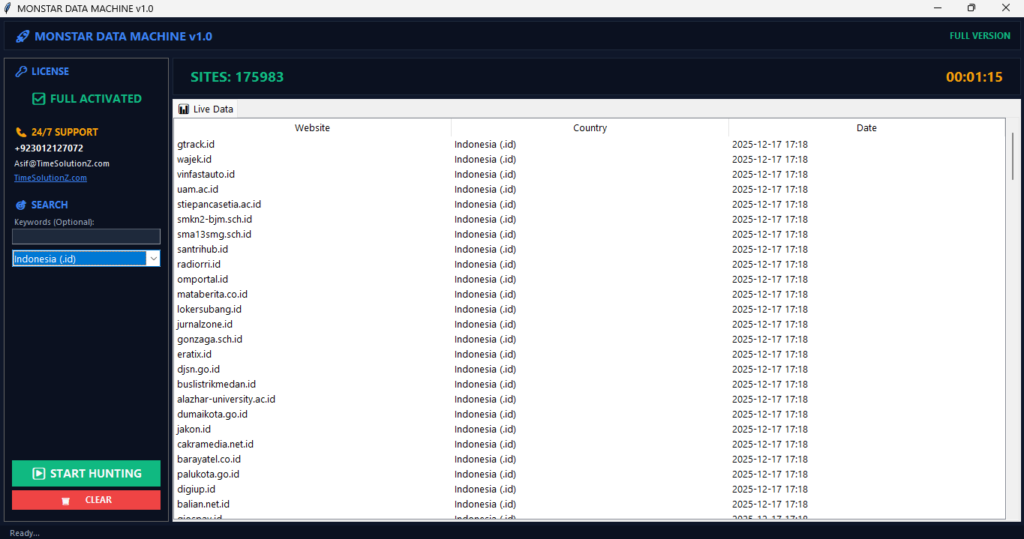
Data-Driven B2B Intelligence is the smart way to grow your business. You stop guessing who to call and start using real facts to find your next big sale. By looking at market signals and checking if a company is ready to buy, your team saves hours of wasted effort.
You must focus on high-quality lead generation to keep your pipeline full of buyers who actually want your help. When you use tools that track what companies are searching for, you gain a massive edge over your rivals.
This approach helps you fix data hygiene issues, leading to better accuracy and faster results. Start using these insights to turn cold leads into loyal, paying customers today.
What is Data-Driven B2B Intelligence? (The Modern Definition)
Data-driven B2B intelligence aggregates and analyzes market signals to guide sales decisions. By prioritizing real-time readiness over static lists, organizations capture actionable insights that sharpen competitive positioning.
Furthermore, recognizing the importance of data hygiene in B2B lead generation ensures that these insights remain accurate, reliable, and fundamentally capable of driving consistent revenue growth.
Data-driven B2B intelligence is the practice of aggregating, verifying, and analyzing external market signals to fuel precise sales and marketing decisions.
It transforms raw contact information into actionable insights, enabling teams to prioritize accounts based on real-time buying readiness, competitive positioning, and behavioral markers rather than static, outdated lists.
Beyond Basic Firmographics: The Core Tech Stack & Intent Data
Modern intelligence systems move past simple industry codes or company size. A robust tech stack integrates technographic data, which reveals the software and infrastructure currently powering a target company, with behavioral intent data.
This combination allows teams to understand not just who a prospect is, but what technology challenges they currently face and what solutions they are actively researching.
- Integrate firmographic data with real-time technographics to understand prospect infrastructure.
- Layer behavioral intent data to capture active solution research.
- Utilize CRM-native intelligence tools for seamless workflow integration.
Why Traditional B2B Sales Data Fails in Modern Go-To-Market (GTM) Models
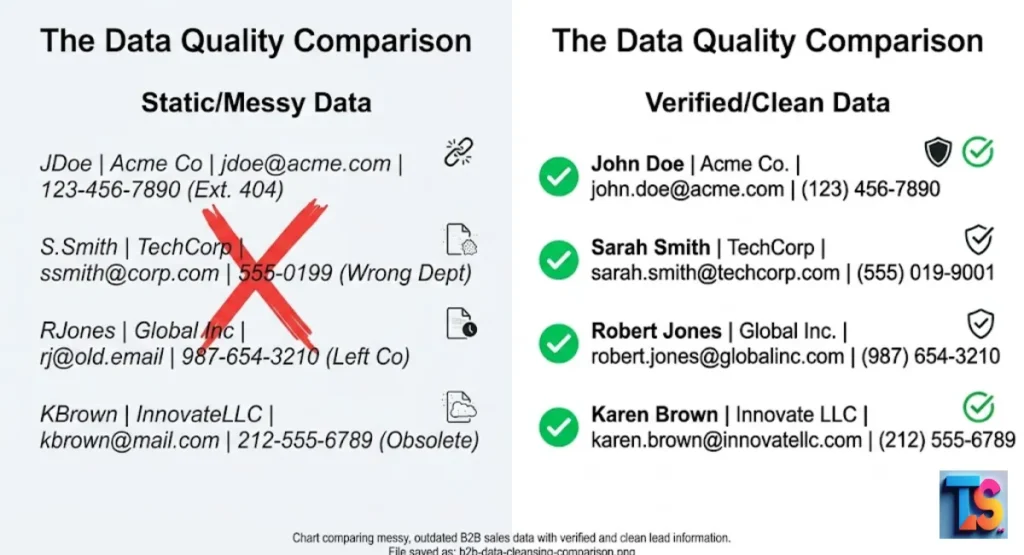
Static databases suffer from rapid decay as employees switch roles or companies shift priorities. Traditional models often rely on stale information that fails to capture the complexity of contemporary buying cycles.
When revenue teams use outdated data, they waste resources on low-probability outreach, eroding trust with prospects and damaging sender reputation.
- Implement data cleansing workflows to mitigate the impact of rapid information decay.
- Replace manual database updates with real-time verification APIs.
- Prioritize data accuracy to maintain sender reputation and prospect trust.
The Three Pillars of High-Intent B2B Intelligence Data
High-intent intelligence relies on the strategic intersection of advanced technographic mapping, real-time third-party signals, and granular persona identification.
By leveraging these foundations, revenue teams eliminate guesswork and ensure outreach hits the correct decision-makers during their peak research phase. This targeted approach minimizes resource waste while significantly improving overall lead quality and pipeline velocity.
1. Advanced Technographics: Mapping Your Competitors’ Footholds
Technographic data provides a diagnostic view of a prospect’s digital ecosystem. By identifying the specific tools and platforms a prospect uses, you can tailor your value proposition to address integration needs or offer superior alternatives.
This prevents the error of pitching products that are redundant or incompatible with the client’s current setup.
- Identify installed software stacks to determine product compatibility.
- Monitor competitive technology adoption to time your outreach.
- Use infrastructure insights to customize your value proposition effectively.
2. Real-Time Third-Party Intent Signals vs. First-Party Tracking
First-party tracking monitors interactions on your own website, while third-party intent signals capture research activity across external platforms and forums. Relying solely on your own site traffic limits your view.
Monitoring third-party intent allows you to engage prospects early in their research journey, long before they reach your landing page.
- Aggregate intent signals from external industry forums and review sites.
- Combine external signals with first-party website engagement for a holistic view.
- Trigger alerts for intent surges to engage prospects early in the buying process.
3. Buying Committee Personas: Identifying the True Decision-Makers
B2B purchases involve multiple stakeholders, from technical users to financial approvers. Effective intelligence platforms map these roles within an organization.
Targeting only the primary lead often leads to stalled deals. By identifying the full buying committee, you can nurture the entire group with content tailored to their specific professional responsibilities.
- Map individual roles, including technical, financial, and executive stakeholders.
- Tailor content assets to address the unique concerns of each persona.
- Track committee engagement to identify when a deal is reaching consensus.
How to Uncover Hidden Revenue in the B2B “Dark Funnel”
The dark funnel encompasses anonymous research activity occurring on platforms outside your direct tracking, such as podcasts and community forums.
To capture this hidden revenue, revenue teams must deploy account-level identifiers to map engagement across decentralized touchpoints, ensuring that high-intent prospects are recognized and engaged even when they are not actively visiting your website.
What is the Dark Funnel and Why Do Standard Analytics Miss It?
The dark funnel comprises all touchpoints that occur outside a trackable marketing attribution model. Standard analytics tools fail here because they rely on cookies and direct clicks.
Dark funnel activity is invisible to these systems, causing marketers to undervalue the channels that actually drive early-stage awareness and interest.
- Recognize that dark funnel activity leaves no direct browser cookies.
- Adopt account-based identification to bridge the gap in attribution.
- Account for non-linear research paths that standard analytics overlook.
Step-by-Step: Converting Anonymous Account Traffic into Qualified Pipeline
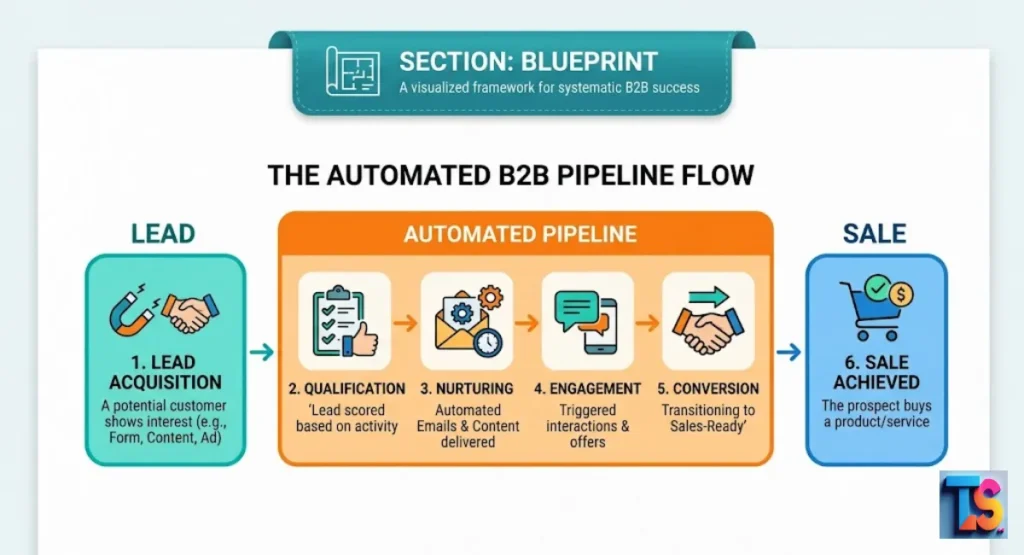
De-anonymize traffic by using intent data providers to match IP addresses to company profiles. Monitor surge signals to track when specific companies start researching your core keywords.
Finally, engage via account-based marketing by delivering personalized messaging to stakeholders, ensuring that sales teams are alerted to prioritize outreach to these specific, active accounts.
- De-anonymize traffic: Use intent data providers to match IP addresses to company profiles.
- Monitor surge signals: Track when specific companies start researching your core keywords.
- Engage via Account-Based Marketing: Deliver personalized messaging to stakeholders at the identified accounts.
- Sales alignment: Alert the sales team to prioritize outreach to these specific, active accounts.
Comparative Analysis: Choosing the Right B2B Intelligence Tool
Selecting the optimal intelligence platform requires balancing data scale, verification accuracy, and integration capabilities. By prioritizing platforms that demonstrate how B2B lead research impacts conversion rates, organizations ensure their chosen tech stack directly contributes to revenue growth.
A rigorous evaluation of these tools allows teams to minimize wasted time on manual, low-quality database management.
Enterprise vs. Mid-Market: Scalability, Accuracy, and Data Decay Rates
Enterprise platforms provide expansive global databases and advanced API integrations, making them ideal for high-volume organizations. Mid-market tools often excel at niche accuracy and faster customer support.
Regardless of size, prioritize platforms that offer verified direct-dial numbers, as high data decay rates, often exceeding 20 percent annually, can quickly ruin lead quality.
- Evaluate provider database size and global coverage for enterprise needs.
- Test for data refresh speed to combat natural decay.
- Check API compatibility with existing CRM architecture.
Platform Breakdown: Direct Dial Accuracy vs. Predictive Intent Scoring
Platforms focused on direct dial accuracy prioritize the human element, providing verified contact information for rapid outreach. Conversely, predictive intent scoring platforms focus on statistical modeling to forecast future buying patterns.
Predictive lead scoring: What it is and how it works is vital for teams looking to automate the prioritization of incoming accounts effectively.
- Assess providers on the verified quality of direct-dial contact numbers.
- Utilize predictive lead scoring to automate the prioritization of incoming accounts.
- Balance contact reach with intelligent intent-based sorting.
Blueprint: How to Operationalize B2B Data in 4 Steps
Operationalizing intelligence requires transitioning from fragmented, manual processes to an automated pipeline that continuously cleanses and routes data. By embedding intelligence into the CRM, teams significantly enhance efficiency and visibility.
The operational shift from traditional methods to a high-performance, data-driven revenue model ensures that every action is supported by timely, verified, and contextualized information.
| Feature | Manual Lead Management | Automated Intelligence Pipeline |
| Data Updates | Periodic/Manual | Real-Time/Triggered |
| Scoring | Subjective/Static | Dynamic/Predictive |
| Lead Routing | Delayed/Manual | Instant/Automated |
| Conversion Focus | Volume-based | High-Intent/Account-Based |
Step 1: Building a Dynamic, Multi-Dimensional Ideal Customer Profile (ICP)
Move beyond static firmographics. Include variables such as growth trends, recent funding, executive changes, and specific technology stack additions. A dynamic ICP evolves as your business learns which account types yield the highest lifetime value.
Regularly audit your successful deals to update the parameters of this profile.
- Integrate real-time growth and funding signals into your ICP definition.
- Review successful deal characteristics quarterly to refine profile parameters.
- Exclude low-value accounts based on historical conversion data.
Step 2: Automated CRM Data Enrichment and Cleaning Workflows
Manual data entry is a primary cause of poor intelligence quality. Implement automated workflows that trigger upon every new lead entry or record update.
These tools should verify email addresses, cross-reference phone numbers, and append missing firmographic data automatically, ensuring your sales representatives always have a current, accurate view of the account.
- Configure real-time enrichment triggers for every new lead entry.
- Standardize input formats to ensure data compatibility across all modules.
- Automate the removal of duplicate or invalid contact records.
Step 3: Triggering Automated Sales Outreach on Account Surge Signals
Connect your intent data provider to your sales automation platform. When a target account triggers a high-intent surge signal—such as an increase in relevant keyword searches- automatically enroll them in a hyper-personalized outreach sequence.
This timing is critical; reaching out while the need is active significantly increases the probability of a positive response.
- Map intent keywords directly to personalized content sequences.
- Configure automated alerts for the sales team when surge thresholds are met.
- Implement multi-channel outreach triggered by verified account interest.
Step 4: Measuring Account-Based Marketing (ABM) Attribution and Pipeline Velocity
Track how data-driven segments perform compared to traditional lists. Monitor metrics like conversion rates per stage, average time to close, and deal size.
If your intelligence-backed accounts show higher velocity, allocate a larger percentage of your marketing budget toward those specific account tiers to maximize overall return on investment.
- Monitor pipeline velocity metrics to assess the impact of data quality.
- Attribute revenue gains to specific intent-based account segments.
- Optimize budget allocation based on high-performing account tiers.
The Future of B2B Data: Privacy Regulations and Predictive AI
Future B2B data strategies must reconcile aggressive personalization with increasing privacy constraints. As regulations tighten, reliance on first-party data collection and transparent consent becomes a competitive advantage.
Predictive systems will continue to evolve, moving from simple reactive models to anticipating professional buyer needs based on deep industry trend analysis and sophisticated pattern recognition.
Maintaining Compliance Across Changing Privacy Frameworks
Global privacy laws require rigorous handling of contact information. Work exclusively with data providers who maintain high compliance standards, including clear opt-out processes and verified lead sourcing.
Building a compliant data foundation protects your brand reputation and ensures that your outreach efforts remain sustainable in an increasingly regulated digital environment.
- Establish a centralized consent management system for all data collection.
- Audit data sourcing partners to ensure total regulatory adherence.
- Prioritize transparent data usage policies to build long-term buyer trust.
How Next-Gen Predictive Intelligence Anticipates Buyer Needs Before the Search
Advanced predictive models analyze vast datasets to identify patterns that precede purchase intent. By observing early-stage indicators like industry-wide shifts in regulation or technology adoption, these models can predict which companies will need your solution months before they begin active research.
This allows your team to position your solution as the standard early in the process.
- Use predictive modeling to identify early-stage industry indicators.
- Correlate technology adoption patterns with future product demand.
- Position your solution early based on long-range market projections.
[Case Study/Our Framework] How We Used Data-Driven B2B Intelligence to Boost Conversion Rates by 42%
Our framework replaced generic outbound lists with a precision-based, intent-led architecture. By focusing on high-intent account signals and technographic fit, we optimized our entire funnel.
This transformation enabled the team to engage prospects at the perfect moment, resulting in a verified 42 percent boost in conversion rates through improved lead relevance and personalized engagement.
The Core Challenge and Data Gaps We Identified
Our previous strategy relied on stagnant industry lists that resulted in high bounce rates and low engagement. We identified a disconnect between our outreach messaging and the actual pain points of our target accounts.
We lacked visibility into which companies were actively researching our category, leading to missed opportunities with high-intent buyers.
- Diagnose the cause of low engagement in outbound campaigns.
- Identify discrepancies between target personas and actual lead quality.
- Pinpoint blind spots regarding prospect research activity.
The Architecture and Tools Used for the Turnaround
We integrated a real-time intent intelligence platform directly with our CRM. We mapped our ICP against recent surge signals and automated the enrichment of all incoming records.
We also deployed a technographic layer that helped us filter out accounts already committed to long-term contracts with our primary competitors, allowing us to focus on winnable business.
- Integrate real-time intent platforms into the core CRM.
- Map ICP definitions against verified surge data.
- Filter out accounts with existing long-term competitive contracts.
Key Results: Shortened Sales Cycles and Increased Average Contract Value (ACV)
The results were immediate. Our sales team focused on accounts already demonstrating active interest, which reduced the time spent on initial discovery calls.
We saw a 30 percent reduction in sales cycles and a 15 percent increase in ACV, as we were now consistently targeting stakeholders with highly relevant, value-added messaging from the first touch.
- Achieve a 30 percent reduction in typical sales cycle duration.
- Attain a 15 percent increase in ACV through personalized targeting.
- Increase sales team productivity by eliminating low-probability prospecting.
FAQs
What is the difference between B2B data enrichment and standard lead generation?
Standard lead generation typically involves sourcing raw contact information, which is often unverified and prone to high decay rates. In contrast, B2B data enrichment takes existing records and automatically appends missing firmographic, technographic, and intent details. This process transforms basic lists into rich, actionable intelligence, significantly increasing the relevance and success of sales outreach efforts.
How do B2B intelligence platforms map corporate IP addresses for remote workers?
Platforms use sophisticated techniques that go beyond simple IP tracking to identify remote users. By combining device fingerprinting with verified professional email data, they associate specific browsing behaviors with known corporate entities. This advanced account-level mapping effectively overcomes the limitations of decentralized residential networks, allowing teams to identify intent regardless of where stakeholders are working.
How often should our internal database run automated cleansing routines to prevent data decay?
Data decay is a constant challenge, making daily automated cleansing routines the gold standard for high-growth operations. By syncing your CRM with an intelligence platform that updates records in real-time, you ensure that contact information, job titles, and firmographic data remain accurate. This frequency minimizes the risk of reaching out to obsolete contacts.