Every business needs a clear path to win new customers. Relying on luck creates high financial stress and stalls your business growth. Discovering the best strategies for client acquisition keeps your pipeline full and cash flow predictable.
A reliable client acquisition system combines targeted outbound sales with value-driven inbound marketing. It utilizes automated software to discover, qualify, and convert prospects into high-paying accounts. This framework switches your company from guessing to scaling based on accurate performance metrics.
The Revenue Bridge: Marketing channels build initial awareness and attract qualified leads to your website. The sales team then engages these prospects directly to close the deals. When these two systems align, your overall conversion rate rises and your pipeline moves faster.
What is a Sustainable Client Acquisition Strategy?
A sustainable client acquisition strategy is a repeatable setup used to win new corporate accounts. It does not rely on luck or sudden shifts in the market landscape. Instead, it uses clean metrics and software to build a stable pipeline.
When asking yourself what is client acquisition in a practical business environment, it is best understood as a complete end-to-end operational framework that converts raw contacts into signed contracts. To achieve real growth, you must install a fixed client acquisition system. This system serves as the primary backbone of your sales operations team. Top companies connect their lead sources directly to database tools like HubSpot or Salesforce.
- Data Tracking: You record every single interaction with a new prospect automatically.
- Volume Control: You can scale your outreach upward when you need more deals.
- Cost Stability: You know exactly how much cash it takes to land clients.
Why Relying Solely on Word-of-Mouth Puts Your Business at Risk
Relying only on personal recommendations leaves your corporate revenue vulnerable to sudden drops. Referrals are completely out of your direct control, making financial forecasting impossible. When your personal network stops talking, your incoming deal flow dries up completely.
Traditional service firms often hit massive staffing industry client acquisition challenges by ignoring modern outreach. You cannot force past buyers to refer your brand to their business peers. A modern enterprise needs independent digital channels to maintain consistent corporate expansion.
- Zero Scalability: You cannot increase referral volume by spending more marketing capital.
- Limited Reach: Referrals restrict your brand to your current personal social circle.
- Slow Funnel Speed: Referral prospects buy on their own schedule rather than yours.
The 3 Pillars of Scalable Customer Acquisition
The three pillars of scalable customer acquisition are audience prospecting, high-value assets, and automated tracking. Balancing these three operational zones ensures your sales reps always have active conversations. Focusing on just one pillar leaves your revenue pipeline weak and exposed.
- Targeted Outbound: Reaching out directly to exact corporate buyers using specialized email software.
- Inbound Assets: Creating interactive web tools that attract ideal accounts to your site.
- Pipeline Automation: Using software to move prospects through stages without manual delays.
Phase 1: Foundations of High-Value B2B Client Acquisition
The foundations phase establishes your ideal buyer criteria and automated lead filtering frameworks. This initial setup prevents your marketing team from wasting money on bad-fit traffic. Proper foundations save your sales representatives hundreds of hours of cold calling.
A dedicated client acquisition manager spends their time perfecting this essential baseline phase. They ensure all campaign messages match the deepest problems of your corporate buyers.
- Audience Definition: You map out the exact traits of profitable target companies.
- Message Alignment: You create simple statements that speak directly to operational pain.
- Software Integration: You link your website forms to platforms like Pipedrive.
Building an Ideal Client Profile (ICP) to Filter Out Bad-Fit Leads

An Ideal Client Profile defines the specific type of company that succeeds with your service. It filters prospects by corporate revenue, employee size, and geographic location. Building this profile stops your sales team from pitching to low-budget accounts.
To construct an accurate profile, gather historical metrics from your top three customers. Pinpoint their shared corporate characteristics inside your central customer relationship management tool.
- Employee Headcount: Focus on precise company sizes, such as 50 to 100 workers.
- Revenue Brackets: Target firms making above a set milestone, like 5 million dollars.
- Current Infrastructure: Look at the software tools they already use every day.
Niche Marketing vs. Generalist Messaging: How to Command Higher Fees
Niche marketing focuses your campaign message on solving one problem for one exact industry. Generalist messaging tries to speak to everyone and becomes boring to corporate buyers. Specialization allows your company to stand out as an expert and charge premium prices.
Consider the debate of customer acquisition vs retention which is more important for corporate scaling. High-paying niche clients enjoy better retention rates, making them more valuable over time.
| Strategy Metric Comparison | Customer Acquisition Approach | Customer Retention Approach |
| Primary Operational Focus | Winning brand new corporate accounts | Keeping existing buyers active |
| Average Execution Cost | Higher initial upfront investment | Lower ongoing maintenance cost |
| Long-Term Revenue Impact | Drives immediate pipeline volume | Expands total lifetime account value |
Setting Up an Automated Lead Qualification Framework
An automated lead qualification framework scores prospects based on their authority and project budget. It uses intelligent online forms to separate ready buyers from casual web browsers. This automated filter protects your sales calendar from unverified, low-budget discovery calls.
You can build this qualification setup using smart forms connected to HubSpot, or deploy an automated client acquisition bot directly on your high-traffic landing pages to engage and vet incoming traffic in real time. Ask three direct questions before letting a user book a spot on your calendar:
- What is your current allocated budget for solving this operational issue?
- Are you the primary decision maker for new software vendor contracts?
- When does your company need this service fully active and deployed?
Phase 2: Inbound Client Acquisition Strategies (The Pull Engine)
Inbound strategies draw motivated buyers to your business by publishing high-value technical assets. This engine builds professional trust before a prospect ever speaks with your team. It changes your website into a lead generation utility that operates around the clock.
The pull engine requires upfront work but drops your customer acquisition cost over time. It creates digital content assets that capture high-intent buyers for many years.
- Content Generation: You write guides that address specific business problems directly.
- Interactive Tools: You launch web calculators that give readers instant custom answers.
- Social Proof: You display detailed case studies that prove your real-world success.
Intent-Based Content Marketing & SEO for B2B Growth
Intent-based content marketing creates articles for buyers who are actively searching for answers. It avoids broad terms in favor of phrases that indicate a readiness to purchase. This strategy drives high-quality b2b client acquisition by capturing motivated decision makers.
For instance, an agency focused on a hyper-specific vertical might build specialized guides detailing client acquisition strategies for financial advisors, ensuring every article targets the exact pain points of high-value wealth management firms rather than generic businesses.
Track the conversion performance of your content pages using your website analytics dashboard. Do not focus on basic traffic numbers or superficial page views. Monitor the exact percentage of readers who complete your lead intake forms.
- Commercial Phrases: Target words like price, comparison, or corporate implementation setup.
- Scannable Layouts: Use short lists to help busy managers read your tips fast.
- Clear Commands: Place a visible button that leads straight to your calendar page.
Designing High-Utility Lead Magnets (Calculators, Audits, and Tools)
High-utility lead magnets are interactive web tools that solve a specific problem instantly. They offer immense information value compared to generic, boring digital PDF brochures. These interactive tools earn high conversion rates because they deliver personalized data reports.
Excellent examples include online budget worksheets, operational return on investment calculators, or security audits. The user enters their current business numbers and receives an instant custom report. This data helps your sales representatives personalize their follow-up messages later.
Structuring Authority-Driven Case Studies Using the Before-After-Bridge Method
The Before-After-Bridge method highlights a client’s past struggle, their new success, and your solution. It provides real-world verification that proves your company delivers on its promises. Corporate buyers rely on deep case studies to justify their purchasing choices.
- The Before: You detail the severe operational bottleneck the client faced originally.
- The After: You display the new, optimized reality using clear data points.
- The Bridge: You explain the exact step-by-step implementation plan you deployed.
Leveraging Video Marketing and Webinars to Build Pre-Call Trust
Video marketing and webinars show your corporate expertise in an easily digestible visual format. They allow corporate decision makers to evaluate your framework before committing to a live call. This digital education phase shortens your sales cycle by removing basic doubts early.
Record a brief, high-value strategy workshop and place it on your main landing page. Focus the video entirely on resolving common sales objections your team encounters. A prospect who watches your educational video is far easier to close on the phone.
Phase 3: Outbound Client Acquisition Strategies (The Push Engine)
Outbound strategies involve reaching out directly to ideal decision makers who do not know your brand. This push engine gives your business complete control over your targeting and daily lead volume. It is the fastest way to generate immediate revenue growth for a new service.
Modern outreach relies on deep company research rather than sending generic spam. You must customize every message to fit the recipient’s exact job role.
- Direct Prospecting: You find exact buyers using tools like LinkedIn Sales Navigator.
- Personalized Messaging: You write custom emails tailored to one specific corporate goal.
- Strategic Alliances: You partner with non-competing firms to share high-quality leads.
Hyper-Personalized Cold Email Campaigns That Actually Get Replies
Hyper-personalized cold email campaigns target a small, highly filtered list of corporate prospects. They reference specific company developments, recent executive hires, or visible software gaps. This manual care ensures your email stands out inside a crowded corporate inbox.
Use tools like LinkedIn Sales Navigator to find the exact managers who handle your niche. Write cold email templates that focus entirely on helping them reach their target goals.
Subject: Quick question regarding your sales pipeline speed
Body: Noticed your team is scaling its regional outbound department. Most expanding firms face drops in data quality during fast transitions. We built an automated tracking system that keeps lead data clean. Are you open to a brief two-minute video showing our process?
Account-Based Marketing (ABM) for High-Ticket Enterprise Clients
Account-based marketing treats an individual high-value corporate account as its own distinct market. It coordinates personalized marketing and outbound sales to win complex enterprise contracts. This targeted strategy is essential for securing large, multi-year service agreements.
- Select Accounts: Identify twenty dream corporate targets using specialized platform databases.
- Map Contacts: Discover all key decision makers across the operations and finance departments.
- Deploy Assets: Send custom digital reports built specifically for those targeted individuals.
Social Selling: How to Use LinkedIn and Reddit to Source Warm Leads
Social selling means building professional relationships on digital networks where your buyers gather. It involves answering industry questions, sharing data insights, and commenting on executive posts. This strategy warms up cold prospects before your sales team pitches a deal.
On LinkedIn, share daily breakdowns of successful client projects using clear data points. On Reddit, search for active threads where users ask for help with niche operational blocks. Provide comprehensive text explanations without dropping annoying promotional links into the comments.
Setting Up Strategic Referral Partnerships with Non-Competing Businesses
Strategic referral partnerships connect your company with non-competing businesses that serve your exact audience. These alliances create a steady flow of highly trusted, warm client introductions. Because the partner has already built trust, these incoming leads convert much faster.
- Find Partners: Seek agencies that offer complementary services to your target market.
- Draft Agreements: Establish a clear reciprocal referral policy or a percentage revenue-share model.
- Maintain Contact: Meet monthly to share target client lists and pass warm introductions.
Phase 4: Optimizing the Sales Pipeline and Closing Deals
Optimizing your sales pipeline ensures you do not drop the leads created by your engines. It focuses on moving raw inquiries into signed contracts with minimal friction. A small increase in your close rate can double your corporate net profit.
This stage requires clean internal workflows and fast reaction times. Use software like Pipedrive or Salesforce to monitor every active deal stage closely.
- Objection Handling: You prepare clear answers for common buyer concerns.
- Multi-Channel Contact: You reach out across email, phone calls, and text messages.
- Client Referral Track: You turn new buyers into active referral partners immediately.
Handling the Top 3 Sales Objections: Price, Timing, and Trust
Handling objections requires preparing data-backed answers before your sales conversation begins. Most client concerns about cost or timing are actually signals of low perceived value. Shifting the conversation toward measurable return on investment resolves these executive worries.
- Price Objections: Prove how your system pays for itself within three months of deployment.
- Timing Objections: Highlight the daily financial cost of delaying an operational fix.
- Trust Objections: Share third-party industry benchmarks from recognizable firms you have helped.
Building a Multi-Channel Follow-Up Sequence (Email, Phone, SMS)
A multi-channel follow-up sequence uses different communication lines to stay top-of-mind with prospects. Most high-ticket contracts close after the fifth contact attempt during a sales campaign. Spreading your touches across email, phone, and professional networks increases your final connection rate.
Space your outreach points naturally across a ten-day period to avoid annoying the buyer. Never send generic messages that just ask for a quick update. Every step in your follow-up sequence must deliver a fresh piece of helpful industry data.
- First Touch: Send a helpful article addressing their main industry problem.
- Second Touch: Make a brief phone call to discuss the article points.
- Third Touch: Send a direct message on an established professional network.
- Fourth Touch: Drop a brief text message with a short client success video.
Turning Existing Customers into an Incentivized Referral Machine
An incentivized referral machine encourages current happy clients to introduce your team to new buyers. It uses formal rewards, service credits, or cash bonuses to build an active acquisition channel. Business decision makers trust peer recommendations over any form of paid advertising.
Ask for new introductions immediately after delivering a highly successful monthly performance report. Provide your client with a pre-written introductory email template to keep the task easy.
Phase 5: Tracking Key Client Acquisition Metrics (ROI & Scaling)
Tracking metrics allows your company to scale its marketing budget without burning through cash. It reveals exactly which digital channels produce profit and which ones lose money. Making strategic decisions without hard data can destroy your corporate cash reserves.
Review your metric dashboards every Friday afternoon with your leadership team. Focus your energy on numbers that directly affect your corporate bank balance.
- Cost Analysis: You measure exact marketing spend against new revenue won.
- Speed Tracking: You monitor how fast deals move through your sales funnel.
- Dashboard Cleaning: You remove useless metrics that do not impact your profits.
Understanding the Relationship Between Customer Acquisition Cost (CAC) and Lifetime Value (LTV)

The ratio between your acquisition cost and lifetime value determines long-term corporate survival. Customer Acquisition Cost measures the total marketing and sales dollars spent to win one account. Lifetime Value tracks the total gross revenue that a single account pays your business.
To calculate your acquisition cost, divide total spend by your new clients won. A healthy business model demands a Lifetime Value that is three times larger than your acquisition cost.
Customer Acquisition Cost formula: Total Marketing Spend plus Total Sales Spend divided by Number of New Clients Won.
Lifetime Value formula: Average Monthly Service Fee multiplied by Average Customer Lifespan in Months.
Tracking Conversion Rates, Close Rates, and Pipeline Velocity
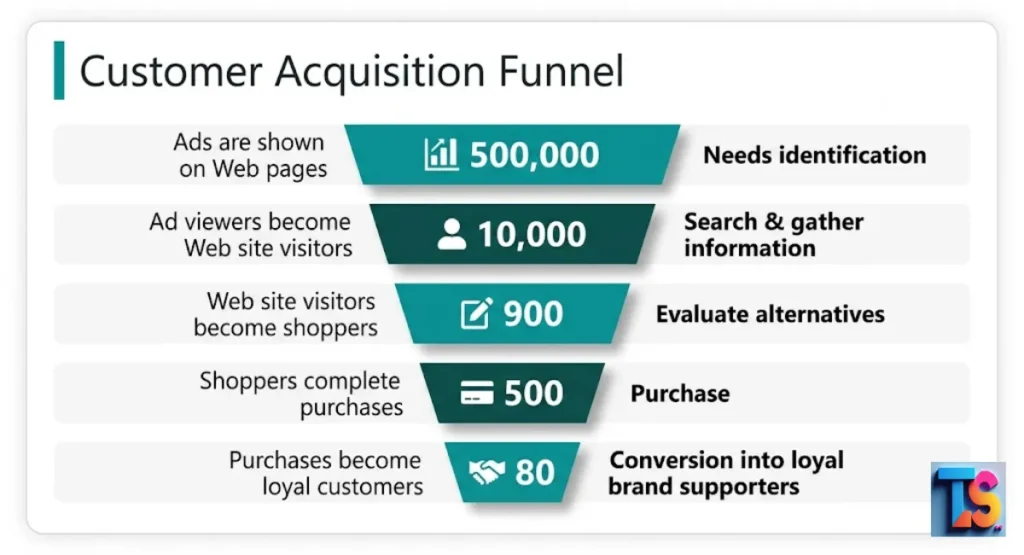
Pipeline velocity tracks how many days a prospect spends moving through your sales funnel. Measuring conversion rates at each individual deal stage exposes your exact pipeline bottlenecks. Increasing velocity increases your monthly cash flow without requiring more raw lead volume.
- Funnel Conversion Rate: The percentage of site visitors who turn into qualified leads.
- Sales Close Rate: The percentage of qualified opportunities that sign a final contract.
- Velocity Metric: The average time in days a deal takes to close completely.
Eliminating Vanity Metrics from Your Marketing Dashboard
Vanity metrics are superficial data points like social media likes, page views, and follower counts. These numbers make your team feel good but have zero impact on your actual revenue. A scaling enterprise must remove these distractions and track only financial indicators.
Focus your dashboard on sales opportunities created, meetings held, and total pipeline value. A marketing channel with low traffic but high conversion rates is always your best asset.
FAQs
What is the fastest strategy to acquire new clients?
Highly targeted cold email outreach combined with direct phone calls is the fastest path. This outbound approach skips the long setup times required by inbound content networks. It allows your sales representatives to land an offer before an executive within 24 hours.
How much should a business spend on customer acquisition?
A growing enterprise should invest 10 to 20 percent of gross revenue into acquisition. This budget covers software platform licenses, paid advertising spend, and sales team commissions. Keep your operational costs low enough to protect your net profit margins.
What is the difference between lead generation and client acquisition?
Lead generation is the simple act of collecting contact information from interested buyers. Client acquisition is the complete end-to-end operational framework that converts those raw contacts into signed contracts. Lead generation is merely the introductory step of a full system.
How do digital agencies get high-paying clients?
Digital agencies land premium clients by using niche marketing and publishing data-backed case studies. They build an automated client acquisition system to handle outreach on professional networks. This positioning allows them to bypass price wars and command premium fees.
Summary
Building a profitable enterprise requires abandoning random, unverified marketing gimmicks. Long-term success comes from deploying a fixed client acquisition system and running it daily. Select one outbound method and one inbound engine, link them to a CRM, and optimize the data weekly.
Action Plan Checklist:
- Define a clear Ideal Client Profile using your top three highest-paying current accounts.
- Build an online calculator tool to act as a high-utility lead magnet.
- Publish a technical case study structured with the Before-After-Bridge method.
- Launch an outbound email campaign targeting fifty ideal corporate accounts per week.
- Integrate your website contact forms with a central CRM to track pipeline velocity.