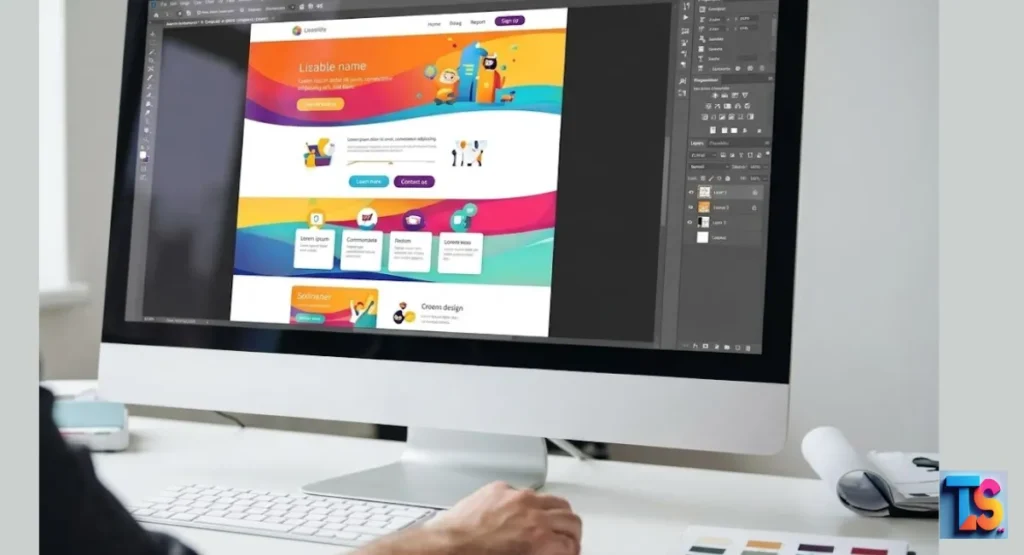
Building a web design portfolio that works as a powerful sales tool is essential for scaling your freelance career in 2026. Most designers fail because they treat their site like a personal art gallery, but successful pros design for business growth.
To win high-paying projects, you must shift your focus toward solving real problems, such as poor lead generation or low conversion rates. By showcasing how your work directly improves a client’s ROI-focused design and performance, you become a trusted business partner.
This strategic approach helps you attract your ideal target audience and close deals faster, moving you away from low-budget tasks toward high-value, long-term digital marketing strategies that actually build your professional reputation.
The Fatal Flaw: Why “Pretty” Portfolios Fail to Attract Clients
A portfolio fails to attract clients when it focuses on design trends rather than the business impact of your work. Clients are searching for a freelance web design services provider who can increase their sales, not just someone who uses the latest visual effects. When your site looks like an art museum, it speaks to other designers, not the business owners who have the budget to pay you.
Dribbble-Style Mockups vs. Problem-Solving Systems
You should replace fake, pretty mockups with real-world case studies that show you understand business logic. Real projects involve constraints like budgets, technical hurdles, and specific user goals. The table below shows the difference:
| Feature | Dribbble-Style Portfolio | Business-Focused Portfolio |
| Primary Goal | Visual applause | Lead generation |
| Content | Aesthetic mockups | Strategic case studies |
| Outcome | Designer followers | High-paying clients |
The Shift from “Designer for Hire” to Business Partner
You become a high-value asset by shifting your mindset from a “pixel-pusher” to a strategic consultant. When you position yourself as a business partner, you stop fighting for low-cost projects and start selling your expertise as a growth driver. This strategy allows you to increase your rates because you are selling a clear portfolio ROI rather than just a website build.
Step 1: Claim Your Niche to Eliminate 90% of Your Competition

You eliminate competition by specializing in one specific industry or technology. Trying to design for everyone makes you look like a beginner who lacks focus. When you become the go-to expert for a specific group, your authority grows, and you no longer have to compete on price.
How Specialization Directly Increases Your Project Rates
Specialization increases your rates because experts are always worth more than generalists. If you are the “go-to designer for local law firms,” you face zero competition from general designers. Clients are happy to pay a premium for someone who already knows their industry rules and specific pain points.
Framework: Choosing Between Industry-Specific or Tech-Stack Niches
Choosing the right niche helps you target your ideal client faster. Use this table to decide your path:
| Path | Benefit | Example |
| Industry-Specific | Deep knowledge of client pain points. | Web design for local dental clinics. |
| Tech-Stack Niche | Become a master of one platform. | High-performance Webflow e-commerce. |
Step 2: The 3-Part Case Study Framework That Sells Your Value

Your portfolio must use a specific storytelling structure to turn every project into a sales tool. This framework proves to potential clients that you know how to build a conversion-focused layout that drives real-world growth.
Section 1: The Business Bottleneck (The Problem)
The best way to start a case study is by clearly defining the specific business problem the client faced before you arrived. Stop using vague phrases like “they needed a new site.” Instead, state facts, such as “the client lost 60% of leads because their mobile site took six seconds to load.”
Section 2: UX Psychology and Design Decisions (The Strategy)
You must explain the “why” behind your design to show that your choices are rooted in data, not just personal taste. When you detail how your color choices or button placements guide user behavior, you prove your expertise. This strategy convinces clients that you build websites to sell, not just to look nice.
Section 3: Hard Metrics and Proof of Revenue (The Results)
The most effective way to close a deal is by sharing hard data that proves your design impact. If you cannot show direct revenue, use engagement metrics to highlight your success. You should list improvements like:
- Reduced bounce rate.
- Faster page load times.
- Better mobile accessibility scores.
- Increased form completions.
Step 3: Landing High-Paying Gigs When You Have Zero Experience
You do not need a list of famous clients to build a portfolio that sells your services. You simply need to demonstrate that you can solve business problems with a clear client acquisition workflow.
The Art of the Concept Project: Redesigning Fictional Brands
A concept project works because it proves your ability to identify and fix a broken business website. Pick a real company with a poor site, redesign the key pages, and explain how your version fixes their lost sales. This shows your strategic thinking and technical ability.
Leveraging Strategic Pro-Bono Work for Real-World Testimonials
Strategic pro-bono work helps you gain real-world experience and a powerful testimonial from a business owner. Offer to build one high-quality site for a non-profit in exchange for an honest review. This provides proof that you can handle real limits and deadlines, which builds massive trust.
Step 4: Optimizing Your Site for Frictionless Inbound Leads
Your portfolio is your first real client project, so it must work perfectly to generate your own leads. Every element on your page should lead the visitor toward booking a call with you.
Placement Strategy: Where to Put High-Contrast Calls to Action (CTAs)
You must place high-contrast buttons in the hero section and at the end of every case study to capture visitor intent. These buttons make your call to action stand out. They ensure that even a busy business owner knows exactly how to hire you.
Why You Should Replace Long Contact Forms with Direct Booking Links
You remove friction from your client acquisition workflow by using a direct booking link instead of long, confusing contact forms. This simple switch lets hot leads choose a time to talk immediately. It saves everyone time and moves the prospect closer to a closed deal.
FAQs
How many projects should be in a web design portfolio?
Three to five high-quality case studies are enough to prove your expertise. Quality always beats quantity. Focus on depth and explaining your clear thinking process.
Which platform is best for hosting a professional portfolio (Webflow, Framer, or WordPress)?
The right platform depends on your target audience and the types of websites you want to build.
| Platform | Best For | Main Benefit |
| Webflow | Custom designs | High performance and clean code. |
| Framer | Interactive work | Very fast and great visuals. |
| WordPress | Large sites | Flexibility for complex features. |
Should I include my pricing directly on my portfolio website?
Listing a starting price is a smart way to filter out low-budget leads early. It sets clear boundaries and ensures you only spend time on serious business owners.
Next Steps:
Now that you have the right framework, update your site to reflect these business-first strategies today. If you want to scale your business, learn more about our client acquisition workflow to start closing higher-paying deals. Build your site for profit, not just for show. Your next big client is waiting.
This strategy covers how to attract web design clients by building a client-generating web design portfolio. You now know the best platforms for freelance web designers to use, which is key for attracting small business clients for web design. Use these networking strategies for web designers to grow. Good luck.